Lawn Care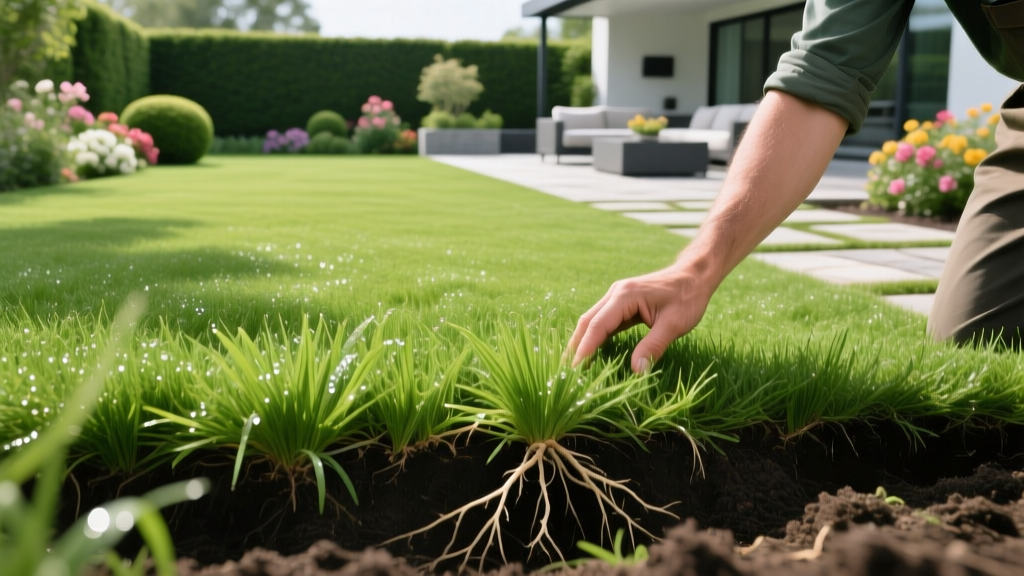
Why Is My Grass Turning Brown? 7 Causes and Quick Fixes
The 2-Minute Lawn Diagnostic Matrix
When homeowners ask, "why is my grass turning brown," the answer is rarely a single issue. Brown turf is a symptom of environmental stress, biological attack, or cultural mismanagement. Before buying random bags of fertilizer or fungicide, use this diagnostic matrix to pinpoint the exact failure point in your lawn's ecosystem.
| Visual Symptom | Pattern & Texture | The Tug Test Result | Primary Culprit |
|---|---|---|---|
| Irregular brown patches | Spongy feel, peels back like carpet | Fails (pulls up easily) | White Grubs |
| Circular rings or lesions | Wet morning dew, distinct borders | Passes (roots hold firm) | Fungal Disease (Brown Patch) |
| Uniform yellow/brown fading | Footprints remain visible >30 mins | Passes | Drought Stress / Dormancy |
| Small, isolated dead spots | High traffic or pet areas, green ring | Passes | Dog Urine / Nitrogen Burn |
| Overall thinning and browning | Hard soil, water runoff on slopes | Passes | Soil Compaction & Thatch |
Drought Stress vs. Natural Dormancy
The most common reason for a browning lawn is moisture deficit, but you must distinguish between drought stress and natural dormancy. Cool-season grasses (Kentucky Bluegrass, Tall Fescue) naturally enter dormancy and turn brown when soil temperatures exceed 85°F or air temperatures consistently drop below 32°F. Warm-season grasses (Bermuda, Zoysia) go dormant when soil temperatures fall below 55°F.
The Footprint Test
Walk across your lawn on a dry day. If your footprints remain visible in the turf for more than 30 minutes, the grass lacks the turgor pressure required to spring back. This indicates drought stress, not dormancy. According to Texas A&M AgriLife Extension, lawns require 1 to 1.5 inches of water per week during active growth phases.
- The Fix: Water deeply 2 to 3 times per week rather than daily. Place three empty tuna cans in different zones of your yard and run your sprinklers until they collect 0.5 inches of water. This ensures deep root penetration and prevents shallow-rooted weeds like crabgrass from taking over.
⚠️ Warning: The Overwatering Trap
Many homeowners see brown grass and immediately increase irrigation. If the soil is already saturated, you will drown the roots, deplete soil oxygen, and invite Pythium blight. Always check soil moisture by driving a 6-inch screwdriver into the ground. If it slides in effortlessly and comes out coated in mud, do not water.
Fungal Diseases: Brown Patch and Dollar Spot
If your grass is turning brown in distinct circular patterns—often with a dark "smoke ring" border on the outer edge during the morning—you are likely dealing with a fungal pathogen. Brown Patch (Rhizoctonia solani) thrives when daytime temperatures exceed 80°F, nighttime temperatures stay above 65°F, and humidity remains high.
As noted by Penn State Extension, Brown Patch primarily attacks the leaf blades of Tall Fescue and Perennial Ryegrass, leaving the roots intact. This is why the turf passes the "tug test" but still looks severely damaged.
Targeted Fungicide Application
Stop watering in the evening immediately; water only between 4:00 AM and 6:00 AM to minimize leaf wetness. For active infections, granular fungicides containing Azoxystrobin (e.g., Scotts DiseaseEx) or Propiconazole are highly effective.
- Application Rate: Apply Azoxystrobin at 3.5 lbs per 1,000 square feet for curative control.
- Rotation: Fungi develop resistance quickly. Alternate your chemical class (FRAC code) every 28 days. Switch from a QoI fungicide (FRAC 11) to a DMI fungicide (FRAC 3) for the next application.
Soil Compaction and Thatch Buildup
If your lawn turns brown during mild weather and water pools on the surface or runs off into the driveway, your soil is compacted or choked by thatch. Thatch is the layer of dead organic matter between the soil surface and the green blades. A layer up to 0.5 inches is beneficial for moisture retention, but anything exceeding 0.75 inches acts as a hydrophobic barrier, preventing water and liquid fertilizers from reaching the root zone.
Mechanical Intervention
- Core Aeration: Rent a walk-behind core aerator in early fall (for cool-season grass) or late spring (for warm-season grass). The machine must pull 3-inch deep soil plugs, not just poke holes. Leave the plugs on the lawn to decompose; they contain microbes that naturally break down thatch.
- Power Raking: If thatch exceeds 1 inch, use a power rake (dethatcher) set to a depth that barely scratches the soil surface. Aggressive dethatching can tear out healthy rhizomes and stolons.
- Topdressing: After aerating, apply a 1/4-inch layer of compost or finely screened topsoil to introduce organic matter and smooth out minor grading issues.
Pest Infestations: Grubs and Chinch Bugs
When grass turns brown and the turf feels spongy underfoot, perform the "tug test." Grab a handful of brown grass and pull upward. If it rolls back like a freshly installed carpet with no root resistance, white grubs (the larvae of Japanese Beetles or Masked Chafers) have severed the root system.
According to the University of California Integrated Pest Management (UC IPM) program, grub damage peaks in late summer and early fall when the larvae are in their third instar stage and consuming the most root mass.
Curative vs. Preventative Grub Control
- Curative (Active Damage Now): Apply a fast-acting contact insecticide like Trichlorfon (e.g., Bayer Advanced 24-Hour Grub Killer / Dylox) at a rate of 3 lbs per 1,000 sq ft. Water it in immediately with 0.5 inches of irrigation to move the chemical into the root zone where the grubs are feeding.
- Preventative (For Next Year): Apply Chlorantraniliprole (e.g., Acelepryn) in April or May. This systemic insecticide takes 60 to 90 days to fully translocate through the soil profile, providing season-long control without harming beneficial earthworms or pollinators.
Pet Urine and Chemical Burn
Dog urine contains high concentrations of urea (nitrogen) and soluble salts. When a dog repeatedly urinates in the same spot, the salt accumulation causes osmotic stress, drawing moisture out of the grass roots and resulting in a dead brown spot, often surrounded by a dark green "halo" where the diluted nitrogen acted as a fertilizer.
The Fix: Do not use commercial "lawn repair" tablets that alter your dog's urine pH; this can cause severe urinary tract health issues. Instead, manage the soil chemistry. Immediately after your dog urinates, pour 1 gallon of water on the spot to dilute the salts. For existing brown spots, apply Gypsum (Calcium Sulfate) at 50 lbs per 1,000 square feet. The calcium in gypsum displaces the sodium in the soil, restoring soil structure and allowing the roots to absorb water again. Rake out the dead blades, overseed with a matching cultivar, and keep the seed moist for 14 days.
Frequently Asked Questions
Can brown grass turn green again after dormancy?
Yes, if the grass is truly dormant and not dead. To verify, look at the crown (the base of the plant where the blades meet the roots). If the crown is firm and white/pale green, the plant is alive and will green up once soil temperatures and moisture levels return to optimal ranges. If the crown is brown, brittle, and dry, the plant is dead and requires overseeding.
Why is my new sod turning brown at the edges?
Sod edges dry out 3 to 4 times faster than the center of the rolls because they have exposed surface area. If the edges of your new sod are turning brown and pulling away from the adjacent piece, you are underwatering the perimeter. Increase irrigation frequency on the edges and use a sod roller to ensure the soil-to-root contact is seamless, eliminating air pockets that desiccate the roots.