
Lawn Care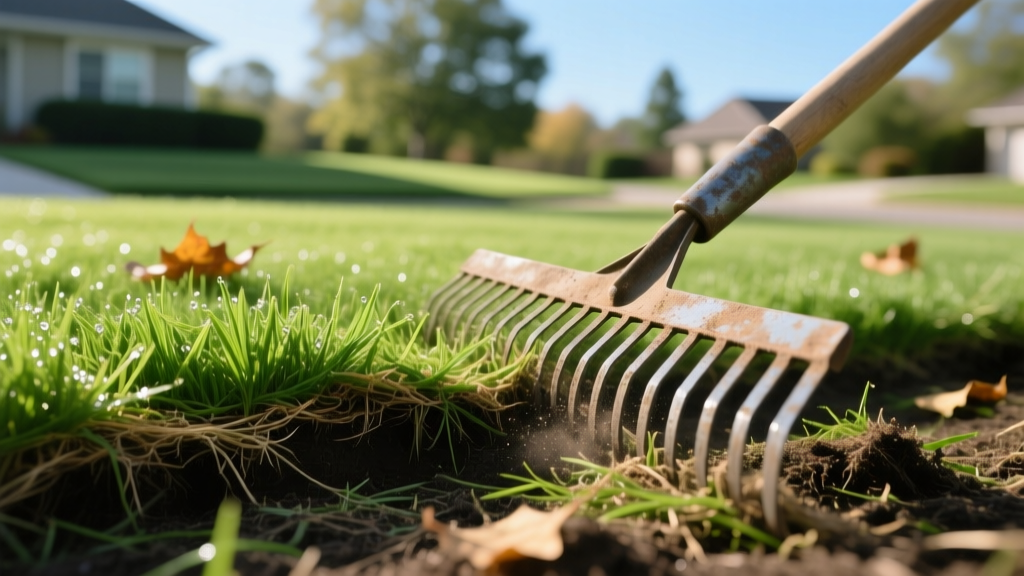
Diagnosing Lawn Thatch and Matting: When Raking is the Best Fix
Most homeowners associate raking with autumn leaf cleanup, but in professional turf management, raking is a critical diagnostic and corrective tool. When your lawn exhibits stunted growth, spongy footing, or localized brown patches, the root cause is often hidden just below the surface. Misdiagnosing these symptoms leads to wasted fertilizer and ineffective watering. Before you apply chemicals or aerate, you must accurately diagnose whether your turf is suffering from thatch accumulation, winter matting, or fungal crusting—and determine if targeted raking is the correct intervention.
Diagnostic Decision Tree: Identify Your Surface Problem
- Symptom: Footprints remain visible for hours; lawn feels spongy. Diagnosis: Thatch buildup. Action: Deep raking or dethatching.
- Symptom: Matted, plastered-down grass blades in early spring; gray or pink webbing. Diagnosis: Snow mold (Typhula or Microdochium). Action: Light surface raking to break the fungal crust.
- Symptom: Grass flattened in high-traffic areas after winter dormancy, but soil is firm. Diagnosis: Winter matting. Action: Gentle fan raking to lift the canopy.
The Thatch Test: Measuring Your Lawn's Organic Layer
A common myth perpetuated by bagging-mower manufacturers is that grass clippings cause thatch. In reality, clippings are 85% water and decompose rapidly. True thatch is a tightly intermingled layer of living and dead stems, stolons, rhizomes, and roots that accumulate between the green vegetation and the soil surface. These tissues are rich in lignin, which resists rapid microbial breakdown.
To diagnose thatch, use a sharp spade or a dedicated soil probe to extract a wedge-shaped core from your lawn. Measure the brown, spongy layer above the mineral soil. According to the University of Minnesota Extension, a thatch layer exceeding 0.5 inches is the threshold where intervention becomes mandatory. At this depth, the thatch acts as a hydrophobic barrier, preventing water, oxygen, and liquid fertilizers from reaching the root zone. It also harbors pests like chinch bugs and creates a shallow root environment that makes your turf highly susceptible to summer drought stress.
Manual Raking vs. Power Raking: Choosing the Right Tool
Once you have diagnosed a thatch or matting problem, selecting the correct tool is critical. Using a power rake on a thin, weak lawn can destroy the crown tissue, while using a manual rake on a heavily compacted thatch layer will result in exhaustion and incomplete removal.
| Tool Type | Recommended Model | Est. Cost | Best Use Case |
|---|---|---|---|
| Manual Thatch Rake | Bully Tools 24-Tine (60" fiberglass handle) | $45 - $55 | Lawns under 1,500 sq ft; thatch between 0.5" and 0.75"; spot treatments. |
| Electric Dethatcher | Sun Joe TJ604E 14-inch (9-Amp motor) | $150 - $170 | Lawns 1,500 - 5,000 sq ft; moderate thatch up to 1"; annual spring cleanup. |
| Tow-Behind Power Rake | Agri-Fab 40-inch Tine Dethatcher | $130 - $150 | Properties over 5,000 sq ft; severe matting; requires riding mower. |
Solving Specific Lawn Problems Through Targeted Raking
Spring Snow Mold Recovery
If you live in a region with prolonged snow cover, your lawn may emerge in spring with circular, matted patches featuring gray or pink webbing. This is snow mold, specifically Typhula incarnata (gray) or Microdochium nivale (pink). Fungicides are largely ineffective once the snow melts. The UC Statewide IPM Program notes that the most effective cultural control is to gently rake the affected areas. This breaks up the fungal mycelium crust, allows the soil to dry, and promotes air circulation to the turf crown, halting the disease's progression and allowing new growth to push through.
Post-Drought Canopy Matting
After a severe summer drought followed by heavy autumn rains, warm-season grasses like Bermuda and Zoysia often suffer from canopy matting. The dead, brittle stolons collapse and form a dense, impermeable layer. Raking here is not about removing thatch from the soil line, but rather 'combing' the upper canopy. Set your dethatcher tines to the highest setting (barely touching the soil surface) or use a flexible lawn broom to stand the grass blades upright before your final fall mowing. This prevents the mower from scalping the lawn and ensures a clean cut.
Warning: The Hidden Dangers of Over-Raking
Aggressive power raking on a lawn with less than 0.5 inches of thatch will tear out healthy living stolons and expose the turf crown to desiccation and UV damage. Furthermore, power raking brings dormant weed seeds (like crabgrass and poa annua) to the surface, exposing them to light and triggering mass germination. Always measure your thatch depth before deploying mechanical dethatchers.
Expert Raking Protocol: Timing, Technique, and Aftercare
Raking is a high-stress event for your lawn. To ensure rapid recovery, follow this precise agronomic protocol:
- Time the Intervention: For cool-season grasses (Kentucky Bluegrass, Fescue), rake in early spring just as the grass breaks dormancy, or in early fall at least four weeks before the first expected frost. For warm-season grasses, wait until late spring after the lawn has fully greened up and completed its first two mowings.
- Mow Low First: Drop your mower deck to 1.5 inches and bag the clippings. This removes the upper canopy interference, allowing the rake tines to penetrate directly into the thatch layer at the soil line.
- Execute the Raking: When using a manual thatch rake, pull in a linear motion, overlapping your strokes by 2 inches. If using an electric dethatcher, make two passes: one horizontally and one vertically to ensure cross-directional extraction.
- Remove the Debris: Do not leave the pulled thatch on the lawn. Use a leaf blower or a flexible fan rake to remove 100% of the extracted organic matter.
- Immediate Aftercare: Within 24 hours of raking, apply a starter fertilizer high in phosphorus (e.g., a 10-18-10 NPK ratio) to stimulate root recovery. Follow immediately with core aeration and overseeding if your turf density is below 80%. Water deeply to settle the soil around the exposed roots.
By treating raking as a precise surgical procedure rather than a blunt landscaping chore, you restore the critical soil-to-air interface, paving the way for a dense, resilient, and deeply rooted lawn.

