
Lawn Care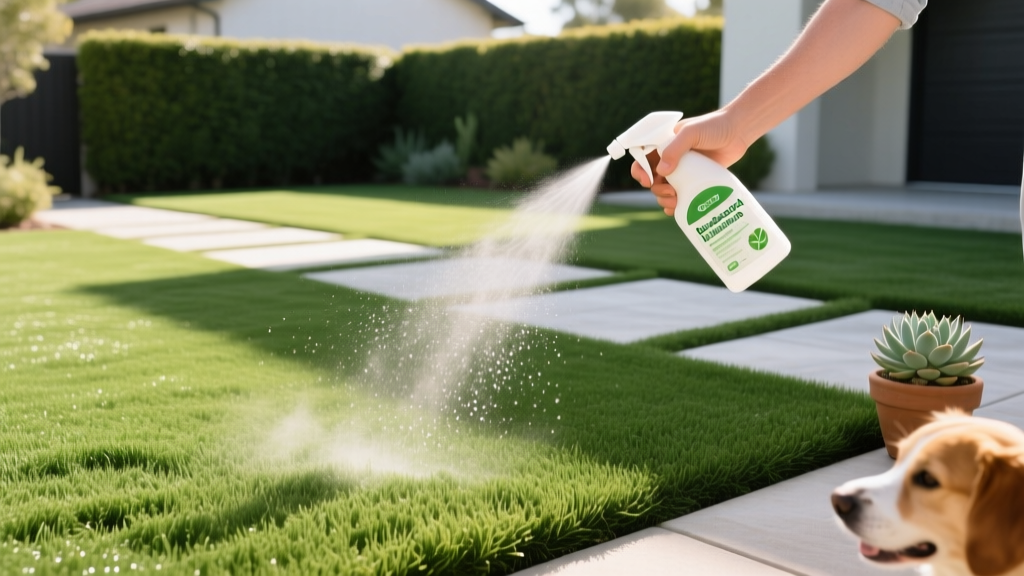
How to Disinfect Artificial Grass: Step-by-Step Pet Odor Guide
Synthetic turf lacks the natural soil microbiome that breaks down organic matter. When pet urine, feces, or spilled food settle into the infill and polyurethane backing of artificial grass, bacteria rapidly multiply, producing volatile organic compounds (VOCs) like ammonia and hydrogen sulfide. Simply rinsing the turf with water is insufficient; water alone cannot dissolve uric acid crystals or eliminate the biofilm that harbors pathogens. To maintain a sanitary, odor-free landscape, you must implement a targeted chemical or enzymatic disinfection protocol.
This guide details exactly how to disinfect artificial grass, breaking down the chemical mechanics of odor removal, the specific products required, and a professional-grade, step-by-step maintenance procedure.
Why Disinfecting Synthetic Turf is Non-Negotiable
Artificial grass is engineered for drainage, not biological decomposition. The perforated backing allows liquids to pass through into the aggregate base, but the yarn and infill trap solid organic particles. According to the Synthetic Turf Council, failure to routinely disinfect and deodorize synthetic turf leads to three critical failures:
⚠️ The Uric Acid Crystallization Problem
Urine contains uric acid, which is not water-soluble. When the water in urine evaporates, uric acid forms microscopic salt crystals that bond tightly to the synthetic yarn and infill. These crystals remain dormant until humidity or moisture reactivates them, causing the turf to 'off-gas' ammonia repeatedly for months after the initial incident.
Furthermore, untreated pet waste harbors zoonotic pathogens, including E. coli and Salmonella. The Environmental Protection Agency (EPA) regulates antimicrobial treatments to ensure they effectively neutralize these public health threats without causing environmental runoff toxicity. Selecting the correct EPA-registered disinfectant is vital for both safety and efficacy.
Essential Tools and Disinfectant Solutions
Choosing the wrong chemical can degrade the UV inhibitors in polyethylene yarn or dissolve the latex/polyurethane backing. Never use chlorine bleach (sodium hypochlorite) or high-acid cleaners on artificial turf. Below is a comparison matrix of the three primary disinfection categories used by turf professionals in 2026.
| Solution Type | Active Ingredient / Mechanism | Best Use Case | Est. Cost (per sq ft) | Pros & Cons |
|---|---|---|---|---|
| Enzymatic Cleaners (e.g., PE-51, Simple Green Outdoor) | Live bacteria cultures & enzymes that consume uric acid and organic carbon. | Routine pet odor removal; heavy urine saturation. | $0.04 - $0.08 | Pros: Destroys uric acid crystals permanently. Safe for pets. Cons: Requires 10-15 min dwell time; ineffective in freezing temps. |
| Quaternary Ammonium (e.g., Wysiwash, Simple Green d Pro 5) | Quat-based antimicrobial that disrupts bacterial cell membranes. | Killing active bacteria, viruses, and mold; commercial daycares. | $0.02 - $0.05 | Pros: Instant kill rate; highly cost-effective. Cons: Does not break down existing uric acid crystals; must be rinsed. |
| DIY / Natural (White Vinegar & Water) | Acetic acid (typically 5% concentration) lowers pH to inhibit bacteria. | Light spot treatments; budget-conscious quick fixes. | < $0.01 | Pros: Cheap, readily available. Cons: Weak against heavy biofilms; can harm nearby ornamental plants if runoff is unmanaged. |
Pro Tip: For severe, multi-pet households, professionals use a two-step protocol: a Quaternary Ammonium wash to kill active bacteria, followed 48 hours later by an Enzymatic treatment to digest the remaining uric acid crystals.
Step-by-Step Procedure: How to Disinfect Artificial Grass
Follow this exact sequence to ensure maximum penetration into the infill layer without displacing your base materials.
Step 1: Debris Removal and Dry Prep
Use a motorized turf brush or a stiff-bristled push broom to sweep away leaves, solid waste, and surface debris. Brushing against the natural grain of the turf stands the blades upright, exposing the infill layer (typically silica sand, Zeolite, or Envirofill) directly to the disinfectant. Remove solid pet waste immediately using a pooper-scooper; do not hose it into the drainage base.
Step 2: Pre-Rinse and Temperature Check
Rinse the turf with a garden hose equipped with a fan-spray nozzle. Avoid high-pressure jet nozzles or power washers, as water pressure exceeding 50 PSI will blast the infill out of the turf matrix, creating uneven depressions.
Crucial Timing: Never apply enzymatic cleaners when the turf surface temperature exceeds 110°F. High heat evaporates the water carrier before the enzymes can penetrate the backing, and it can literally 'bake' urine proteins into the synthetic fibers. Perform this step in the early morning or late evening.
Step 3: Application of the Disinfectant
For whole-lawn treatments, use a hose-end sprayer (like the Ortho Dial N Spray) set to a dilution ratio of 2 oz of enzymatic concentrate per gallon of water. For targeted hot-spots, use a 1-gallon pump sprayer to ensure deep saturation.
- Spray Pattern: Apply evenly in a sweeping motion, ensuring the liquid penetrates past the 50mm grass blades and reaches the 1.5-inch infill layer and backing.
- Volume: Apply approximately 1 gallon of mixed solution per 50 square feet for standard maintenance, or 1 gallon per 25 square feet for heavy odor saturation.
Step 4: Dwell Time and Agitation
Allow the solution to dwell for 10 to 15 minutes. Enzymes require moisture and time to catalyze the breakdown of organic compounds.
Warning: Do not let the solution dry on the turf. If you are working in direct sunlight or low humidity, lightly mist the area with plain water every 5 minutes to keep the enzymes active. For heavy biofilms, gently agitate the infill with a turf rake during the dwell time to force the liquid deeper into the aggregate base.
Step 5: Final Rinse and Infill Redistribution
Rinse the area thoroughly with the fan-spray nozzle for 2 to 3 minutes to push the neutralized organic matter and residual cleaner through the perforated backing and into the crushed rock sub-base. Once the turf is mostly dry (usually the next day), use a power broom to re-level the infill and stand the grass blades back up.
Troubleshooting Common Disinfection Failures
If you have followed the steps above but the turf still emits an odor or looks degraded, consult this diagnostic matrix:
Diagnostic Troubleshooting Guide
- Symptom: Turf smells worse immediately after cleaning.
Cause: The enzymatic cleaner is actively breaking down years of trapped uric acid, temporarily releasing ammonia gas.
Fix: This is normal. Allow 24-48 hours for the digestion process to complete and the odor to dissipate. - Symptom: Odor returns exactly 3 days after a rainstorm.
Cause: The infill layer (specifically Zeolite) has reached its maximum cation exchange capacity and can no longer absorb ammonia.
Fix: Top-dress the turf with 1.5 lbs of fresh Zeolite infill per square foot to restore absorption capabilities. - Symptom: Synthetic blades are brittle, faded, or fraying at the tips.
Cause: Previous use of chlorine bleach or undiluted quaternary ammonium stripped the UV stabilizers from the polyethylene yarn.
Fix: Chemical damage is irreversible. Apply a turf-safe UV protectant spray (like 303 Aerospace Protectant) to slow further degradation, and plan for partial turf replacement.
Seasonal Disinfection Frequencies
Maintenance schedules must adapt to ambient temperatures, as bacterial replication rates double for every 10°F increase in temperature.
- Summer (High Heat / High Bacteria): Apply enzymatic treatments every 1 to 2 weeks. Rinse daily if pets use the yard frequently.
- Spring/Fall (Moderate Temps): Apply treatments every 3 to 4 weeks. Focus on clearing organic debris (leaves) that trap moisture and promote mold.
- Winter (Freezing Temps): Enzymes go dormant below 40°F. Switch to mechanical removal of waste and use a 50/50 white vinegar and water spray for spot-treating ice-melt residue and minor odors until temperatures rise.
Expert Safety and Environmental Warnings
'When managing synthetic turf in residential zones, always verify that your chosen antimicrobial or enzymatic product is certified safe for aquatic environments if your property borders a storm drain or natural waterway. Runoff containing high concentrations of quaternary ammonium compounds can be highly toxic to local fish and amphibian populations.' — Landscape Maintenance Industry Best Practices, 2026
Always wear nitrile gloves and protective eyewear when mixing concentrated disinfectants. Keep pets and children off the treated turf until the surface is completely dry to prevent contact dermatitis or accidental ingestion of wet chemical residues. By adhering to these precise chemical applications and mechanical procedures, your artificial grass will remain sanitary, structurally intact, and entirely odor-free for its full 15-to-20-year lifespan.

