
Lawn Care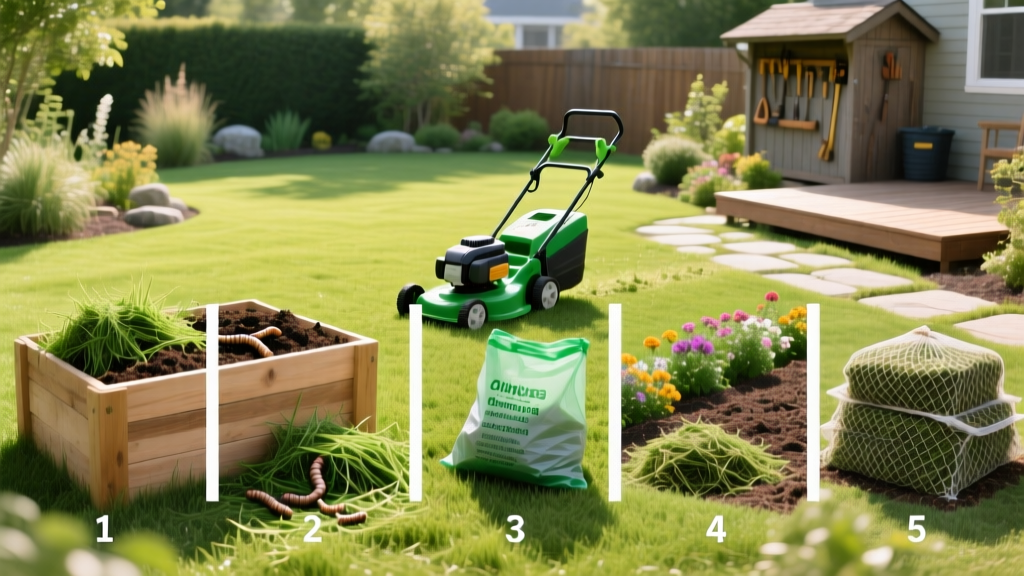
How to Dispose of Grass Clippings: 5 Eco-Friendly Methods
An average 5,000-square-foot lawn generates between 1,000 and 1,500 pounds of grass clippings annually. When sent to landfills, this nitrogen-rich organic matter decomposes anaerobically, releasing methane—a greenhouse gas 25 times more potent than carbon dioxide. Knowing exactly how to dispose of grass clippings is not just a matter of neighborhood aesthetics; it is a critical component of sustainable lawn maintenance.
This step-by-step procedural guide outlines the five most effective, eco-friendly methods for managing grass clippings, complete with exact carbon-to-nitrogen (C:N) ratios, municipal compliance rules, and herbicide safety protocols.
Method 1: The 'Leave It' Protocol (Grasscycling)
Grasscycling is the practice of leaving clippings on the lawn to decompose naturally. According to the Environmental Protection Agency (EPA), yard trimmings left on the lawn can supply up to 25% of your lawn's annual fertilizer needs, returning roughly 2 pounds of nitrogen per 1,000 square feet back into the soil.
Step-by-Step Grasscycling Procedure
- Upgrade Your Mower Deck: Install a dedicated mulching blade (such as the Oregon 96-351 or your mower's OEM mulching equivalent). Mulching blades feature extended cutting edges and curved wings that keep clippings suspended in the deck for multiple cuts before dropping them.
- Follow the 1/3 Rule: Never remove more than one-third of the grass blade in a single mowing. If your target height is 3 inches, mow when the grass reaches 4.5 inches. This ensures clippings are short enough (under 1 inch) to filter down to the soil surface rather than matting on top.
- Manage Moisture: Only mow when the grass is completely dry. Wet clippings clump together, blocking sunlight and creating anaerobic pockets that invite fungal diseases like brown patch (Rhizoctonia solani).
- Adjust Mowing Frequency: During peak spring growth (cool-season grasses) or mid-summer monsoons (warm-season grasses), you may need to mow every 4 to 5 days instead of the standard 7-day cycle.
Method 2: Composting Grass Clippings (Mastering the C:N Ratio)
Dumping pure grass clippings into a compost bin is a common maintenance error. Fresh grass has a C:N ratio of roughly 15:1 to 20:1. Without carbon-rich bulking agents, the pile will go anaerobic, producing a foul ammonia odor and a slimy, compacted mass.
To achieve the ideal 30:1 C:N ratio required for thermophilic composting (130°F–150°F), you must layer grass with high-carbon materials. The Natural Resources Defense Council (NRDC) recommends a volumetric mix of 1 part green grass to 2 or 3 parts brown carbon material.
Composting Bulking Agent Matrix
| Bulking Agent (Browns) | Approximate C:N Ratio | Mixing Ratio (by Volume) | Preparation Requirement |
|---|---|---|---|
| Dry Autumn Leaves | 60:1 | 2 parts leaves : 1 part grass | Shred with mower first |
| Wheat or Oat Straw | 80:1 | 3 parts straw : 1 part grass | Chop into 2-inch pieces |
| Shredded Cardboard | 350:1 | 1 part cardboard : 2 parts grass | Remove tape/ink, shred finely |
| Pine Needles | 80:1 | 2 parts needles : 1 part grass | Use sparingly (lowers pH) |
Composting Execution Steps
- Layering: Start with a 4-inch base of twigs for aeration. Alternate 2-inch layers of grass with 4-inch layers of your chosen brown material.
- Moisture Check: The pile should feel like a wrung-out sponge. If it's too dry, water it lightly with a hose. If too wet, add more shredded cardboard.
- Turning Schedule: Turn the pile every 3 to 5 days using a compost aerator tool or pitchfork to introduce oxygen and maintain the 130°F+ internal temperature required to kill weed seeds and pathogens.
Method 3: Municipal Yard Waste & Curbside Pickup Procedures
If grasscycling and composting are not viable, municipal yard waste collection is the next best option. Most municipalities strictly ban grass clippings from standard household trash, imposing fines up to $500 for violations.
Curbside Disposal Checklist
- Procure Approved Bags: Purchase 30-gallon, 2-ply kraft paper lawn bags (e.g., Husky or Lowe's brands, typically $1.50 to $2.00 per bag). Plastic bags are rejected by 90% of municipal composting facilities because they do not break down in industrial windrows.
- Pre-Dry the Clippings: Spread fresh clippings on your driveway for 24 hours before bagging. This reduces moisture weight and prevents the bags from tearing during transport.
- Mind the Weight Limit: Most city waste management departments enforce a strict 35-pound to 40-pound weight limit per bag. A 30-gallon bag filled with wet grass can easily exceed 60 pounds. Fill bags only 3/4 full if the grass is damp.
- Secure the Top: Roll the top of the paper bag down twice and use a single piece of water-activated paper tape or a biodegradable twine tie. Do not use plastic duct tape.
Method 4: Repurposing as Garden Bed Mulch
Grass clippings make an excellent, nitrogen-rich mulch for vegetable gardens and ornamental beds, suppressing weeds and retaining soil moisture. However, they must be applied correctly to avoid nitrogen tie-up and rot.
- Application Thickness: Apply no more than 1 to 2 inches of fresh grass clippings at a time. Thicker layers will mat together, forming an impermeable crust that blocks water and oxygen from reaching plant roots.
- Keep Away from Stems: Leave a 3-inch gap between the clipping mulch and the base of plant stems or tree trunks to prevent collar rot and rodent damage.
- Dry Before Applying: Always let clippings dry in the sun for a day before using them as mulch to prevent the transfer of fungal spores to your garden plants.
The Herbicide Hazard: When NOT to Compost or Mulch
CRITICAL WARNING: Persistent Herbicides
If you have treated your lawn with broadleaf herbicides containing clopyralid or aminopyralid (common in products like Milestone, Opensight, and many consumer 'Weed & Feed' formulas), do not compost the clippings or use them as mulch in vegetable gardens.
These synthetic auxins have a half-life of up to a year in soil and can survive the thermophilic composting process. When applied to gardens, they cause severe epinasty (twisted, deformed growth) in sensitive crops like tomatoes, peppers, and legumes. If you use these chemicals, you must leave the clippings on the lawn or dispose of them via municipal trash (where permitted) for at least 3 to 4 mowing cycles after application.
Frequently Asked Questions
Can I burn my grass clippings?
No. Fresh grass clippings contain up to 85% moisture, making them nearly impossible to burn efficiently. Attempting to burn them produces excessive, acrid smoke and violates open-burning ordinances in most suburban and urban zones. Furthermore, burning destroys the valuable nitrogen and organic matter the clippings contain.
Can I put grass clippings in my regular household trash bin?
In most jurisdictions, grass clippings are legally banned from standard municipal solid waste (MSW) landfills. Waste management facilities use visual inspections and weight audits to catch yard waste. If caught, your trash may be left at the curb, and you could face municipal fines. Always check your local Department of Public Works guidelines.
How do I test my compost for herbicide residue?
Perform a simple bioassay test before using your compost. Plant 5 to 10 sensitive seeds (like bush beans or peas) in a pot filled with your finished compost, and plant a control group in standard potting soil. If the compost plants exhibit twisted leaves, stunted roots, or fail to germinate within 14 days compared to the control group, the compost contains persistent herbicide residue and should not be used on edible crops.
What if my mower leaves clumps of grass even with a mulching blade?
Clumping indicates the grass is either too wet, too tall, or the mower deck is clogged. Scrape the underside of the mower deck with a putty knife to remove built-up thatch and wet grass. If the grass is overgrown, perform an initial 'high cut' with the bagger attached to remove the top third, then do a second pass at your target height without the bagger to mulch the remaining clippings.

