
Lawn Care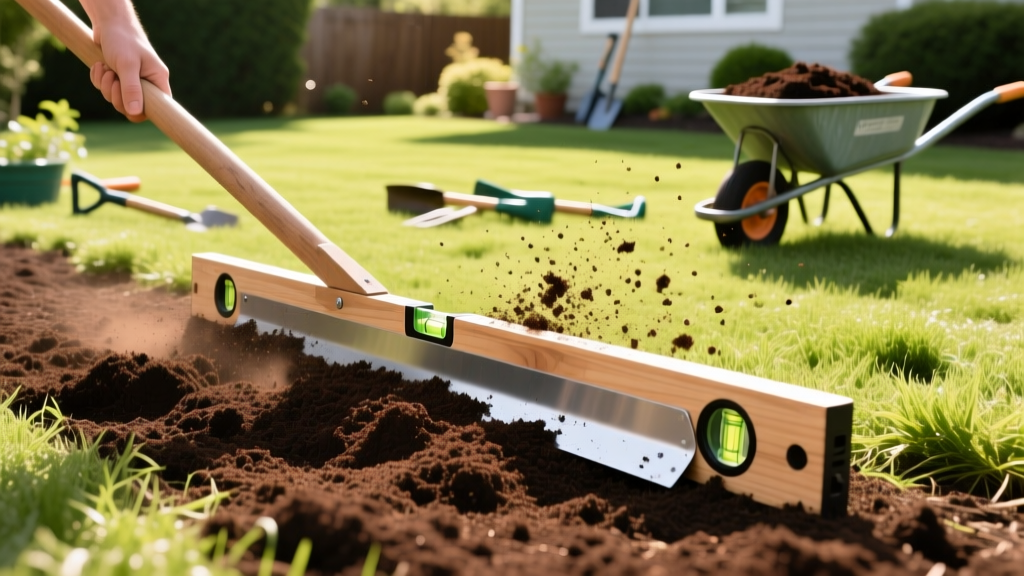
How to Build a DIY Lawn Leveler for Organic Topdressing
The Hidden Link Between Level Lawns and Organic Soil Biology
Maintaining a chemical-free lawn requires a fundamental shift in focus: from feeding the grass blades to feeding the soil microbiome. When a lawn suffers from uneven grading, dips, and bumps, micro-puddles form after irrigation or rainfall. These puddles create anaerobic (oxygen-depleted) soil conditions that suffocate beneficial mycorrhizal fungi and aerobic bacteria. Worse, standing water breeds fungal pathogens like Pythium blight and Brown Patch—diseases that organic gardeners cannot simply eradicate with synthetic fungicides.
A DIY lawn leveler is the ultimate mechanical intervention for organic lawn care. By using a leveling rake to distribute organic topdressing (compost, worm castings, and coarse sand) into low spots, you simultaneously correct surface drainage and inoculate the soil with biology. Commercial steel levelers often cost between $120 and $250, but a custom-built, chemical-safe wooden leveler can be constructed for under $65 using untreated lumber, ensuring no copper azole or CCA pressure-treating chemicals leach into your organic soil profile.
Organic Insight: Synthetic fertilizers feed the plant directly, masking poor soil structure. Organic topdressing requires physical soil integration. A DIY leveler acts as a mechanical soil-blender, pushing compost into aeration holes and smoothing the grade without smothering the grass crowns.
Materials and Tools for a Chemical-Safe DIY Lawn Leveler
To maintain strict organic standards, avoid pressure-treated pine, which is infused with copper-based fungicides and insecticides. Untreated cedar is naturally rot-resistant and completely safe for organic environments. Below is the exact bill of materials based on 2026 home improvement pricing.
| Material | Specifications | Estimated Cost | Organic Purpose |
|---|---|---|---|
| Cedar Boards (1x4x8') | Untreated, kiln-dried | $28.00 (for 2) | Rot-resistant frame without chemical leaching |
| Galvanized Hardware Cloth | 1/2-inch mesh, 36" x 36" | $19.00 | Sifts compost, blocks rocks, prevents rust |
| Exterior Wood Screws | 1.5-inch and 2.5-inch | $8.00 | Secure joints against moisture warping |
| Heavy-Duty Pipe Straps | 1.5-inch metal U-straps | $6.00 | Attaches handle to the frame securely |
| Wooden Broom Handle | Hardwood, 72-inch length | $12.00 | Provides leverage for dragging heavy compost |
Step-by-Step Construction Guide
Building this tool takes approximately 45 minutes. The key to an effective leveler is the mesh tension and the handle angle.
1. Cut and Assemble the Cedar Frame
Cut your cedar boards to create a 30-inch by 30-inch square frame. A 30-inch width is optimal for pushing organic compost; anything wider becomes too heavy to drag when loaded with wet topdressing. Assemble the corners using 2.5-inch exterior screws, pre-drilling the holes to prevent the cedar from splitting. Add a cross-brace across the middle of the frame for structural rigidity.
2. Attach the Hardware Cloth
Cut the 1/2-inch galvanized hardware cloth to 32x32 inches, allowing a 1-inch overhang on all sides. Lay the mesh over the bottom of the frame and secure it using heavy-duty galvanized staples every 4 inches along the perimeter. Fold the sharp overhanging edges up and screw them into the inner sides of the cedar frame to prevent snagging on your turf.
Safety Note: Always wear heavy leather work gloves when cutting and handling hardware cloth. The cut edges are razor-sharp and can easily cause lacerations.
3. Mount the Handle at a 45-Degree Angle
Position the 72-inch hardwood handle on the top-center cross-brace. The handle should angle backward at roughly 45 degrees. Secure it using the metal pipe straps and 1.5-inch screws. This angle allows you to apply downward pressure while pulling the leveler toward you, forcing the organic topdressing down into the turf canopy rather than just pushing it across the surface.
Formulating Organic Topdressing Blends
The effectiveness of your DIY lawn leveler depends entirely on the material you are dragging. According to NC State University TurfFiles, topdressing materials must match your native soil profile to prevent creating a hydrophobic barrier. Here are three chemical-free blends optimized for different lawn conditions:
| Blend Name | Ratio | Best Used For | Application Depth |
|---|---|---|---|
| Clay Soil Rescue | 60% coarse masonry sand, 40% screened compost | Heavy clay soils prone to compaction and puddling | 1/4 inch per season |
| Sandy Soil Retention | 80% organic compost, 20% topsoil | Sandy soils that drain too fast and lose nutrients | 1/8 inch per season |
| Pure Biological Boost | 100% vermicompost (worm castings) | Lawns needing microbial inoculation without grade changes | 1/16 inch (dusting) |
The Chemical-Free Leveling Protocol
Do not simply dump compost and drag it. Proper integration requires a specific sequence to ensure the organic matter reaches the root zone without smothering the grass.
- Mow Low: Drop your mower deck to 1.5 inches. Scalping the lawn slightly before topdressing prevents the compost from getting caught on tall grass blades and ensures it reaches the soil surface.
- Core Aerate: Pulling cores creates physical channels. As noted by the EPA's composting guidelines, integrating organic matter into aerated holes dramatically accelerates soil biological activity and improves water retention.
- Distribute the Blend: Shovel your chosen topdressing blend into small, evenly spaced piles across the lawn. Do not dump it in one massive pile, which will smother the grass underneath.
- Drag and Level: Pull your DIY lawn leveler backward toward you. Apply moderate downward pressure on the handle. The 1/2-inch mesh will break apart compost clumps, sift out debris, and push the material into the aeration holes and low spots.
- Water Deeply: Immediately apply 0.5 inches of water. This washes the compost off the grass blades (preventing fungal leaf spots) and settles the topdressing into the soil profile.
Troubleshooting Common DIY Leveler Issues
Mesh Clogging with Wet Compost
If your compost is too wet, it will blind (clog) the hardware cloth. Solution: Lay your compost out on a tarp in the sun for 24 hours before application. The ideal moisture content for topdressing is roughly 40%—it should hold together when squeezed in a fist but crumble easily when poked.
Leveler Rides Too High Over Bumps
If the frame is bridging over high spots without filling the low spots, your handle angle is too steep, or you are pulling too fast. Solution: Lower the handle angle to 30 degrees and walk at a slow, deliberate pace, allowing the weight of the cedar frame to do the work.
Frequently Asked Questions
Can I use a DIY lawn leveler on newly seeded organic lawns?
No. Wait until the new grass has been mowed at least three times and the root system is established. Dragging a leveler over seedlings will uproot them and disrupt the germination zone.
How often should I topdress and level an organic lawn?
For cool-season grasses (Fescue, Kentucky Bluegrass), apply topdressing in early fall during the aeration window. For warm-season grasses (Bermuda, Zoysia), apply in late spring or early summer when the grass is actively spreading. Limit applications to 1/4 inch of material per year to avoid raising the grade too close to sidewalks and driveways.
Is a steel leveler better than this DIY cedar version?
Steel levelers are heavier, which provides more downward force. However, for organic gardeners managing smaller suburban lawns (under 5,000 sq ft), the cedar DIY leveler offers sufficient weight, superior maneuverability, and guarantees zero heavy-metal or chemical leaching into your soil ecosystem.

