
Lawn Care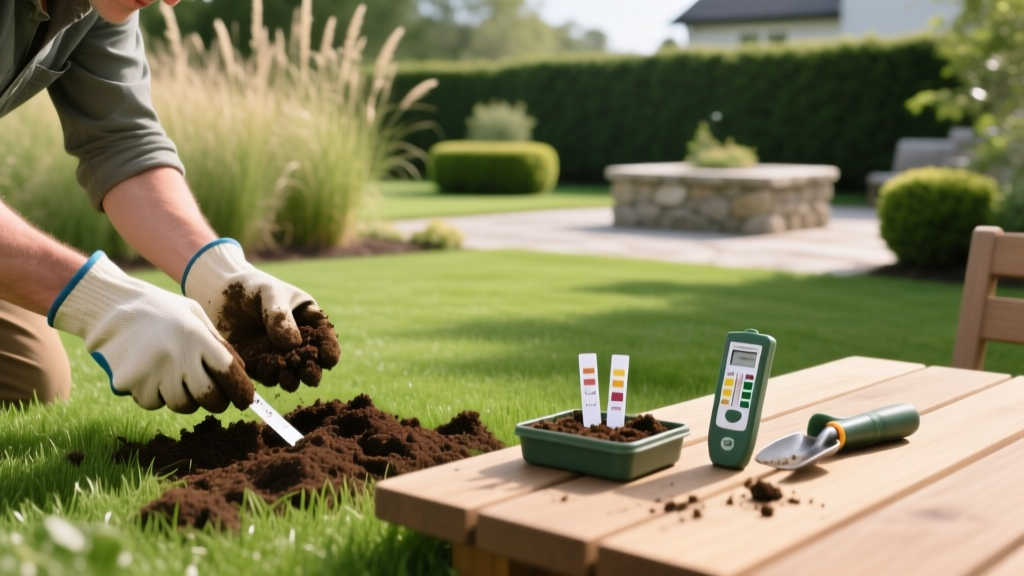
DIY Lawn Soil Analysis: Step-by-Step Testing and Amendment Guide
The Hidden Cost of Blind Fertilization
Applying generic 10-10-10 or 46-0-0 synthetic fertilizers without data is the most common failure point in residential turf management. Turfgrass requires precise chemical balances to thrive; guessing your soil's needs inevitably leads to phosphorus runoff, potassium leaching, and severe micronutrient lockout. A professional lawn soil analysis shifts your maintenance program from reactive guesswork to proactive chemistry. By measuring exact nutrient concentrations, pH buffers, and cation exchange capacity (CEC), you can calculate amendment rates down to the pound per 1,000 square feet.
Choosing Your Testing Method: Mail-In Labs vs. At-Home Kits
Not all soil tests yield actionable data. Cheap chemical dye kits from big-box stores only provide rough pH estimates and are entirely useless for measuring macronutrients (N-P-K) or base saturation. For a true lawn soil analysis, you must use spectrometry-based lab testing.
| Testing Method | Accuracy | Metrics Included | Cost Range | Best For |
|---|---|---|---|---|
| University Extension Labs | High | pH, P, K, Ca, Mg, Buffer pH | $15 - $25 | Budget-conscious, reliable baseline data |
| Private Agronomy Labs (e.g., Logan Labs) | Very High | Mehlich-3, CEC, Base Saturation, Micros | $30 - $45 | Advanced turf managers, Albrecht method practitioners |
| At-Home Chemical Dye Kits | Low | Rough pH, colorimetric N-P-K | $10 - $15 | None (Not recommended for turf) |
| Digital pH/EC Probes | Variable | Real-time pH, Electrical Conductivity | $150 - $400 | Monitoring salt buildup and daily pH fluctuations |
According to NC State University's Soil Testing Department, mail-in lab tests utilizing the Mehlich-3 extraction method are the gold standard for the Southeast and Midwest, while the Morgan extraction is preferred for high-pH calcareous soils in the West. Always select a lab that aligns with your regional soil chemistry.
Step-by-Step Procedure: Extracting a Composite Core Sample
The accuracy of your lawn soil analysis is entirely dependent on your sampling technique. Turfgrass root zones are shallow, and sampling too deep will dilute the data with subsoil that the grass cannot access.
Map Your Zones
Divide your lawn into distinct zones based on sun exposure, drainage, and grass type. Never mix soil from a shaded, heavily compacted side yard with a sandy, sun-baked front yard. Test them separately.
Bypass the Thatch Layer
Use a trowel to scrape away the top 0.5 inches of thatch and organic debris. You must sample the mineral soil where the root hairs actually reside.
Extract 10 to 15 Cores
Using a stainless steel soil probe (or a clean spade), extract cores at a strict depth of 3 to 4 inches. Walk in a zig-zag pattern across the zone to capture spatial variability. Avoid areas near downspouts, pet urine spots, or recently fertilized tree bases.
Composite and Mix
Drop all 15 cores into a clean plastic bucket. Warning: Never use galvanized metal buckets or brass tools, as they will leach zinc and copper into your sample, skewing the micronutrient data. Break the cores apart and mix them thoroughly by hand.
Air Dry and Ship
Spread the soil on a newspaper in a garage to air-dry for 24 hours. Do not bake it in an oven or microwave, as extreme heat alters nitrogen and sulfur readings. Fill the lab's provided ziplock bag to the fill line (usually 2 cups) and mail it immediately.
Decoding Your Lawn Soil Analysis Report
When your results arrive, the sheer volume of numbers can be overwhelming. Focus on these three critical pillars to build your amendment strategy.
1. Soil pH and Buffer pH
Your active pH dictates nutrient availability. If your pH drops below 5.5, aluminum toxicity stunts root growth, and phosphorus binds to iron, becoming completely unavailable to the grass. However, active pH alone doesn't tell you how much lime is needed to fix it. You must look at the Buffer pH (often listed as SMP Buffer). The buffer pH measures your soil's reserve acidity (hidden in the clay and organic matter). A sandy soil and a heavy clay soil might both have an active pH of 5.0, but the clay will require three times as much lime to raise the pH due to its higher buffering capacity.
2. Cation Exchange Capacity (CEC)
CEC measures your soil's ability to hold onto positively charged nutrients (Ca, Mg, K). Think of it as the size of your soil's nutrient warehouse.
The CEC Fertilization Rule:
If your CEC is below 5 (sandy soil), your warehouse is tiny. Applying heavy doses of potassium or nitrogen will result in immediate leaching into the groundwater. You must split your fertilizer applications into 4-6 light doses per year. If your CEC is above 15 (heavy clay), you can apply fewer, heavier doses without losing nutrients to leaching.
If your CEC is below 5 (sandy soil), your warehouse is tiny. Applying heavy doses of potassium or nitrogen will result in immediate leaching into the groundwater. You must split your fertilizer applications into 4-6 light doses per year. If your CEC is above 15 (heavy clay), you can apply fewer, heavier doses without losing nutrients to leaching.
3. Base Saturation Percentages
Advanced private labs provide base saturation—the percentage of the CEC warehouse occupied by specific cations. The ideal target for turfgrass is roughly:
- Calcium (Ca): 65% - 75%
- Magnesium (Mg): 10% - 15%
- Potassium (K): 3% - 5%
Calculating Exact Amendment Rates
Once you have identified the deficiencies, use these industry-standard calculations to correct them. As noted by University of Maryland Extension, over-applying amendments is just as damaging as under-applying.
Raising pH (Sweetening the Soil)
To raise pH, apply agricultural lime. If your Base Saturation shows low Calcium but adequate Magnesium, use Calcitic Lime (calcium carbonate). If both are low, use Dolomitic Lime (calcium-magnesium carbonate).
Dosage: A standard application is 50 lbs per 1,000 sq. ft. to raise the pH by approximately 0.5 points. Never exceed 50 lbs per 1,000 sq. ft. in a single application; split it into spring and fall applications if more is required.
Lowering pH (Acidifying Alkaline Soils)
For high-pH soils (common in arid western states), you must apply elemental sulfur. Soil bacteria convert elemental sulfur into sulfuric acid over 3 to 6 months, slowly lowering the pH.
Dosage: Apply 1 to 1.5 lbs of 90% elemental sulfur per 1,000 sq. ft. to drop the pH by 0.5 points. Avoid using aluminum sulfate, as it introduces toxic levels of heavy metals to the turf rootzone.
Correcting Potassium Deficiencies
If your soil test shows low potassium (K), avoid Muriate of Potash (0-0-60), as the chloride salts can burn turfgrass and damage soil biology. Instead, source Sulfate of Potash (0-0-50) or Potassium Nitrate (13-0-44) to deliver K without the harmful chloride load.
Frequently Asked Questions
How often should I perform a lawn soil analysis?
Test your soil every 2 to 3 years. If you are actively correcting a severe pH imbalance or heavy clay compaction issue, test annually in the fall to track the progress of your amendments.
Does nitrogen show up on a soil test?
Rarely, and you should ignore it if it does. Nitrogen is highly volatile; it leaches with rain, volatilizes into the air, and is rapidly consumed by microbes. By the time the lab processes your sample, the nitrogen reading is obsolete. Base your nitrogen applications on your grass type's annual agronomic requirements (e.g., 2-4 lbs per 1,000 sq. ft. annually for Kentucky Bluegrass) rather than soil test data.
Can I test wet soil?
You can extract wet soil, but you must let it air-dry before putting it in the shipping bag. Mailing wet soil in a sealed plastic bag creates anaerobic conditions, triggering microbial activity that will alter the pH and nitrogen levels before the lab technicians can run the spectrometry analysis.

