
Lawn Care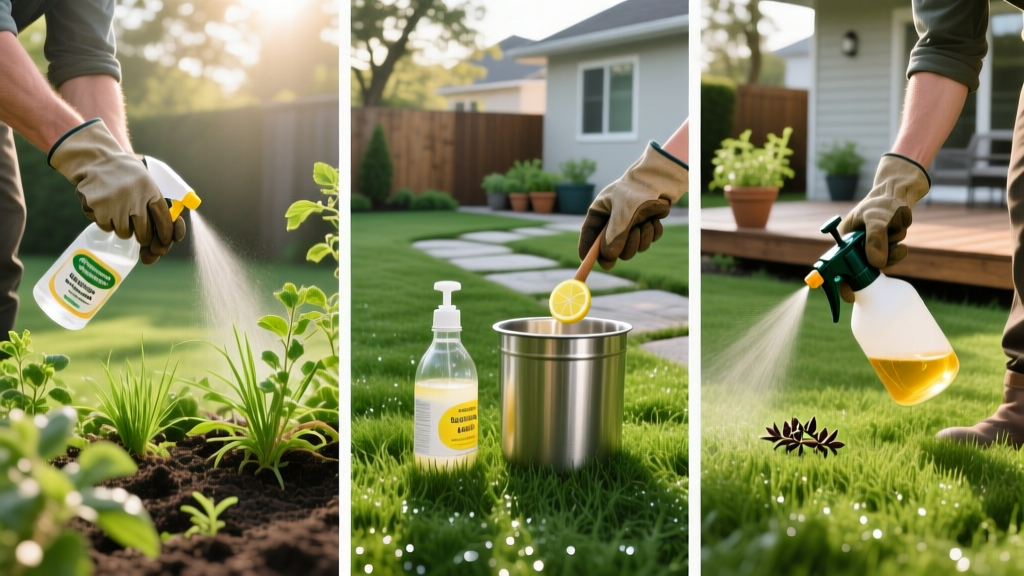
DIY Natural Weed and Grass Killer: 3 Organic Recipes Tested
The Shift to Organic Herbicides
As municipal bans on synthetic herbicides like glyphosate expand across North America in 2026, homeowners are actively seeking effective organic alternatives for lawn renovation, driveway edging, and garden bed maintenance. A reliable natural weed and grass killer must achieve rapid foliar desiccation without leaving toxic soil residues. However, the internet is flooded with ineffective kitchen-pantry myths—such as using standard 5% culinary vinegar—that fail to kill mature taproots and merely burn the top millimeter of leaf tissue.
To achieve a true kill rate on unwanted grasses and broadleaf weeds without synthetic chemicals, you must formulate a contact herbicide that strips the plant waxy cuticle, acidifies the cellular structure, and utilizes a surfactant to prevent runoff. Below, we break down the exact chemistry, field-tested DIY recipes, and application protocols required to eradicate unwanted vegetation organically.
The Chemistry of Organic Contact Herbicides
Unlike systemic synthetic herbicides that travel down to the root system, organic herbicides are strictly contact-based. They destroy the cell membranes of the foliage they touch. According to the EPA minimum risk pesticide guidelines, active ingredients like acetic acid, d-limonene, and eugenol (clove oil) are exempt from federal registration due to their low toxicity profiles, yet they are highly lethal to plant tissue upon contact.
The secret to a high-efficacy natural weed and grass killer lies in the synergy of three components:
- The Desiccant: High-concentration acetic acid (20% to 30%) or pelargonic acid to rupture plant cells.
- The Cuticle Stripper: Essential oils like d-limonene (orange oil) or eugenol that dissolve the protective waxy layer on leaves, allowing the acid to penetrate instantly.
- The Surfactant: A non-ionic sticker-spreader (like pure castile soap) that breaks the surface tension of the water, ensuring the solution coats the leaf evenly rather than beading up and rolling off.
3 Proven DIY Natural Weed and Grass Killer Recipes
Recipe 1: The Driveway Crack Eradicator (Vinegar & d-Limonene)
This is the most powerful DIY formulation for killing mature grass and deep-rooted weeds in hardscapes, paver joints, and driveway cracks. The d-limonene acts as a powerful solvent, accelerating the acetic acid burn.
- 1 Gallon 30% Horticultural Vinegar (Cost: ~$22 per gallon)
- 1 Cup d-Limonene (Orange Oil Extract) (Cost: ~$14 per 16oz)
- 2 Tablespoons Liquid Castile Soap (Do not use synthetic dish detergents, which contain degreasers that harm soil microbes)
Mixing Protocol: Pour the vinegar into a polyethylene pump sprayer. Add the d-limonene and soap last to prevent excessive foaming. Agitate gently. This mixture costs approximately $3.80 per mixed gallon and yields a 95% kill rate on broadleaf weeds within 24 hours.
Recipe 2: The Delicate Bed Spot-Treater (Clove Oil & Eugenol)
When treating weeds near the root zones of desirable ornamental plants or turfgrass, 30% vinegar can cause collateral pH damage to the soil. Eugenol, the active compound in clove oil, breaks down rapidly in the soil microbiome, making it safer for tight spaces.
- 1 Gallon Distilled Water
- 3 Ounces Clove Oil (Minimum 80% Eugenol content)
- 1 Tablespoon Liquid Castile Soap
Mixing Protocol: Clove oil is highly viscous. Pre-mix the clove oil and castile soap in a small jar until emulsified, then add to the water in your sprayer. Shake vigorously before every spray pass. This recipe costs about $4.50 per gallon and is ideal for spot-treating crabgrass in existing flower beds.
Recipe 3: The Paver Joint Sterilizer (Salt & Boiling Water)
For areas where you never want grass or weeds to return—such as the gaps between flagstones or beneath deck lattices—osmotic shock via sodium chloride is highly effective. Warning: This will render the soil sterile.
- 1 Gallon Boiling Water
- 2 Cups Non-Iodized Table Salt
- 1 Tablespoon Liquid Castile Soap
Mixing Protocol: Dissolve the salt completely in the boiling water, add the soap, and apply immediately using a heat-rated metal watering can or specialized thermal sprayer. The heat cooks the plant proteins while the salt dehydrates the root crown.
Recipe Comparison Matrix
| Recipe | Speed of Kill | Best Use Case | Soil Impact | Cost / Gallon |
|---|---|---|---|---|
| Vinegar & d-Limonene | 12 - 24 Hours | Driveways, fences, heavy brush | Temporary pH drop | $3.80 |
| Clove Oil (Eugenol) | 24 - 48 Hours | Garden beds, near desirable roots | Minimal / Rapid breakdown | $4.50 |
| Salt & Boiling Water | Instant - 12 Hours | Paver joints, gravel paths | Permanent soil sterility | $1.20 |
Application Protocol: Maximizing the Kill Rate
Because organic herbicides lack systemic root action, your application technique dictates success. Follow these strict parameters for optimal results:
- Timing is Critical: Apply between 10:00 AM and 2:00 PM on a clear, sunny day. UV radiation and high ambient temperatures (above 75°F) synergize with acetic acid to accelerate cellular collapse. Applying in the evening or on cloudy days reduces efficacy by up to 60%.
- Nozzle Selection: Swap the standard cone nozzle on your pump sprayer for a flat-fan nozzle (such as a TeeJet 8002). Flat-fan nozzles produce a uniform sheet of liquid that coats both sides of the leaf blade, whereas cone nozzles waste product by spraying past the target.
- Saturation, Not Mist: Spray until the leaves are visibly dripping. Contact herbicides require complete foliar coverage. If you only mist the top of the canopy, the weed will simply push new growth from the unburned lower nodes.
- The 24-Hour Rain Rule: Check your local forecast. If rain is expected within 24 hours, delay application. Organic oils and acids wash off easily before they have fully penetrated the plant cuticle.
Warning: Soil pH and Microbe Health
Repeated applications of 30% horticultural vinegar will lower your soil pH and harm beneficial mycorrhizal fungi. If you are using Recipe 1 to clear an area before laying new sod or planting grass seed, wait at least 14 days after the final application, then apply a light dusting of dolomitic lime to neutralize the soil acidity before seeding.
Repeated applications of 30% horticultural vinegar will lower your soil pH and harm beneficial mycorrhizal fungi. If you are using Recipe 1 to clear an area before laying new sod or planting grass seed, wait at least 14 days after the final application, then apply a light dusting of dolomitic lime to neutralize the soil acidity before seeding.
Commercial Organic Alternatives for Large Acreage
If mixing DIY solutions for a large property (over 1/2 acre) is impractical, the 2026 commercial market offers several OMRI-listed (Organic Materials Review Institute) ready-to-use alternatives. While more expensive than DIY, they offer factory-emulsified stability.
- A.D.I.O.S. (Advanced Development in Organic Solutions): Priced around $55 per gallon, this formula relies on a patented blend of corn gluten meal, sodium chloride, and natural oils. It is highly effective on poison ivy and deep-rooted perennial grasses.
- BurnOut Weed & Grass Killer: Priced at $35 per gallon, this utilizes 18% nonanoic acid (pelargonic acid). Pelargonic acid is naturally found in geraniums and strips plant cuticles faster than acetic acid, showing visible browning in as little as 15 minutes.
- EcoRaider Organic Weed Killer: A newer entrant utilizing concentrated citrus oils and fatty acids, retailing for roughly $28 per gallon. It is highly favored by landscaping professionals for its low odor profile compared to heavy vinegar mixes.
For more information on integrating these methods into a broader landscape management plan, consult the UC Statewide IPM Program guidelines on weed management, which detail long-term cultural controls to reduce weed seed banks.
Frequently Asked Questions
Will a natural weed and grass killer kill the roots?
No. DIY and commercial organic herbicides are strictly contact-based. They will kill the foliage and crown of young, shallow-rooted annual weeds (like chickweed or crabgrass). However, mature perennial weeds with deep taproots (like dandelions or bindweed) will experience top-kill but may resprout from the root within 2 to 3 weeks. Consistent reapplication every 14 days depletes the root carbohydrate reserves, eventually starving the plant.
Can I use standard 5% kitchen vinegar from the grocery store?
You can, but it is highly inefficient. Standard 5% white vinegar will only burn the delicate new growth of very young seedlings. It lacks the acidic concentration required to penetrate the thick cuticle of mature grass blades or broadleaf weeds. Upgrading to 30% horticultural vinegar is mandatory for a reliable natural weed and grass killer.
Is it safe to spray these recipes near my vegetable garden?
Recipe 2 (Clove Oil) and Recipe 3 (Boiling Water, if applied carefully) are safe near edibles, provided you avoid direct drift onto the leaves of your crops. Recipe 1 (30% Vinegar) should be kept away from vegetable beds, as the high acidity can temporarily lock up soil nutrients and stunt the growth of sensitive crops like tomatoes and peppers.
Do I need to wear protective gear when mixing 30% vinegar?
Yes. While natural, 30% acetic acid is highly corrosive to human tissue. It can cause severe corneal damage and chemical burns on the skin. Always wear nitrile gloves, long sleeves, and ANSI-rated splash goggles when handling, mixing, and spraying horticultural vinegar concentrations above 11%.

