
Lawn Care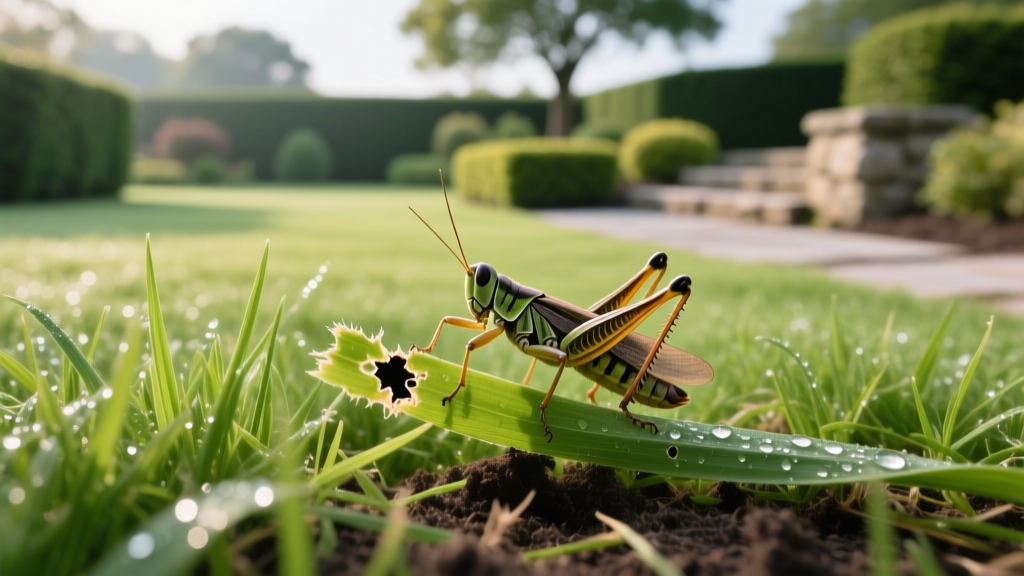
Do Grasshoppers Eat Grass? Lawn Damage ID and Control Guide
The Direct Answer: Do Grasshoppers Eat Grass?
Grasshoppers are polyphagous, meaning they are generalist herbivores that consume a wide variety of plant material. To answer the core question: yes, grasshoppers do eat grass, but they are not obligate turf-feeders. In a balanced ecosystem, grasshoppers actually prefer broadleaf weeds, clovers, and garden ornamentals over your turfgrass. However, during population outbreaks—typically triggered by consecutive years of hot, dry weather followed by warm springs—they will aggressively defoliate home lawns.
When grasshoppers do target turf, they show distinct preferences. Kentucky bluegrass and perennial ryegrass are highly susceptible to severe clipping, while tall fescue and bermudagrass are often bypassed due to their tougher, more fibrous leaf structures. Understanding this feeding behavior is critical because it dictates where you should focus your scouting and treatment efforts.
Feeding Mechanics and Damage Identification
Unlike sap-sucking insects (such as chinch bugs or leafhoppers) that cause stippling and yellowing, grasshoppers possess mandibles designed for physical removal of plant tissue. They typically begin feeding at the outer margins of the grass blade and chew inward, leaving ragged, jagged edges. In severe infestations, they will clip the grass entirely at the crown, mimicking the damage of a dull mower blade or a scalped lawn.
Accurate identification prevents homeowners from wasting money on the wrong pesticides. Below is a diagnostic matrix to differentiate grasshopper damage from other common turf destroyers.
| Pest | Damage Symptom | Frass / Visual Signs | Peak Activity Window |
|---|---|---|---|
| Grasshoppers | Ragged leaf margins; complete clipping at the crown. | Cylindrical, oblong fecal pellets; visible insects jumping. | Mid-summer to early fall (Adults). |
| White Grubs | Root severing; turf rolls back like loose carpet. | C-shaped white larvae in top 2 inches of soil; dug-up patches by crows/skunks. | Late summer to early fall. |
| Chinch Bugs | Yellowing patches turning to dead brown straw; localized expanding circles. | Tiny black/white insects scurrying at the thatch line; no frass pellets. | Peak heat of July and August. |
| Armyworms | Grass blades skeletonized or chewed off at the soil line; looks like a close shave. | Green/brown caterpillars curling into a 'C' when disturbed; round, wet frass. | Late summer to early fall (after heavy rains). |
The Outbreak Threshold: When Should You Worry?
Spotting one or two grasshoppers on your lawn is not a cause for alarm. Treatment is only economically and ecologically justified when populations breach specific economic thresholds. According to entomological guidelines from the University of Minnesota Extension, action is required when you count 15 to 20 nymphs per square yard within the lawn itself, or 30 to 40 nymphs per square yard in the bordering weedy areas where they breed.
Critical Treatment Window: The Nymph Stage
The most common mistake homeowners make is treating adult grasshoppers in August. By this stage, adults have fully developed wings and will simply fly in from neighboring fields hours after you spray. You must target the 2nd and 3rd instar nymphs in late spring or early summer (usually June, depending on your zone) while they are still wingless and confined to their hatching grounds in weedy margins, ditches, and fence lines.
Targeted Control Strategies for Home Lawns
Effective grasshopper management requires a multi-pronged approach combining biological controls, targeted chemical barriers, and cultural habitat disruption.
1. Biological Control: Microsporidia Bait
For an eco-friendly approach that targets nymphs without harming pollinators or pets, use baits containing Nosema locustae (a naturally occurring microsporidian protozoan). Products like Nolo Bait or Semaspore cost approximately $18 to $22 per pound. One pound covers roughly one acre when applied via a broadcast spreader. The pathogen infects the grasshopper's digestive tract, reducing feeding by 60% within days and eventually killing the nymph. It is highly effective but slow-acting, requiring 3 to 6 weeks for maximum population suppression.
2. Chemical Knockdown: Pyrethroids and Carbamates
When populations breach the 15-per-square-yard threshold and immediate protection is needed, synthetic insecticides offer rapid knockdown.
- Bifenthrin (e.g., Talstar P): A professional-grade pyrethroid providing up to 30 days of residual control. Dilute at a rate of 0.5 to 1.0 fluid ounces per 1,000 square feet. A 3/4-gallon jug costs around $45 and will treat multiple acres. It is highly toxic to aquatic life, so avoid application near storm drains or ponds.
- Carbaryl (e.g., Sevin 22.5% Liquid): A broad-spectrum carbamate that disrupts the insect's nervous system. Apply at 1.5 fluid ounces per gallon of water per 1,000 square feet. While effective, carbaryl is harsher on beneficial insects and earthworms than bifenthrin.
3. Cultural Disruption: Destroying Egg Beds
Female grasshoppers lay cylindrical egg pods containing 15 to 20 eggs each in late summer, preferring undisturbed, dry, weedy soil. They rarely lay eggs in dense, well-irrigated turf. To break the life cycle, rototill or aggressively rake weedy fence lines, abandoned lots adjacent to your property, and dry ditch banks in the fall or early spring. Exposing the egg pods to the elements and predatory birds can reduce the following year's hatch rate by up to 50%.
Step-by-Step Perimeter Defense Protocol
If an outbreak is migrating toward your lawn from a neighboring field or vacant lot, execute this perimeter barrier treatment:
- Mow and Clear: Mow a 5-foot swath along the boundary of your property where the grasshoppers are entering. Remove the clippings to eliminate their immediate food source and expose the soil.
- Time the Application: Apply your chosen liquid insecticide (like Bifenthrin) early in the morning (between 6:00 AM and 8:00 AM). Grasshoppers are ectothermic and sluggish in the cool morning hours, increasing the likelihood they will remain on the treated foliage long enough to receive a lethal dose.
- Spray the Vertical Zone: Do not just spray the turf. Grasshoppers enter by hopping or flying into tall grass and weeds. Spray the foliage of the bordering weeds up to 12 inches high to create a true vertical chemical barrier.
- Water In (Optional): If using a granular bait like Nosema locustae, do not water it in. The bait must remain on the surface for the insects to consume it. If using liquid bifenthrin, allow it to dry completely on the foliage (usually 2 hours) before any irrigation or rainfall occurs.
"Grasshopper control in home lawns is almost entirely dependent on treating the source populations in adjacent weedy areas before the insects develop wings and migrate into the turf. Once they are flying adults in your lawn, control is largely reactive and temporary."
— Adapted from integrated pest management guidelines, Texas A&M AgriLife Extension
By focusing on early identification of ragged margin damage, monitoring weedy perimeters for nymphal instars, and applying targeted biological or chemical barriers before wing development, homeowners can effectively protect their turfgrass from severe grasshopper defoliation.

