
Lawn Care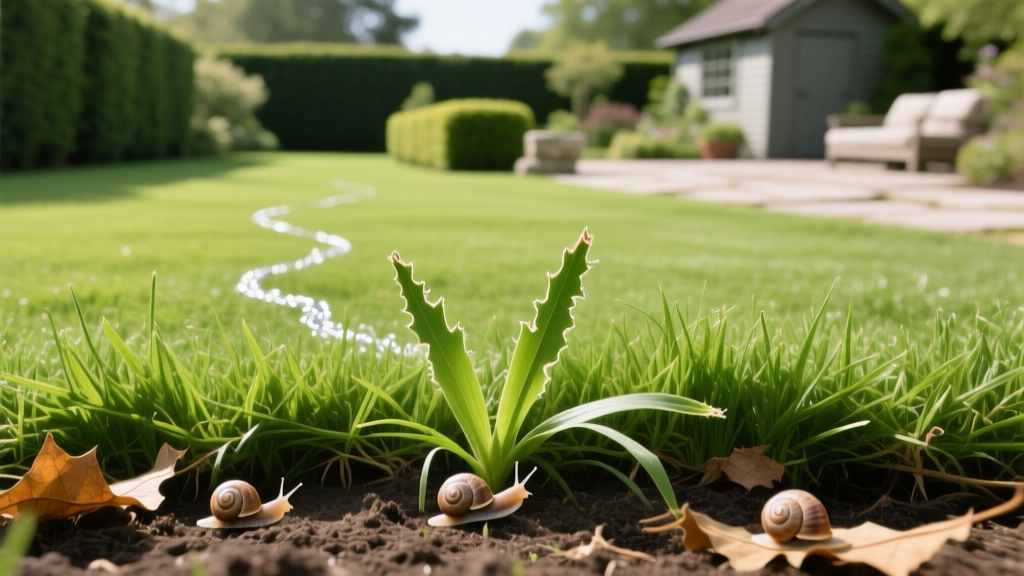
Do Snails Eat Grass? Identifying Lawn Damage and Control
The Short Answer: Do Snails Eat Grass?
When homeowners ask, "do snails eat grass?", the answer is a qualified yes. While snails (and their shell-less cousins, slugs) vastly prefer decaying organic matter, fungi, and broadleaf weeds, they will actively consume turfgrass under specific conditions. Snails rarely destroy mature, established lawns. Instead, they target tender, newly germinated grass seedlings, fresh spring shoots, and turf weakened by disease or severe shade. If you are overseeding a cool-season lawn or establishing a warm-season grass from seed, snails can decimate your germination rates overnight.
Understanding the exact feeding mechanics and environmental triggers of snails is critical for accurate lawn damage identification. Misdiagnosing snail damage as grub or armyworm activity leads to wasted chemical applications and continued turf decline. This guide breaks down the biology of snail feeding, diagnostic frameworks for the field, and modern, pet-safe eradication protocols.
The Biology of Snail Feeding on Turfgrass
Snails do not have mandibles or chewing mouthparts like insects. Instead, they possess a radula—a ribbon-like organ covered in thousands of microscopic, chitinous teeth. When a snail feeds on a grass blade, it scrapes the surface rather than shearing it off. This unique biology creates distinct visual symptoms on turfgrass:
- Windowpaning: The snail scrapes away the green epidermal and mesophyll layers on one side of the grass blade, leaving the transparent opposite surface intact. This creates a silvery, translucent "window" on the leaf.
- Ragged Edges: If the snail feeds on the tip or edge of a young, tender grass shoot, the margin will appear shredded or rasped, rather than cleanly cut.
- Stem Girdling: In very young seedlings, snails will scrape entirely through the tender coleoptile or stem, causing the seedling to collapse and die.
Snails require high humidity (above 80% relative humidity) and moderate temperatures (60°F to 75°F) to remain active. They are strictly nocturnal or crepuscular feeders, retreating into the thatch layer or soil crevices during the heat of the day to prevent desiccation.
Snail Damage vs. Other Lawn Pests: A Diagnostic Matrix
Lawn damage is frequently misattributed. Use this diagnostic matrix to differentiate snail activity from other common turfgrass pests.
| Pest | Primary Damage Symptom | Time of Activity | Field Evidence (Frass/Trails) | Root Damage? |
|---|---|---|---|---|
| Snails/Slugs | Ragged blade edges, silvery windowpaning on leaf surface | Night / Dawn | Iridescent, dried mucus trails on grass and soil | No |
| White Grubs | Irregular brown patches; turf detaches easily from soil | Anytime (root feeding) | C-shaped white larvae found 2-4 inches in soil | Yes (severe) |
| Armyworms | Grass sheared off completely at the base; "scalped" look | Dusk / Night | Green/brown cylindrical droppings (frass) on soil | No |
| Chinch Bugs | Yellowing to brown patches, starting in hot, sunny areas | Daytime (heat active) | Tiny black/white insects at the soil-thatch interface | No (injects toxin) |
Field Identification: The Cardboard Trap Protocol
Because snails hide during daylight hours, visual inspection at noon is ineffective. To confirm a snail infestation and quantify the population density, utilize the standard agricultural cardboard trap method recommended by integrated pest management programs.
The 12x12 Cardboard Trap Test
- Cut a 12-inch by 12-inch square of corrugated cardboard.
- Thoroughly soak the cardboard in water and place it flat on the lawn in a shaded, damaged area at approximately 6:00 PM.
- Leave it undisturbed overnight.
- Return at 8:00 AM the next morning and carefully lift the cardboard.
- Count the snails and slugs clustered on the moist underside.
Action Threshold: If you count more than 5 to 8 gastropods per square foot, the population is high enough to warrant immediate chemical or biological intervention, especially if you are protecting new grass seed.
According to the University of California Integrated Pest Management program, trapping not only identifies the pest but can also serve as a minor cultural control method if done repeatedly across a small yard.
Modern Eradication Strategies: Bait Chemistry and Costs
The era of using highly toxic metaldehyde baits is ending. Metaldehyde is fatal to dogs, cats, and local wildlife upon ingestion, and it has been banned or heavily restricted in numerous jurisdictions. In 2026, professional lawn care relies on iron-based baits that are lethal to snails but safe for vertebrates.
1. Iron Phosphate Baits (e.g., Bonide Slug & Snail Bait, Sluggo)
Iron phosphate interferes with the snail's calcium metabolism and digestive system. Once ingested, the snail stops feeding immediately, though it may take 3 to 6 days for the pest to die. During this time, the snail will retreat to its hiding place, meaning you will not see dead bodies on the lawn (a common reason homeowners mistakenly believe the product "failed").
- Cost: $15 to $20 for a 4 lb bag.
- Coverage: Approximately 5,000 sq. ft. per 4 lb bag.
- Application Rate: Scatter evenly at roughly 1 teaspoon per square yard. Apply in the late evening after watering the lawn, as moisture draws snails to the surface.
2. Ferric Sodium EDTA (e.g., Natria Snail & Slug Killer)
This is a newer, faster-acting chelated iron compound. Ferric sodium EDTA causes rapid dehydration and cell damage in gastropods, typically killing them within 24 hours. It is slightly more expensive but highly effective for severe infestations threatening newly seeded lawns.
- Cost: $22 to $28 for a 4 lb bag.
- Coverage: Up to 5,000 sq. ft.
- Advantage: Faster knockdown and excellent rain-fastness compared to traditional iron phosphate pellets.
Cultural Controls: Altering the Microclimate
Chemical baits treat the symptom; cultural controls treat the environment. Snails thrive in lawns with excessive thatch and poor air circulation. Implementing the following agronomic practices will naturally suppress populations:
- Thatch Management: Snails require a damp, protected habitat during the day. If your lawn's thatch layer exceeds 0.5 inches, rent a power dethatcher or perform core aeration to break up the mat. Exposing the soil surface to UV light desiccates snail eggs and juvenile pests.
- Irrigation Timing: Switch your sprinkler system from evening watering to early morning (between 4:00 AM and 6:00 AM). Evening watering leaves the grass canopy wet all night, creating the exact >80% humidity microclimate snails need to forage. Morning watering allows the turf surface to dry before dusk.
- Canopy Thinning: If your lawn is heavily shaded by tree canopies, consult an arborist for selective limb pruning to increase sunlight penetration and airflow at the soil level.
For further reading on habitat modification, the NC State Extension service emphasizes that reducing daytime hiding spots is the most effective long-term deterrent for gastropods in turf environments.
Step-by-Step Recovery for Snail-Damaged Grass
If snails have already destroyed a section of newly seeded turf, follow this recovery protocol to restore the canopy:
- Eliminate the Threat: Apply Ferric Sodium EDTA bait to the perimeter of the damaged zone to prevent surviving snails from eating the replacement seed.
- Prepare the Seedbed: Rake away the dead, rasped grass blades and debris to expose bare soil.
- Overseed: Apply a matching turfgrass seed at 1.5x the standard rate (e.g., 4.5 lbs per 1,000 sq. ft. for Kentucky Bluegrass) to compensate for potential secondary losses.
- Fertilize: Apply a phosphorus-rich starter fertilizer (such as a 24-25-4 NPK ratio) at 3.5 lbs per 1,000 sq. ft. to drive rapid root and shoot development, allowing the grass to outgrow the vulnerable seedling stage before the next snail generation hatches.
Frequently Asked Questions
Will crushed eggshells or diatomaceous earth stop snails from eating my grass?
No. This is a persistent gardening myth. While diatomaceous earth (DE) can cut the soft bodies of insects, snails produce a thick, protective mucus that allows them to glide over sharp edges like crushed eggshells or DE without injury. Furthermore, DE loses all efficacy the moment it gets wet from morning dew or irrigation, rendering it useless on lawns.
Do snails eat Bermuda grass or Zoysia?
Mature, established warm-season grasses like Bermuda and Zoysia have tough, fibrous leaf tissues and high silica content, making them highly unpalatable to snails. Snails will almost exclusively target these grasses only during the initial germination phase or immediately after aggressive dethatching when tender new rhizomes and shoots are exposed.
Can I use beer traps to protect my lawn?
Beer traps (shallow dishes of yeast-rich liquid) do attract and drown snails, but they are highly impractical for turfgrass. You would need dozens of traps per 1,000 square feet, they must be emptied and refilled every 48 hours, and they can actually attract snails from neighboring properties into your yard. Iron phosphate baits are vastly more efficient and cost-effective for lawn-scale applications.

