Lawn Care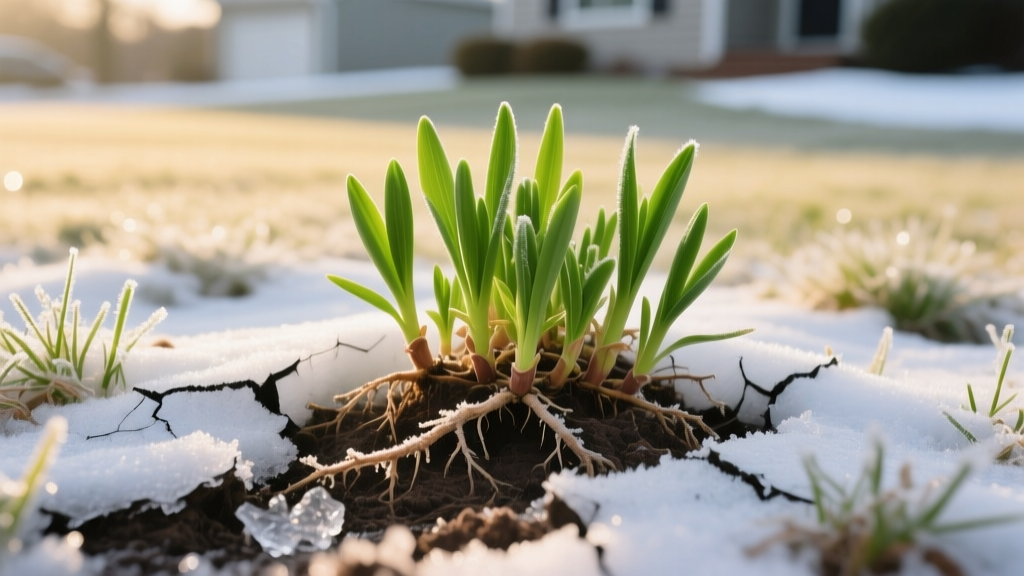
Do Weeds Die in the Winter? The Truth About Cold-Weather Survival
The Short Answer: Winter Weed Survival Mechanics
The short answer to the question "do weeds die in the winter" is no. While the above-ground foliage of some perennial weeds may wither after the first hard frost, the vast majority of lawn weeds either possess biological antifreeze mechanisms, retreat into deep root systems, or follow a specific lifecycle that actually peaks during the coldest months of the year. Understanding these survival mechanics is the first step toward reclaiming your turf before spring germination begins.
Winter lawns are typically dominated by two categories of weeds: winter annuals and cool-season perennials. Winter annuals germinate in the late summer or early fall when soil temperatures drop to 55°F–65°F. They establish a root system before winter, enter a semi-dormant state during deep freezes, and then aggressively flush with new growth in early spring. Perennials, like dandelions and white clover, store carbohydrates in their taproots or rhizomes during autumn, allowing them to survive freezing topsoil and push new shoots upward the moment daytime highs consistently exceed 45°F.
The Winter Weed Lifecycle Matrix
To effectively target weeds, you must map their lifecycle to the current season. Applying the wrong treatment at the wrong time is the primary reason homeowners fail to control cold-weather infestations.
| Weed Category | Germination Window | Winter Behavior | Spring Action | Common Species |
|---|---|---|---|---|
| Winter Annuals | Aug – Oct (Soil 55-65°F) | Slow rosette growth; survives light freezes | Rapid vertical growth, flowers, sets seed, dies | Henbit, Chickweed, Poa annua |
| Summer Annuals | Apr – Jun (Soil >65°F) | Seeds remain completely dormant in soil | Germinate when soil warms; thrive in heat | Crabgrass, Goosegrass, Spurge |
| Cool-Season Perennials | N/A (Spreads via seed & roots) | Foliage dies back; roots store carbohydrates | Draws on root reserves to push new foliage | Dandelion, Broadleaf Plantain, Clover |
How Weeds Survive Freezing Temperatures
According to turfgrass research from the University of Minnesota Extension, winter annual weeds utilize a physical survival strategy known as the rosette growth habit. Species like henbit and common chickweed grow their leaves flat against the soil surface in a circular pattern. This minimizes exposure to desiccating winter winds and allows the plant to absorb radiant heat from the soil, effectively creating a microclimate that is several degrees warmer than the ambient air temperature.
Furthermore, many perennial weeds synthesize cryoprotectants—biological antifreeze proteins and concentrated sugars that lower the freezing point of the water inside their plant cells. This prevents ice crystals from forming and rupturing the cell walls during sub-zero nights, ensuring the crown of the plant remains viable until spring.
Identifying Common Winter Survivors
Accurate identification dictates your chemical and cultural control strategy. Here are the primary offenders you will encounter between December and March:
- Common Chickweed (Stellaria media): Features small, paired oval leaves and tiny white star-shaped flowers. It thrives in thin, overwatered, or poorly drained turf areas and can produce over 800 seeds per plant before dying off in late spring.
- Henbit (Lamium amplexicaule): Often confused with chickweed, henbit has square stems, clasping leaves that wrap around the stem, and purple tubular flowers. It is highly tolerant of cold temperatures and poor soil fertility.
- Annual Bluegrass (Poa annua): A grassy weed rather than a broadleaf. It features a distinctive boat-shaped leaf tip and produces seed heads even at low mowing heights. It turns a bright, unsightly lime-green in dormant winter lawns.
- Dandelion (Taraxacum officinale): While the leaves may die back after a hard frost, the deep taproot (often extending 10 to 15 inches into the soil) remains fully alive and ready to regenerate the moment soil temperatures rise.
The Temperature Threshold Rule for Herbicides
The most common mistake homeowners make is spraying post-emergent herbicides during winter cold snaps. Systemic herbicides, such as 2,4-D and dicamba, rely on the plant's phloem to translocate the active ingredient from the leaves down to the root system. When daytime high temperatures drop below 50°F, the metabolic processes and phloem transport in weeds slow to a near halt. The herbicide will sit on the leaf surface, fail to reach the root, and ultimately wash away with the next rain.
⚠️ Critical Application Warning: Never apply systemic broadleaf herbicides if the 3-day forecast predicts daytime highs below 50°F. For effective winter control, wait for a warm front where temperatures will remain above 55°F for at least 48 hours post-application.
Cold-Weather Herbicide Chemistry: Esters vs. Amines
If you must treat weeds during the cooler shoulder seasons (late fall or early spring), the chemical formulation of your herbicide matters immensely. Standard liquid weed killers use amine formulations of 2,4-D, which are highly water-soluble but struggle to penetrate the thick, waxy cuticle that weeds develop in cold weather.
Instead, look for products utilizing ester formulations (such as 2,4-D ester or triclopyr ester). Esters are lipid-soluble, meaning they easily melt through the waxy leaf cuticle of cold-weather weeds. Furthermore, adding a non-ionic surfactant (at a rate of 0.25% to 0.5% v/v) to your tank mix is mandatory in winter to break the surface tension of the spray droplet and ensure maximum foliar absorption.
For rapid burndown of winter annuals in cool weather, products containing carfentrazone (such as SpeedZone Broadleaf Herbicide) are highly effective. Carfentrazone is a contact herbicide that causes rapid cell membrane disruption, showing visible necrosis on chickweed and henbit within 24 hours, even when temperatures dip into the mid-40s°F. The NC State TurfFiles program frequently recommends carfentrazone blends for cool-season broadleaf control where systemic translocation is unreliable.
Step-by-Step Winter Weed Eradication Protocol
Follow this exact sequence to eliminate winter weeds without damaging your dormant or cool-season turfgrass:
- Map the Infestation: Walk the lawn on a mild winter day. Flag areas heavily populated by chickweed, henbit, or Poa annua. Spot-treating these specific zones saves money and reduces chemical load compared to broadcast spraying.
- Check the Forecast: Identify a 4-day window with no rain and daytime highs consistently between 55°F and 65°F. Avoid spraying if a hard freeze (below 28°F) is predicted within 48 hours of application.
- Calibrate the Sprayer: Ensure your nozzle is delivering 1.0 to 1.5 gallons of water per 1,000 square feet. Winter weeds have smaller leaf surface areas, so thorough, even coverage is more critical than in the summer.
- Mix and Apply: Combine your ester-based or carfentrazone-based herbicide with a non-ionic surfactant. Apply to the point of runoff, but do not let the liquid pool on the soil surface.
- Delay Mowing: Do not mow your lawn for 48 hours before or 48 hours after application. This allows the weed maximum leaf area to absorb the chemical and sufficient time to translocate it to the crown.
Frequently Asked Questions
Will a hard freeze kill winter weeds naturally?
No. While a severe, prolonged freeze (temperatures below 10°F for several consecutive days) may burn back the foliage of winter annuals like chickweed, the crown and root systems are insulated by the soil. Once temperatures moderate, the weeds will quickly regenerate. Relying on weather for weed control is an ineffective strategy that allows weeds to outcompete your turf for early-spring nutrients.
Can I apply pre-emergent herbicides in the winter?
Applying pre-emergents in the dead of winter (January or February) is generally a waste of product. Pre-emergents like prodiamine or dithiopyr degrade over time due to microbial activity and UV exposure. Since winter annual weeds germinate in the late summer and early fall, the correct time to apply a pre-emergent for winter weed prevention is between mid-August and early September, when soil temperatures drop below 70°F. For more detailed soil temperature data, refer to the UC IPM Weed Management guidelines.
Do weeds die in the winter if I smother them with leaves?
Leaving a thick layer of unshredded leaves on your lawn will block sunlight, but it will not necessarily kill established winter weeds. In fact, the moisture trapped beneath the leaf canopy creates an ideal microenvironment for fungal diseases like snow mold and can actually protect the crowns of perennial weeds from extreme freezing temperatures. Always mulch or remove leaves to maintain turf health and expose weeds to the elements and targeted herbicides.