
Lawn Care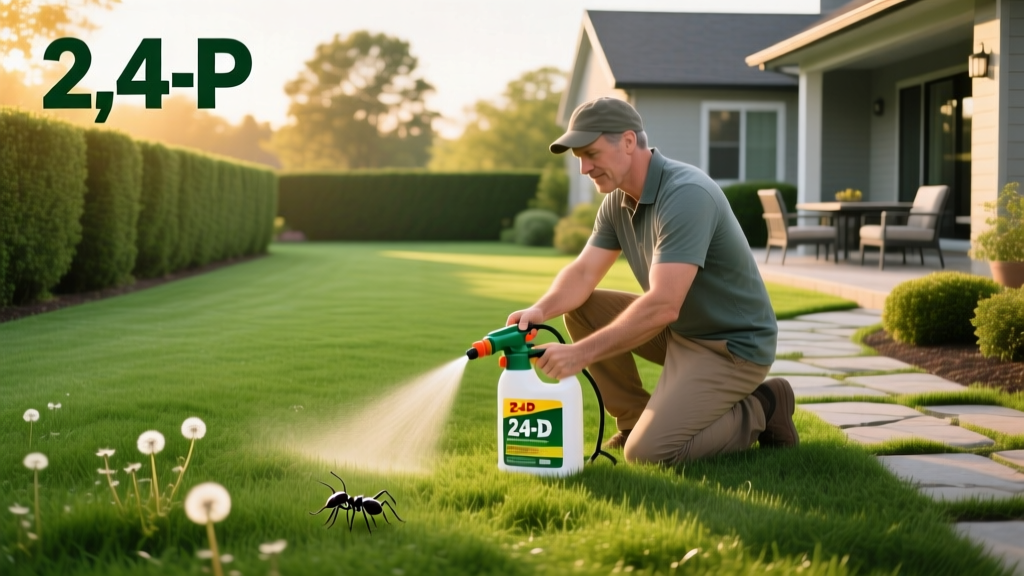
Does 2,4-D Kill Grass? A Safety & Application Guide
The Short Answer: Selective Herbicide Science
If you are asking, 'does 2,4-D kill grass?', the short answer is no—2,4-D (2,4-Dichlorophenoxyacetic acid) will not kill established grass when applied correctly. It is a selective, systemic herbicide specifically engineered to target broadleaf weeds (dicots) while leaving turfgrass (monocots) unharmed. However, the complete answer requires understanding the biological edge cases where 2,4-D can severely damage or even kill your lawn.
2,4-D functions as a synthetic auxin, a class of plant hormones that regulate growth. When absorbed by broadleaf weeds like dandelions, clover, and plantain, the chemical triggers rapid, uncontrolled cellular division and elongation. The weed essentially grows itself to death, exhibiting symptoms like epinasty (downward curling of leaves), stem twisting, and vascular tissue collapse. Grasses, being monocots, possess a different vascular structure and can rapidly metabolize and detoxify the 2,4-D molecule before it causes systemic failure.
According to the Environmental Protection Agency (EPA), 2,4-D has been a cornerstone of turf management for decades due to this precise monocot-dicot selectivity. Yet, selectivity is not an absolute shield; it is a biological tolerance that can be overwhelmed by environmental stress, improper mixing, or specific grass genetics.
Grass Type Tolerance Matrix
Not all turfgrass species process 2,4-D with the same efficiency. While cool-season grasses generally exhibit high tolerance, several warm-season grasses are highly susceptible to injury. Review the matrix below before selecting a 2,4-D product like Trimec Classic or Ortho WeedClear.
| Grass Species | Season Type | 2,4-D Tolerance | Recommended Max Rate (per 1,000 sq ft) |
|---|---|---|---|
| Kentucky Bluegrass | Cool | High | 2.0 to 2.5 fl oz |
| Tall Fescue | Cool | High | 1.5 to 2.0 fl oz |
| Perennial Ryegrass | Cool | High | 1.5 to 2.0 fl oz |
| Bermudagrass | Warm | Moderate | 1.0 to 1.5 fl oz |
| Zoysiagrass | Warm | Moderate | 1.0 to 1.5 fl oz |
| St. Augustinegrass | Warm | Low (Vulnerable) | Avoid or use < 0.5 fl oz |
| Centipedegrass | Warm | Low (Vulnerable) | Avoid or use < 0.5 fl oz |
⚠️ CRITICAL WARNING FOR SOUTHERN LAWNS: If you maintain St. Augustinegrass or Centipedegrass, standard 2,4-D formulations can cause severe stunting, yellowing, and turf death. For these grass types, opt for alternative active ingredients like Atrazine (for St. Augustine) or Sethoxydim, or use specialized products labeled explicitly for sensitive southern turfs, such as those relying on Penoxsulam.
When 2,4-D Will Damage or Kill Your Lawn
Even if you have a highly tolerant grass species like Tall Fescue, 2,4-D can become phytotoxic under specific environmental and mechanical conditions. Understanding these failure modes is critical for preventing accidental lawn destruction.
1. Temperature-Induced Volatilization
Applying 2,4-D when ambient temperatures exceed 85°F (29°C) is the most common cause of turf damage. At high temperatures, the ester formulations of 2,4-D volatilize, turning into a gas that drifts across the lawn. This vapor can cause 'strapping' (parallel leaf veins) and severe burning in turfgrass, while also damaging nearby ornamental shrubs and tomato plants. Always apply 2,4-D in the early morning when temperatures are between 60°F and 80°F.
2. Seedling and Sprig Vulnerability
Newly germinated grass lacks the mature enzymatic pathways required to detoxify synthetic auxins. Applying 2,4-D to a lawn that was seeded or sprigged within the last 6 to 8 weeks will likely kill the young grass. The industry standard rule is to wait until the new turf has been mowed at least three to four times before introducing any broadleaf herbicides.
3. Drought and Environmental Stress
When grass is drought-stressed, its metabolic processes slow down, including its ability to break down herbicides. Furthermore, weeds under drought stress develop thicker, waxy cuticles, prompting homeowners to mistakenly increase the herbicide dose or add excessive surfactants. This combination leads to chemical burn on the turfgrass. If your lawn is showing footprints that remain compressed (a sign of wilting), delay the application until after a deep irrigation cycle.
4. Surfactant Burn
2,4-D requires a non-ionic surfactant (NIS) to penetrate the waxy cuticle of broadleaf weeds. The standard rate is 0.25% to 0.5% v/v (roughly 1/2 to 1 teaspoon per gallon of water). Homeowners frequently over-apply dish soap or cheap surfactants, which strips the protective wax layer off the turfgrass blades, leading to rapid desiccation and necrotic spotting.
Precision Application Framework
To maximize weed control while protecting your turf, follow this exact mixing and application protocol. This framework assumes the use of a standard 2-gallon hand-pump sprayer for spot treatments, which is the most efficient method for residential lawns.
- Calculate the Area: Measure the square footage of the treatment zone. Do not guess. A 10x10 foot area is 100 square feet.
- Measure the Herbicide: For a cool-season lawn using a concentrate like Trimec Classic, the label rate is approximately 1.5 fl oz per 1,000 sq ft. For a 100 sq ft spot treatment, you need just 0.15 fl oz (about 1 teaspoon) of concentrate.
- Add Water First: Fill your sprayer halfway with clean water before adding the chemical. This prevents foaming and ensures proper agitation.
- Incorporate Surfactant: Add 1/2 teaspoon of a dedicated non-ionic surfactant (not household dish detergent, which contains degreasers that harm turf).
- Add Tracking Dye: Include a few drops of turf-marking dye (like Basagran Blue). This provides crucial information gain, allowing you to see exactly where you have sprayed and preventing overlapping passes that cause localized chemical burn.
- Nozzle Selection: Use a flat-fan nozzle (e.g., TeeJet 8002) rather than a cone nozzle. Flat-fan nozzles produce uniform droplet sizes that minimize drift and ensure the chemical lands directly on the weed foliage, not the soil.
'The efficacy of 2,4-D is entirely dependent on foliar absorption. Soil activity is negligible. Therefore, thorough coverage of the weed leaf surface is far more important than drenching the soil around the base of the plant.' — Penn State Extension Turfgrass Management
Spot Spraying vs. Broadcast Applications
While broadcast spraying (using a tow-behind tank) is common for large acreage, spot spraying is vastly superior for residential lawns under 10,000 square feet. Broadcast applications of 2,4-D unnecessarily expose the entire turf canopy to chemical stress and increase the total environmental load. By utilizing a 1-gallon or 2-gallon pump sprayer, you reduce chemical usage by up to 90%, lower your material costs, and virtually eliminate the risk of widespread turf stunting. Reserve broadcast applications only for severe, lawn-wide infestations of white clover or broadleaf plantain.
Frequently Asked Questions
Will 2,4-D kill crabgrass or nutsedge?
No. Crabgrass, nutsedge, and dallisgrass are monocots (grasses and grass-like weeds). Because 2,4-D only targets dicots (broadleaves), it will have zero effect on these weeds. To control crabgrass, you must use a pre-emergent like Prodiamine in early spring, or a post-emergent like Quinclorac. For nutsedge, Sulfentrazone or Halosulfuron-methyl are required.
How long after applying 2,4-D can I overseed my lawn?
2,4-D leaves a residual effect in the soil and on decaying plant matter that can inhibit the germination of new grass seed. You must wait a minimum of 3 to 4 weeks after a 2,4-D application before overseeding with Kentucky Bluegrass, Fescue, or Ryegrass. Always check the specific product label, as some ester formulations require longer waiting periods than amine formulations.
What happens if it rains after I spray?
2,4-D requires time to translocate through the weed's phloem. Most modern formulations become rainfast within 2 to 4 hours. If a heavy downpour occurs within 60 minutes of application, the herbicide will likely wash off the foliage, rendering the treatment ineffective. Do not re-spray immediately; wait 10 to 14 days to assess weed curling before deciding if a follow-up spot treatment is necessary.

