
Lawn Care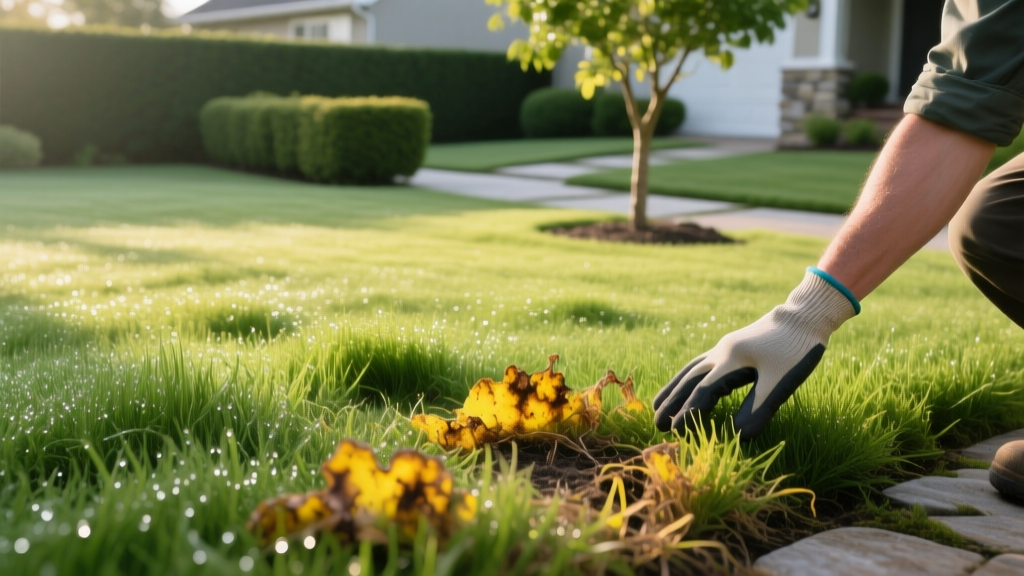
Does Ammonia Kill Grass? The Science of Ammonia Burn and Recovery
The Short Answer: Does Ammonia Kill Grass?
Yes, household ammonia will kill grass if applied directly or spilled in concentrated amounts. While ammonia contains nitrogen—the primary macronutrient required for turfgrass growth—the chemical form and extreme pH of household ammonia products make them highly destructive to lawns. When homeowners ask, "does ammonia kill grass," they are usually dealing with one of two scenarios: an accidental spill of a glass or multi-surface cleaner, or an attempt to use a DIY internet "lawn tonic" recipe. In both cases, the result is severe foliar burn, root desiccation, and localized soil sterilization.
Unlike agricultural fertilizers that slowly release ammonium into the soil ecosystem, household ammonia (ammonium hydroxide) introduces a massive, immediate shock to the turf. The high alkalinity destroys plant cell walls on contact, while the sudden influx of unbuffered salts draws moisture out of the grass roots via osmotic stress. Understanding the exact chemical mechanism is critical for mitigating damage and executing a proper lawn recovery protocol.
CRITICAL SAFETY WARNING: Never attempt to dilute an ammonia spill on your lawn using a cleaning solution that contains bleach (sodium hypochlorite). Mixing ammonia and bleach produces chloramine gas, which is highly toxic to humans, pets, and soil biology. Always use plain water for outdoor remediation.
The Chemistry: Why Nitrogen Becomes a Toxin
To understand why ammonia burns grass, we must differentiate between the types of ammonia used in agriculture versus those found under your kitchen sink. According to the CDC NIOSH Pocket Guide to Chemical Hazards, anhydrous ammonia (used in farming) is a pressurized gas containing 82% nitrogen. It is injected deep into the soil where it reacts with moisture to form stable ammonium. Household ammonia, however, is a completely different compound.
Household Ammonium Hydroxide vs. Turfgrass Tolerance
Household cleaners typically contain a 5% to 10% solution of ammonium hydroxide (NH4OH) suspended in water. This solution has a pH between 11.0 and 11.5. Healthy turfgrass thrives in a soil pH range of 6.0 to 7.0. When ammonium hydroxide hits the soil surface, it causes an immediate and violent pH spike. This alkaline shock denatures the proteins in the grass blades and kills the beneficial mycorrhizal fungi in the topsoil that roots rely on for nutrient uptake.
Furthermore, the nitrogen in household ammonia is entirely water-soluble and instantly available. A standard lawn application requires roughly 1 to 1.5 pounds of nitrogen per 1,000 square feet. A single cup of 10% household ammonia spilled on a one-square-foot area introduces a localized nitrogen concentration that exceeds the turf's cellular capacity to process it, resulting in immediate "fertilizer burn." The UMass Amherst Extension Turf Program notes that rapid-release, high-salt-index nitrogen sources are the primary culprits behind osmotic root desiccation in residential lawns.
Ammonia Concentrations and Turfgrass Impact Matrix
| Ammonia Type | Chemical Formula | Nitrogen Content | pH Level | Impact on Turfgrass |
|---|---|---|---|---|
| Household Cleaner | NH4OH (Ammonium Hydroxide) | ~1% - 3% | 11.0 - 11.5 | Severe foliar burn, root desiccation, soil biology death |
| Agricultural Fertilizer | NH3 (Anhydrous Ammonia) | 82% | N/A (Gas) | Safe if injected properly; lethal if surface-applied |
| Ammonium Sulfate | (NH4)2SO4 | 21% | 5.5 (Acidic) | Excellent fertilizer; can burn if over-applied without water |
| Ammonium Nitrate | NH4NO3 | 34% | 6.0 - 6.5 | Fast-acting green-up; high burn potential if left on blades |
The DIY "Lawn Tonic" Myth Debunked
A persistent internet myth suggests that mixing household ammonia, dish soap, Epsom salts, and beer creates a miracle "lawn tonic" that greens up grass and kills weeds. This is fundamentally bad agronomy. While the ammonia provides nitrogen, the dish soap acts as a surfactant that strips the protective waxy cuticle from grass blades, making them highly susceptible to drought and UV damage. The EPA's Safer Choice program highlights that many household surfactants and degreasers are toxic to aquatic life and soil microbes. Applying this mixture will not kill established weeds, but it will severely stress your desirable turf, leaving it vulnerable to fungal pathogens like brown patch and dollar spot.
Emergency Spill Protocol: How to Save Your Grass
If you accidentally drop a bottle of glass cleaner or spill a bucket of ammonia-based solution on your lawn, you have a narrow window to prevent permanent crown death. The goal is not to neutralize the chemical with another acid (which creates an exothermic heat reaction that will cook the roots), but to physically leach the ammonium hydroxide below the root zone.
Step-by-Step Remediation Flow
- Immediate Dilution (Minutes 0 to 15): Turn on your garden hose and flood the affected area. You need to apply at least 1 inch of water immediately. Mathematically, 1 inch of water equals 0.62 gallons per square foot. For a 4-square-foot spill, you need to apply roughly 2.5 gallons of water as fast as the soil can absorb it without pooling.
- Deep Leaching (Minutes 15 to 60): Once the initial surface concentration is diluted, switch to a slow trickle. The objective is to push the ammonia salts below the 6-to-8-inch root zone. Keep the soil saturated for 45 minutes to allow gravity to pull the alkaline solution deep into the subsoil where it will safely dissipate.
- Surfactant Flushing (If cleaner contained soap): If the spilled product was a multi-surface cleaner containing degreasers, the soil will become hydrophobic (water-repellent). Apply a liquid soil aerator or a specialized yucca extract surfactant to break the surface tension and allow the flushing water to penetrate the soil profile.
- pH Testing (Day 3): Use a digital soil pH meter to test the spill site 72 hours later. If the pH remains above 7.5, apply pelletized elemental sulfur at a rate of 1 pound per 100 square feet to gradually lower the alkalinity back to the optimal 6.5 range.
Long-Term Recovery and Reseeding Strategies
Even with rapid flushing, the grass blades directly exposed to household ammonia will likely turn white or brown and die back. The survival of the lawn depends on the grass species and whether the plant's crown (the growing point at the soil line) survived the osmotic shock.
- Bermudagrass and Zoysia (Warm-Season): These grasses spread via aggressive above-ground stolons and below-ground rhizomes. Even if the surface grass dies, the underground network will usually push new shoots into the damaged area within 14 to 21 days during the active summer growing season.
- Kentucky Bluegrass (Cool-Season): Because it spreads via rhizomes, Kentucky Bluegrass can slowly fill in a spill-damaged patch up to 12 inches in diameter over a single growing season, provided the surrounding soil biology was not completely sterilized.
- Tall Fescue and Perennial Ryegrass (Bunchgrasses): These grasses do not spread laterally. If the crown is killed by the ammonia burn, the patch will remain bare. You must rake out the dead thatch, apply a starter fertilizer, and overseed the specific area with a matching fescue blend during the early fall or spring.
Frequently Asked Questions
Will ammonia kill weeds without harming my grass?
No. Ammonia is non-selective in its burning action. While the high pH will desiccate the leaves of broadleaf weeds, it will simultaneously burn your turfgrass. Furthermore, because ammonia is a nitrogen source, any weed roots that survive the initial pH shock will actually be fertilized, leading to vigorous weed regrowth a few weeks later.
Can dog urine cause the same damage as an ammonia spill?
Dog urine contains urea, which breaks down into ammonia in the soil. The resulting "dog spots" are caused by the exact same mechanism: a localized overdose of rapid-release nitrogen and salts that draws water out of the grass roots. The flushing protocol (0.62 gallons of water per square foot) is identical for both dog urine spots and household ammonia spills.
Is ammonium sulfate safe for my lawn?
Yes, ammonium sulfate (21-0-0) is a widely used, professional-grade agricultural fertilizer. Unlike household ammonia, it is a stable, dry granular salt with an acidic pH (5.5), making it particularly useful for lowering the pH of alkaline soils while providing a quick flush of nitrogen. It must be watered in immediately after application to prevent foliar burn, but it will not sterilize your soil or cause the extreme pH spikes associated with liquid household cleaners.

