
Lawn Care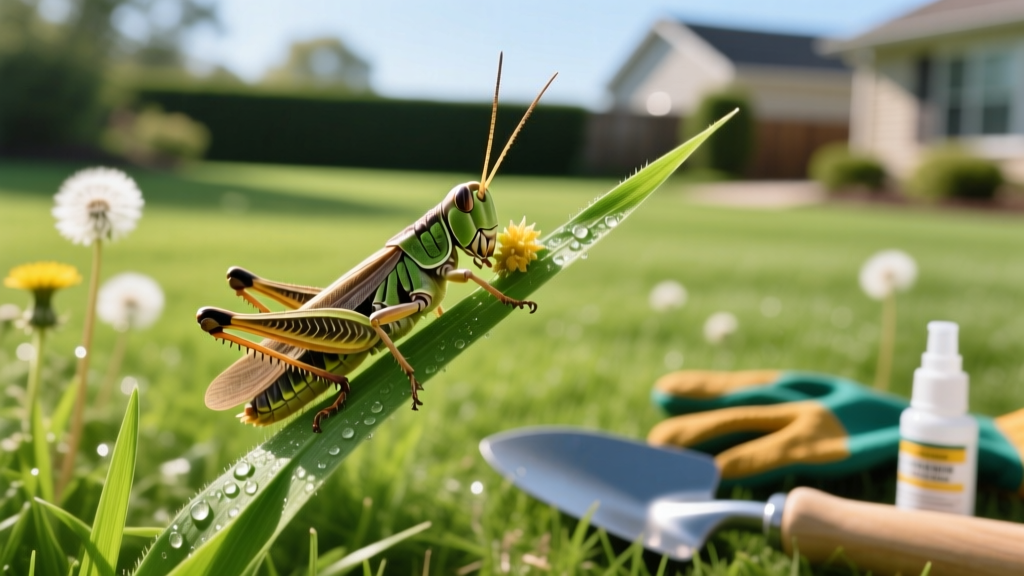
Does a Grasshopper Eat Grass? Lawn Damage & Control Guide
Does a Grasshopper Eat Grass? The Direct Answer
Yes, grasshoppers eat grass, but they are not obligate grass-feeders. While they will readily consume turfgrasses like Kentucky bluegrass, tall fescue, and bermudagrass, they are opportunistic generalists. In a home lawn setting, grasshoppers typically migrate from adjacent dry, weedy areas or unmowed fields rather than establishing permanent breeding populations in heavily maintained, irrigated turf. Understanding their feeding behavior and lifecycle is critical for homeowners trying to distinguish grasshopper damage from more destructive turf-specific pests like chinch bugs or sod webworms.
The Grasshopper Diet: Preferred Turf and Forage
Grasshoppers possess chewing mouthparts designed to shear through fibrous plant tissue. According to the University of Minnesota Extension, grasshoppers consume up to 50% of their body weight in plant material daily. However, their impact on a manicured lawn depends heavily on the surrounding environment.
Expert Insight: Grasshoppers prefer young, tender, rapidly growing plant tissue. If your lawn is drought-stressed and tough, grasshoppers will bypass it in favor of lush broadleaf weeds, garden vegetables, or ornamental flowers located at the lawn's perimeter.
- Highly Susceptible Grasses: Kentucky bluegrass, perennial ryegrass, and young bermudagrass shoots.
- Less Preferred Grasses: Mature, heavily thatched zoysiagrass and drought-hardened tall fescue.
- Preferred Alternatives: Dandelions, clover, plantain, and garden crops (tomatoes, lettuce).
Identifying Grasshopper Damage vs. Other Lawn Pests
Misidentifying the pest leads to wasted money on the wrong pesticides. Grasshopper damage has distinct visual markers that separate it from common turf-destroying insects. The most reliable diagnostic tool is examining the bite pattern and the resulting frass (insect droppings).
| Pest | Bite Pattern | Frass (Droppings) | Active Period |
|---|---|---|---|
| Grasshopper | Ragged, irregular chewing starting from the outer leaf margin inward. | Hard, cylindrical, brown/green pellets (1-2mm). | Mid-day, sunlit hours. |
| Sod Webworm | Notching in the middle of the blade; blades severed at the soil line. | Soft, green, spherical pellets clustered in silk webbing. | Nighttime / early morning. |
| Chinch Bug | No chewing. Grass turns yellow, then brown, starting in hot, sunny patches. | Microscopic; not visible to the naked eye. | Mid-day, visible at the soil-thatch interface. |
Grasshopper Lifecycle and Peak Threat Windows
Effective control requires timing your intervention to the grasshopper's developmental stage. The Colorado State University Extension notes that grasshoppers overwinter as eggs in the soil, typically laid in late summer or early fall in undisturbed, weedy areas like fence lines, ditches, and unmowed borders.
The Nymph Stage: Your Window of Opportunity
Eggs hatch in mid-to-late spring (May to June, depending on soil temperatures). The emerging nymphs look like miniature, wingless adults. This 2nd and 3rd instar stage is the most critical time for intervention. Nymphs are highly susceptible to biological controls and cannot fly, meaning they are confined to their hatching sites (usually the lawn's perimeter). By late summer, they develop wings and can migrate en masse into the center of your lawn, making control exponentially more difficult.
Actionable Control Strategies for Home Lawns
Do not treat the entire lawn indiscriminately. Grasshoppers are edge-dwellers. Focus your efforts on the perimeter and adjacent weedy zones.
Biological Controls: Nosema locustae
For environmentally sensitive areas or early-season nymph control, Nosema locustae is the gold standard. Sold under brand names like Nolo Bait or Semaspore, this is a naturally occurring microsporidian pathogen that specifically infects grasshoppers and crickets.
- Application Rate: 1 pound per acre (approximately 0.5 ounces per 1,000 square feet).
- Carrier: The spores are coated onto wheat bran flakes.
- Timing: Apply in early spring when 2nd and 3rd instar nymphs are active. It takes 3 to 6 weeks for the pathogen to kill the host, but infected grasshoppers stop feeding almost immediately and become lethargic, reducing lawn damage.
- Limitation: Ineffective against adult grasshoppers and degrades rapidly in direct UV sunlight or heavy rain. Apply in the late afternoon and avoid irrigating for 48 hours.
Chemical Interventions: Fast-Acting Synthetics
If adult grasshoppers are actively migrating into your turf and causing severe defoliation, biological baits are too slow. You must use a contact or stomach-poison insecticide.
Safety & Environmental Warning: Broad-spectrum pyrethroids are highly toxic to bees and aquatic life. Never apply liquid sprays to blooming clover or dandelions in your lawn. Mow the lawn to remove flower heads before treating.
- Bifenthrin (e.g., Talstar P): Apply at a rate of 0.5 to 1.0 fluid ounces per 1,000 square feet. Provides excellent residual control (up to 30 days) on foliage.
- Lambda-cyhalothrin (e.g., Scimitar): Highly effective for rapid knockdown of flying adults. Apply at 0.2 to 0.3 fluid ounces per 1,000 square feet.
- Application Protocol: Use a hose-end sprayer for liquid formulations to ensure thorough coverage of the grass blades where grasshoppers rest and feed. Do not mow for 48 hours post-application to allow the chemical to bind to the leaf tissue.
Cultural & Habitat Modifications
Grasshoppers require tall, dry vegetation to lay their egg pods. By altering the microhabitat, you break their reproductive cycle.
- Mow Perimeters: Keep a 10-foot swath around your property mowed to a height of 2.5 inches. This eliminates the tall grasses they prefer for egg-laying.
- Eliminate Broadleaf Weeds: Use a selective herbicide (like a 2,4-D and Dicamba mix) to clear out dandelions and thistles in fence lines, removing their preferred food source.
- Till Garden Borders: If grasshoppers are hatching from an adjacent vegetable garden, shallow tilling (2-3 inches deep) in late fall or early spring exposes the egg pods to freezing temperatures and predatory birds.
Economic Thresholds: When to Treat
Seeing a single grasshopper does not warrant a chemical application. Turfgrasses can easily compensate for minor defoliation through rapid lateral growth. Use the 'square yard sweep' method to determine if treatment is economically justified.
The 10-Nymph Threshold
Count the number of grasshopper nymphs in a 3x3 foot area (1 square yard) at the lawn's edge.
If you count fewer than 10 nymphs, hold off on treatment.
If you count 10 to 20+ nymphs per square yard, initiate biological or chemical control immediately.
Frequently Asked Questions
Do grasshoppers lay eggs in my lawn?
Rarely in well-maintained turf. Grasshoppers prefer to lay their egg pods in undisturbed, dry, compacted soil surrounded by tall weeds. You will typically find their eggs in driveway cracks, unmowed ditch banks, and dry garden beds, not in the center of an irrigated, frequently mowed lawn.
Will watering my lawn drown grasshopper eggs?
No. Grasshopper egg pods are coated in a frothy, waterproof secretion that protects them from moisture and soil fungi. Heavy irrigation will not drown the eggs, though it may encourage fungal pathogens like Beauveria bassiana to attack the hatching nymphs if the thatch layer remains consistently damp.
Are there grasshopper-resistant grass types?
No turfgrass is completely immune to a starving grasshopper, but mature, high-silica grasses like Zoysia and heavily thatched St. Augustine are highly unpalatable. Grasshoppers will actively avoid these lawns if adjacent broadleaf weeds or softer bluegrasses are available.

