
Lawn Care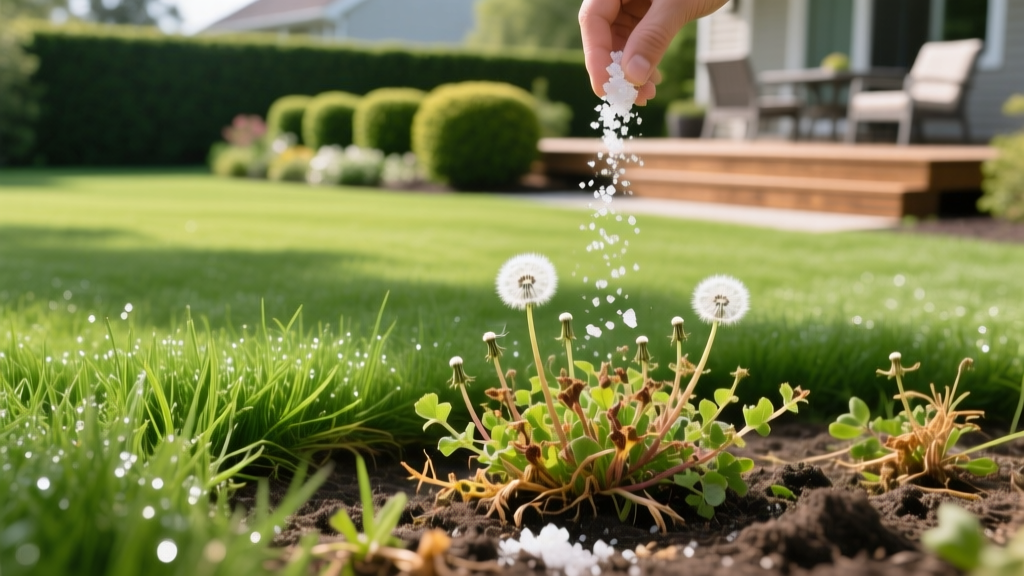
Does Salt Kill Weeds? The Science of Sodium Herbicides
The Short Answer: Does Salt Kill Weeds?
Yes, salt (sodium chloride) kills weeds by inducing severe osmotic stress and ion toxicity. When applied to plant foliage or soil, salt draws moisture out of the plant cells, causing rapid dehydration and tissue death. However, while it is an effective non-selective desiccant, using salt as a primary herbicide in lawns or garden beds is a catastrophic mistake that causes long-term soil sterilization.
⚠️ CRITICAL WARNING: Sodium does not break down in the environment. Unlike organic herbicides that degrade over time, salt accumulates in the soil profile. A single heavy application can render soil completely barren for years, preventing any future grass or plant growth.
How Sodium Chloride Destroys Plant Tissue
To understand why salt is so lethal to vegetation, you must look at the cellular mechanics of plasmolysis and soil deflocculation. When a high concentration of NaCl is introduced to a weed, two distinct processes occur simultaneously:
1. The Osmotic Effect (Physiological Drought)
Plant roots absorb water through osmosis, moving from an area of low solute concentration (the soil) to high solute concentration (the root cells). When you saturate the soil with salt, you reverse this gradient. The soil now has a higher solute concentration than the plant's roots. Instead of absorbing water, the weed's roots actually lose water to the surrounding soil, causing rapid wilting and cellular collapse, even if the soil is physically wet.
2. Ion Toxicity and Soil Structure Collapse
Sodium ions (Na+) are highly destructive to soil architecture. In healthy soil, calcium (Ca2+) and magnesium (Mg2+) bind soil particles together into aggregates, creating pore spaces for air and water. Sodium displaces these essential cations on the soil's Cation Exchange Capacity (CEC) sites. According to Colorado State University Extension, this sodium saturation causes soil particles to repel one another—a process called deflocculation. The soil structure collapses, becoming hard, impermeable, and entirely devoid of oxygen.
Where You CAN Safely Use Salt for Weed Control
Because salt permanently alters soil biology and structure, its use must be strictly confined to areas where you never intend to grow plants again. It is highly effective and incredibly cheap for hardscape maintenance.
- Driveway Cracks: Weeds like dandelions and crabgrass exploit expansion joints and cracks in concrete. Salt prevents regrowth and deters ants.
- Gravel Paths and Patios: Applying rock salt between pavers or in gravel walkways keeps joints clear of vegetation without the risk of chemical runoff into garden beds.
- Fence Lines and Property Borders: Areas abutting chain-link fences or retaining walls where string trimmers cannot easily reach.
The Driveway Crack Brine Recipe
Do not just dump dry salt, as it will blow away or wash into storm drains. Create a targeted brine solution for hardscape application:
- Mix 1 cup of coarse rock salt (sodium chloride) into 2 cups of boiling water.
- Add 1 tablespoon of liquid dish soap (this acts as a surfactant, breaking the water's surface tension so the brine coats the weed's waxy cuticle).
- Stir until fully dissolved and apply directly to the weed crown using a targeted pump sprayer or a squeeze bottle.
Where You Should NEVER Use Salt
Never use sodium chloride, Epsom salts (magnesium sulfate), or water-softener salt in the following areas:
- Turfgrass Lawns: It will kill your Bermuda, Fescue, or Kentucky Bluegrass just as fast as the weeds.
- Vegetable Gardens and Flower Beds: The residual sodium will poison future crops, particularly salt-sensitive plants like beans, carrots, and strawberries.
- Near Tree Drip Lines: Tree roots extend far beyond the canopy. Salt applied to surface weeds near a tree will be absorbed by the fine feeder roots, causing fatal sodium toxicity.
Comparison: Salt vs. Commercial Herbicides
When deciding how to manage weeds, it is vital to weigh the immediate cost savings of salt against the long-term ecological and financial damage. The Environmental Protection Agency (EPA) recommends targeted, environmentally responsible weed management over permanent soil sterilants.
| Treatment | Active Ingredient | Cost per 1,000 sq ft | Soil Impact | Best Use Case |
|---|---|---|---|---|
| Rock Salt | Sodium Chloride (NaCl) | $0.15 | Permanent sterilization; destroys soil structure. | Driveway cracks, gravel paths. |
| Glyphosate | Isopropylamine salt of glyphosate | $2.50 - $4.00 | Binds to soil and degrades via microbes in 14-30 days. | Spot treatment of deep-rooted perennial weeds. |
| Horticultural Vinegar | Acetic Acid (20% - 30%) | $6.00 - $9.00 | Temporarily lowers soil pH; rapidly buffered by soil. | Young annual weeds on warm, sunny days. |
| Iron HEDTA | FeHEDTA (Chelated Iron) | $12.00 - $18.00 | Adds beneficial iron to soil; safe for turfgrass. | Broadleaf weeds (dandelions) in active lawns. |
How to Reverse Salt Damage in Soil
If salt has been previously applied to your lawn or garden beds, or if you are dealing with winter road salt runoff, the soil must be chemically remediated before replanting. You cannot simply flush sodium away with water; it is tightly bound to soil clay particles. You must use a chemical displacement process.
Step-by-Step Gypsum Remediation Protocol
Gypsum (calcium sulfate dihydrate) is the industry standard for reclaiming sodic soils. The calcium in gypsum swaps places with the sodium on the soil's cation exchange sites, freeing the sodium so it can be leached away.
- Test Soil Electrical Conductivity (EC): Use a soil probe and an EC meter. An EC reading above 4.0 dS/m indicates severe salinity that will stunt plant growth.
- Apply Pelletized Gypsum: Broadcast 40 to 50 pounds of pelletized gypsum per 1,000 square feet of affected area using a rotary spreader. Do not use powdered gypsum, as it will blow away and create a dust hazard.
- Core Aerate: Run a gas-powered core aerator over the area, pulling 3-inch soil plugs. This breaks up the deflocculated, compacted surface crust and allows the gypsum to reach the root zone.
- Heavy Leaching: Water the area deeply. You must apply roughly 6 inches of water over a period of several days to physically push the displaced sodium ions below the 12-inch root zone. Ensure your yard has adequate drainage, or the sodium will simply pool and re-enter the topsoil.
- Re-test and Amend: Wait 30 days and re-test the soil. If EC levels remain high, apply a second round of gypsum at 20 lbs per 1,000 sq ft.
Frequently Asked Questions
Will Epsom salt kill weeds?
Epsom salt is magnesium sulfate, not sodium chloride. While a highly concentrated foliar spray of Epsom salt can desiccate small, young weeds, it is largely ineffective against mature weeds with deep taproots. Furthermore, excessive magnesium can cause nutrient lockout, preventing plants from absorbing calcium and potassium.
Does salt kill weeds permanently?
In hardscape areas like concrete cracks, salt provides near-permanent control because there is no soil biology to break it down, and it prevents new seeds from germinating. In soil, it will sterilize the area for months or years until the sodium is physically leached out or chemically displaced by calcium.
Can I use water softener salt on my driveway?
Water softener salt is typically 99% pure sodium chloride and will kill weeds effectively. However, it often contains anti-caking agents or rust removers that can stain concrete or asphalt. Stick to inexpensive, coarse solar rock salt (ice melt grade without added colorants) for the best results on hardscapes.

