
Lawn Care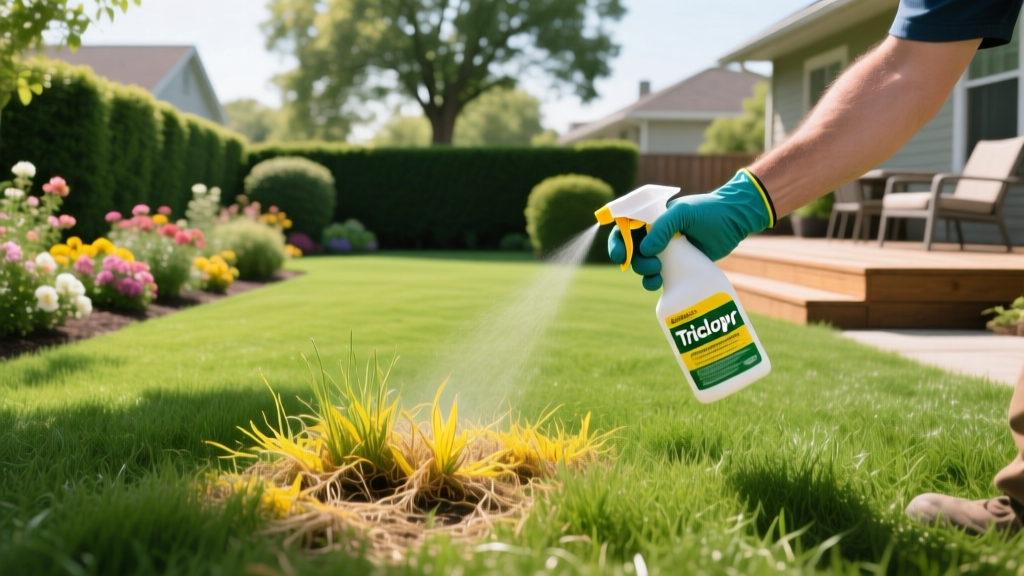
Does Triclopyr Kill Grass? Selective Herbicide Explained
The Short Answer: Does Triclopyr Kill Grass?
No, triclopyr does not kill most established turfgrasses when applied at labeled rates. It is a selective, systemic herbicide specifically engineered to target broadleaf weeds (dicots) while leaving grasses (monocots) largely unharmed. However, "selective" does not mean "invincible." Triclopyr can severely stunt, yellow, or even kill certain sensitive grass species—particularly St. Augustinegrass and centipedegrass—or damage any turf if misapplied during high-temperature volatility windows.
Understanding the physiological boundaries of triclopyr is critical for homeowners and lawn care professionals managing stubborn broadleaf weeds like ground ivy (creeping Charlie), wild violet, and dandelion. According to the Environmental Protection Agency (EPA), triclopyr mimics natural plant growth hormones (auxins), causing uncontrolled, lethal cellular expansion in susceptible broadleaf plants.
The Monocot vs. Dicot Divide: Grasses are monocots; their vascular bundles are scattered, and they possess a natural ability to rapidly metabolize and detoxify synthetic auxins like triclopyr. Broadleaf weeds are dicots with ringed vascular systems that trap the herbicide, leading to fatal overgrowth and tissue necrosis.
Turfgrass Tolerance Matrix: Know Your Grass Type
Before mixing triclopyr—whether you are using a professional concentrate like Turflon Ester Ultra or a pre-mixed prosumer blend like Battleship III—you must verify your grass species. Tolerance varies drastically across warm-season and cool-season turfgrasses.
| Grass Species | Season | Triclopyr Tolerance | Risk Factors & Notes |
|---|---|---|---|
| Kentucky Bluegrass | Cool | High | Excellent safety profile. May show minor, temporary chlorosis in extreme heat. |
| Tall Fescue | Cool | High | Very tolerant. Standard rates (0.75–1.5 oz/1,000 sq ft) are highly effective against weeds without turf damage. |
| Perennial Ryegrass | Cool | Moderate | Prone to temporary stunting and yellowing. Avoid applications when temperatures exceed 85°F. |
| Bermudagrass | Warm | High | Highly tolerant. Often used in combination with other herbicides for tough broadleaf control. |
| Zoysiagrass | Warm | Moderate | Generally safe, but high rates can cause tip burn. Use lower label rates during spring green-up. |
| St. Augustinegrass | Warm | Low / Sensitive | Warning: Highly susceptible to chlorosis and necrosis. Avoid triclopyr; use atrazine or penoxsulam instead. |
| Centipedegrass | Warm | Low / Sensitive | Warning: Will cause severe yellowing and potential turf death. Do not apply to centipedegrass. |
When Triclopyr Will Damage or Kill Your Lawn
Even on highly tolerant grasses like Kentucky bluegrass or Bermudagrass, triclopyr can cause severe phytotoxicity (plant poisoning) under specific environmental and operational conditions. The National Pesticide Information Center (NPIC) notes that herbicide volatility and surfactant interactions are the primary culprits for non-target turf damage.
1. Temperature Inversions and Ester Volatility
Triclopyr is available in two primary chemical formulations: amine and ester. The ester formulation (e.g., Triclopyr Ester) is highly volatile. If applied when ambient temperatures exceed 85°F (29°C), the chemical can vaporize, drift through the air, and settle back onto your grass and nearby desirable broadleaf plants (like tomato gardens or ornamental shrubs), causing severe twisting, cupping, and tissue death.
2. Surfactant and Adjuvant Burn
Triclopyr requires a surfactant to penetrate the waxy cuticle of tough weeds like wild violet. However, adding a heavy Crop Oil Concentrate (COC) or Methylated Seed Oil (MSO) during high heat essentially "fries" the grass blade. The oil strips the turf's protective waxy layer, leading to rapid dehydration and chemical burn. Always use a Non-Ionic Surfactant (NIS) at a rate of 0.25% v/v (roughly 1 teaspoon per gallon) for lawn applications to minimize turf stress.
3. Application During Spring Green-Up
Applying systemic herbicides while warm-season grasses are breaking dormancy (spring green-up) forces the grass to metabolize the chemical while its root system is still weak and relying on stored carbohydrates. This can result in severe stunting that delays canopy closure by up to four weeks.
Formulation Decision Framework: Amine vs. Ester
Choosing the correct triclopyr formulation is the difference between a pristine lawn and a damaged one. Use this framework to select your product:
- Triclopyr Amine (Water-Soluble): Best for warm-weather applications (up to 90°F). It has low volatility, meaning it will not vaporize and drift. However, it penetrates waxy leaves slower. Use for: Dandelions, clover, and plantain in mid-summer.
- Triclopyr Ester (Lipid-Soluble): Best for cool-weather applications (below 80°F). It rapidly penetrates thick, waxy cuticles and works exceptionally well on tough, hard-to-kill weeds. Use for: Wild violet, ground ivy, and black medic in early spring or late fall.
Step-by-Step Application for Maximum Grass Safety
To ensure triclopyr selectively kills weeds without harming your grass, follow these calibrated application steps:
- Calibrate Your Sprayer: Mark a 1,000 sq ft area of your driveway, fill your sprayer with water, and spray the area at your normal walking pace. Measure how much water it took. If you used 1.5 gallons to cover 1,000 sq ft, your carrier volume is 1.5 gallons/1,000 sq ft.
- Mix the Correct Rate: For a standard 38% triclopyr ester concentrate (like Turflon Ester Ultra), the safe lawn rate is typically 0.75 to 1.0 fl oz per 1,000 sq ft. Add this exact amount to your calibrated water volume. Do not exceed 1.5 fl oz/1,000 sq ft, as higher rates offer no better weed control but exponentially increase grass injury.
- Add the Surfactant: Add 1 teaspoon of Non-Ionic Surfactant per gallon of mixed solution. Agitate the tank thoroughly.
- Spray to Wet, Not Runoff: Apply a fine mist over the broadleaf weeds until the leaves are visibly wet but not dripping. Dripping causes the chemical to pool in the soil, increasing the risk of root uptake by shallow-rooted turfgrasses.
- Observe the Rainfast Window: Triclopyr amine requires about 2 hours to become rainfast; ester formulations require roughly 1 hour. Do not irrigate or apply if rain is forecasted within this window.
Expert Troubleshooting: What If My Grass Turns Yellow?
If your grass exhibits chlorosis (yellowing) or slight leaf curling 3 to 7 days after a triclopyr application, do not panic. This is rarely a sign that the grass is dying. Instead, it is usually a temporary physiological stress response known as auxin shock or mild surfactant burn.
Recovery Protocol: Most tolerant cool-season and warm-season grasses will metabolize the herbicide and push out new, green growth from the crown within 14 to 21 days. To accelerate recovery, apply a light dose of fast-release nitrogen (0.5 lbs N per 1,000 sq ft) and ensure the lawn receives 1 inch of water per week. Avoid applying additional stressors like aeration or heavy foot traffic during this recovery window.
For comprehensive lawn weed management strategies and alternative active ingredients safe for sensitive grasses, consult your local university extension office, such as the University of Minnesota Extension's Lawn Care guidelines, which provide region-specific herbicide recommendations.
By respecting the physiological differences between monocots and dicots, selecting the proper amine or ester formulation based on ambient temperatures, and strictly adhering to calibrated application rates, you can leverage triclopyr to eradicate the most stubborn broadleaf weeds while keeping your turfgrass thick, green, and unharmed.

