
Lawn Care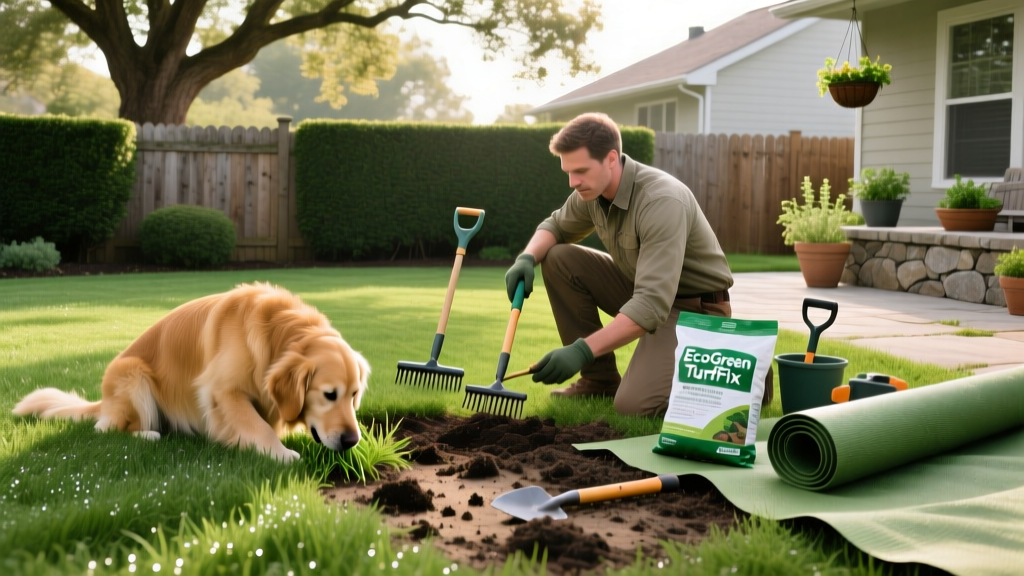
Dog Chewing Grass? Step-by-Step Lawn Repair & Care Guide
The Root Causes: Why Dogs Chew Grass
Before initiating lawn repair, understanding the behavioral driver is critical for long-term success. According to the American Kennel Club, less than 25% of dogs vomit after eating grass, debunking the myth that it is strictly an emetic behavior. Dogs typically chew grass for three reasons: dietary fiber deficiency, behavioral boredom, or simple palate preference. However, the physical act of a dog chewing grass causes severe mechanical damage to your turf. Unlike urine spots which cause chemical nitrogen burns, chewing physically rips the grass tillers and the vital crown tissue out of the soil matrix, requiring immediate mechanical intervention.
Diagnostic Callout: If the grass blades are sheared cleanly, you have a mowing issue. If the blades are jagged, pulled upward, and the soil surface is disturbed with visible root exposure, your dog is actively chewing and uprooting the turf crown.
Step 1: Assessing and Triaging Lawn Damage
Not all chewing damage requires a full lawn renovation. Use the triage matrix below to determine the correct maintenance protocol based on the severity of the crown damage.
| Damage Level | Visual Symptoms | Required Action Protocol |
|---|---|---|
| Mild (Blade Tearing) | Top 30% of blades chewed; crown intact in soil. | Apply liquid kelp fertilizer; raise mowing height to 3.5 inches. |
| Moderate (Crown Exposure) | Grass pulled to soil line; yellowing crowns visible. | Aerate, top-dress with 1/4 inch compost, and spot-seed. |
| Severe (Uprooting) | Bare dirt patches; root systems entirely removed. | Full soil neutralization, tilling, and RTF overseeding. |
Step 2: Soil Neutralization and Crown Repair
Dog saliva contains amylase and slight enzymatic compounds, but the primary issue with dog chewing grass is soil compaction and structural degradation from repetitive pawing and pulling. To repair the soil bed:
- Clear Debris: Use a steel-tine thatching rake to aggressively remove dead, chewed organic matter and loosen the top 1 inch of compacted soil.
- Apply Gypsum: Broadcast Pennington Fast Acting Gypsum (calcium sulfate) at a rate of 40 lbs per 1,000 square feet. Gypsum flocculates clay particles, improving drainage and neutralizing residual sodium from dog saliva and urine without altering the soil pH.
- Top-Dress: Apply a 1/4-inch layer of screened compost. This introduces beneficial microbes necessary to break down residual organic waste and provides a sterile seedbed for new grass.
Step 3: Overseeding with Dog-Resistant Cultivars
Standard Kentucky Bluegrass lacks the tensile strength to withstand repetitive canine chewing. For high-traffic, dog-heavy lawns, transition to Rhizomatous Tall Fescue (RTF). RTF develops deep, aggressive root systems (up to 4 feet deep) and spreads via underground rhizomes, allowing it to self-repair when the surface crown is damaged. The Penn State Extension highly recommends tall fescue blends for their superior wear tolerance and drought resistance.
Recommended Seed Products for 2026
- Jonathan Green Black Beauty Ultra: A premium RTF blend priced around $55 for 10 lbs. Excellent for cool-season and transition zones.
- Scotts EZ Seed Dog Spot Repair: Priced at $22 for 20 lbs. Contains a proprietary mulch and neutralizer matrix, ideal for small, localized chewing patches.
Seeding Procedure: Broadcast seed at 8-10 lbs per 1,000 sq ft. Lightly drag a piece of chain-link fence over the area to ensure seed-to-soil contact. Water twice daily for 14 days to maintain constant surface moisture until germination is complete.
Step 4: Implementing Safe Botanical and Chemical Deterrents
Repairing the lawn is futile if the dog continues to chew the new shoots. Implement a dual-layered deterrent strategy:
Warning: Never use cocoa mulch as a border deterrent. Cocoa bean hulls contain theobromine, which is highly toxic to dogs and can cause fatal cardiac arrhythmias if ingested.
Chemical Deterrents: Apply Grannick's Bitter Apple Spray (approx. $14 for 16 oz) directly to the perimeter of the repaired patches. The bitterant targets the dog's taste receptors without harming the grass. Reapply every 48 hours or immediately after irrigation.
Botanical Barriers: Plant Coleus canina (commonly known as the Scaredy Cat plant) along the borders of your lawn. When brushed against, the leaves release a pungent odor that dogs find highly offensive, creating a natural, living fence that protects your turf.
Ongoing Lawn Maintenance Protocol for Dog Owners
Maintaining a lawn where dogs actively chew and play requires a modified maintenance schedule to ensure rapid recovery from mechanical stress.
'A lawn subjected to canine traffic must be mowed at a minimum height of 3.5 inches. This hides minor chewing damage, shades the soil to prevent weed germination in disturbed patches, and forces the grass to develop deeper, more resilient root systems.'
- Core Aeration: Perform liquid aeration using Nature's Lawn & Garden Aerify Plus every 6 weeks during the growing season to combat severe soil compaction caused by dog traffic.
- Irrigation: Water deeply and infrequently (1 inch per week). Shallow watering encourages surface roots, which are easily torn out when a dog chews the grass.
- Nitrogen Management: Avoid high-nitrogen synthetic fertilizers (like 46-0-0 Urea), which produce rapid, weak, succulent growth that dogs find highly palatable. Use slow-release organic nitrogen sources like Milorganite (5-4-0) to promote steady, tough blade development.
Frequently Asked Questions
Will dog chewing grass kill the entire lawn?
No, but it creates localized bare spots. The primary risk is not the death of the entire lawn, but the introduction of invasive weeds like crabgrass and spurge into the bare soil left behind by uprooted grass crowns.
Is it safe to use grass seed treated with fungicides around dogs?
Most commercial grass seeds are treated with Apron (metalaxyl) or Captan to prevent seed rot. These are generally safe once incorporated into the soil and watered in. However, to eliminate all risk, purchase 'untreated' or 'organic-certified' seed varieties from specialty turf suppliers.
How long should I keep my dog off newly seeded grass?
Restrict all canine access for a minimum of 28 days. Tall fescue takes 10-14 days to germinate, but the root system requires an additional two weeks to anchor firmly into the soil bed. Allowing a dog to walk on or chew 14-day-old grass will easily uproot the immature seedlings.

