
Lawn Care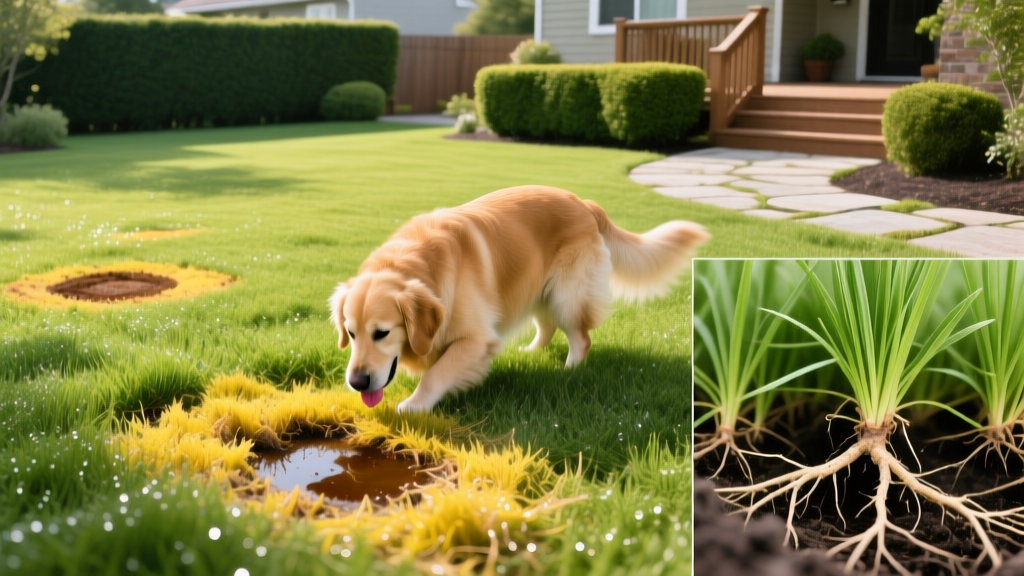
Dog Kills Grass With Pee? Step-by-Step Lawn Repair Guide
The Biochemical Reality: Nitrogen Overload, Not Acidity
The most pervasive myth in lawn care is that dog urine kills grass because it is too acidic. This is scientifically false. According to the University of California Statewide IPM Program, the pH of dog urine typically ranges from 6.0 to 6.5, which is slightly acidic but well within the tolerable range for most turfgrasses. The actual culprit is a massive, localized overdose of nitrogen and soluble salts.
⚠ Warning: Stop Using pH-Altering Supplements
Feeding your dog tomato juice, vitamin C, or DL-Methionine to "acidify" or "alkalize" their urine will not prevent lawn burn. Worse, altering your dog's urinary pH can trigger struvite or calcium oxalate bladder stones. Always consult a veterinarian before changing your dog's diet.
Dog urine contains high concentrations of urea (a nitrogen compound). While nitrogen is the primary ingredient in lawn fertilizers, a single urination event deposits the equivalent of a heavy fertilizer application into a 3-inch radius. This causes a localized nitrogen toxicity, burning the grass blades and roots. The classic symptom—a dead yellow center surrounded by a dark green ring—occurs because the outer edges receive a smaller, beneficial dose of nitrogen, while the center receives a lethal dose.
Data Highlight: The Nitrogen Spike
A single medium-sized dog deposits approximately 15 to 30 grams of nitrogen per urination event.
This is equivalent to applying 300+ lbs of synthetic nitrogen fertilizer per 1,000 square feet, instantly overwhelming the turf's cellular osmotic capacity.
Step-by-Step Immediate Mitigation Protocol (The 8-Hour Window)
Once the urine dries and the salts bind to the soil particles, the damage is largely done. You must act within the first 8 hours to prevent the nitrogen from burning the crown of the grass plant.
Step 1: The 3-Minute Dilution Rule
If you catch your dog in the act, immediately flood the area with water. You need to apply 1.5 to 2 gallons of water directly to the spot. This dilutes the urea concentration below the phytotoxic threshold and pushes the soluble salts down through the soil profile, past the root zone. Using a dedicated "potty watering can" kept near your back door ensures you can react within seconds.
Step 2: Soil Salt Flushing with Gypsum
Water alone does not remove the sodium salts left behind by the urine. Sodium destroys soil structure, causing compaction and preventing water infiltration. To displace the sodium, you must introduce calcium.
- Identify the damage zone: Locate the brown spots and the slightly darker green outer ring.
- Core aerate the spot: Use a manual step-on core aerator to pull 3 to 4 plugs from the affected area. This breaks up the compacted, salt-heavy soil crust.
- Apply Calcium Sulfate (Gypsum): Apply pelletized gypsum at a rate of 50 lbs per 1,000 square feet (roughly a handful per individual urine spot). The calcium in the gypsum will bind to the sodium through cation exchange, allowing the sodium to be flushed out.
- Water deeply: Water the gypsum into the soil with another 1 gallon of water to initiate the chemical exchange.
Step-by-Step Turfgrass Recovery and Overseeding
If the grass crown is entirely necrotic (brown and brittle at the soil line), dilution and gypsum will not bring it back. You must physically replace the turf. Follow this 48-hour recovery protocol to re-establish the lawn.
Phase 1: Soil Preparation (Day 1)
Rake out the dead grass and thatch using a stiff metal bow rake. You need to expose bare soil. If the soil feels hard and crusted, the sodium levels are still too high. Apply a second handful of gypsum, scratch it into the top 1 inch of soil with a hand cultivator, and water heavily. Let the soil dry until it is workable but moist (like a wrung-out sponge).
Phase 2: Selecting Urine-Resistant Cultivars (Day 2)
Not all grass handles nitrogen spikes equally. When repairing spots, you must match your existing lawn, but if you are considering a full renovation, choose urine-tolerant species. According to turfgrass research compiled by the Humane Society and university extension programs, fescues and ryegrasses are significantly more resilient than bluegrasses.
| Grass Species | Urine Tolerance | Recovery Rate | Best Application |
|---|---|---|---|
| Tall Fescue (RTF) | High | Fast (Deep Roots) | Cool-season / Transition zones |
| Perennial Ryegrass | High | Very Fast (Germinates in 5 days) | Quick patch repair / Overseeding |
| Kentucky Bluegrass | Low | Slow (Rhizome spread) | Avoid in high-traffic dog yards |
| Bermudagrass | Low to Moderate | Moderate (Stolon spread) | Warm-season; requires heavy flushing |
Phase 3: Seeding and Topdressing
Broadcast the seed heavily over the bare soil (approx. 10-12 seeds per square inch). Lightly rake the seed so it makes direct soil contact. Topdress the area with a 1/4-inch layer of peat moss or fine compost to retain moisture. Water the spot lightly 3 times a day for 10 minutes to keep the seedbed consistently damp until germination occurs.
Long-Term Behavioral and Environmental Management
Repairing the lawn is a reactive measure. True lawn maintenance with dogs requires proactive environmental design and behavioral conditioning.
Establishing a Designated Potty Zone
The most effective way to save your turfgrass is to train your dog to eliminate in a specific, non-turf area.
- Location: Choose a shaded, out-of-the-way corner of your yard.
- Substrate: Dogs prefer specific textures. Use washed pea gravel, cedar mulch, or artificial turf designed for pets. Avoid cocoa bean mulch, which is highly toxic to dogs if ingested.
- Attraction: Bury a few pieces of your dog's previous feces or pour a cup of their urine into the new zone to establish the scent marker. Lead them to this spot on a leash immediately after meals and upon waking.
Dietary Hydration Over pH Manipulation
Instead of trying to change the chemical pH of your dog's urine, focus on diluting it from the inside out. Increasing your dog's water intake naturally lowers the concentration of urea and salts in their bladder. Transitioning your dog from dry kibble to a high-moisture raw diet or adding warm water/bone broth to their meals will result in larger, more dilute urination events that are significantly less damaging to your lawn.
"Turfgrass is remarkably resilient, but it cannot survive repeated chemical burns. The secret to a pristine lawn with dogs isn't a magic fertilizer; it's a combination of immediate water dilution, sodium displacement with gypsum, and strategic landscape zoning."
— Turfgrass Management Best Practices
Summary Checklist for the Dog-Friendly Lawn
- ☑ Keep a 2-gallon watering can near the door for instant dilution.
- ☑ Stockpile pelletized gypsum for monthly sodium flushing (50 lbs/1,000 sq ft).
- ☑ Overseed damaged patches with Tall Fescue or Perennial Ryegrass.
- ☑ Build a dedicated pea-gravel or cedar-mulch potty zone.
- ☑ Increase dietary moisture to naturally dilute urea concentration.
By shifting your maintenance strategy from reactive frustration to proactive soil chemistry management, you can maintain a dense, healthy lawn while accommodating your dog's natural behaviors. Consistency in the 8-hour dilution window and proper cultivar selection are the ultimate keys to long-term turf survival.

