
Lawn Care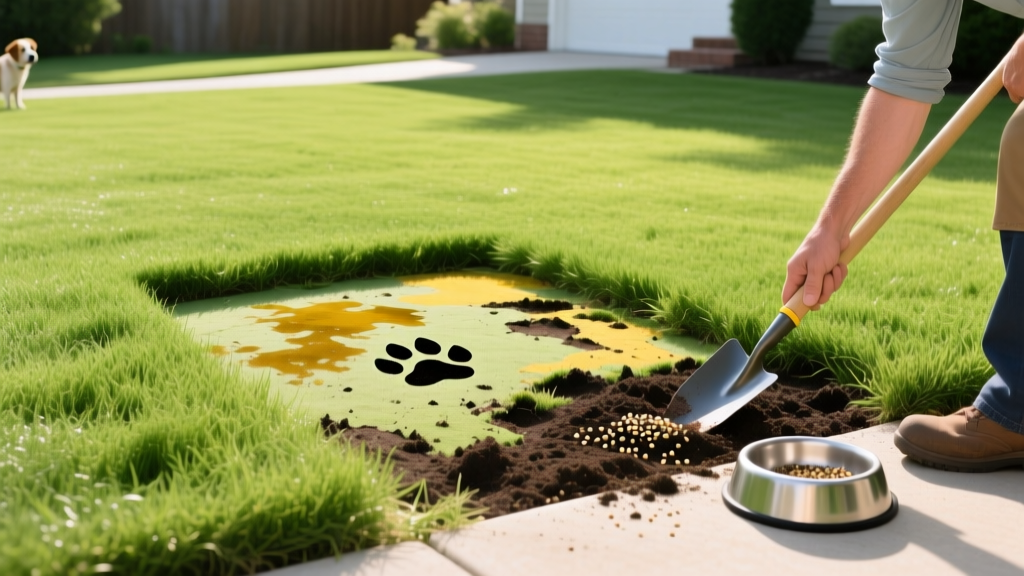
How to Keep Dog Pee From Killing Grass: A Step-by-Step Lawn Repair Guide
Dog urine burns are among the most frustrating challenges in residential lawn care. The resulting yellow spots with dark green halos are not caused by acidic urine, as is commonly believed, but by a massive, localized overdose of nitrogen and salts. When a dog relieves itself, it deposits a concentrated volume of urea that overwhelms the grass's root system, causing rapid cellular dehydration and tissue death. Female dogs and large breeds typically cause the most severe damage because they squat, depositing up to 300 milliliters of urine in a single 12-inch diameter area, whereas male dogs tend to mark multiple vertical surfaces.
Stopping this damage requires a multi-tiered approach combining immediate dilution protocols, strategic landscape design, and the selection of specific, urine-tolerant grass cultivars. Below is a comprehensive, step-by-step lawn maintenance procedure to protect your turf and repair existing damage.
The Chemistry of Urine Burn: Nitrogen vs. pH
The Fertilizer Overload Effect: Urea is approximately 46% nitrogen. A single dog urination spot can deliver the equivalent of 10 times the recommended lawn fertilization rate in a concentrated area. While the center of the spot burns and dies from nitrogen toxicity and salt desiccation, the outer edges often turn dark green and grow rapidly due to the diluted, fertilizer-like effect on the surrounding grass.
According to turfgrass research from Colorado State University Extension, attempting to alter your dog's urine pH using dietary supplements is not only ineffective at preventing lawn burn but can also induce severe health issues, such as struvite bladder stones. The focus must remain on nitrogen dilution and soil salt management.
Step 1: Immediate Dilution Protocols (The 8-Hour Window)
The most effective way to prevent a burn spot is to dilute the urea before it binds to the soil and desiccates the roots. You have an approximate 8-hour window to mitigate the damage after urination occurs.
- Deploy the 1-Gallon Rule: Keep a dedicated 1-gallon watering can or a hose with a spray nozzle near your primary outdoor access door. Immediately pour at least 1 gallon of plain water over the fresh urine spot. This volume is sufficient to push the urea and salts past the shallow root zone (the top 3-4 inches of soil) into the deeper subsoil where it will not harm the crown of the grass.
- Avoid Surfactants: Do not add dish soap or chemical wetting agents to the dilution water. Surfactants can strip the natural waxy cuticle off the grass blades, making them more susceptible to desiccation and fungal pathogens.
- Automate with Smart Irrigation: If you have an in-ground sprinkler system, program a specific 'potty zone' to run for 3 minutes in the late afternoon. This provides a passive dilution mechanism without requiring manual intervention.
Step 2: Hardscaping and Designated Potty Zones
For homeowners dealing with multiple dogs or large breeds, dilution alone may not be sustainable. Training your dog to use a designated hardscaped area removes the problem from the turf entirely. The Humane Society of the United States emphasizes that positive reinforcement in a specific, texturally distinct area is highly effective for canine potty training.
Building a Canine Potty Pad
- Location: Choose a shaded, well-draining corner of the yard, away from high-traffic play areas.
- Base Layer: Excavate the area to a depth of 4 inches and lay down a heavy-duty, permeable landscape fabric to prevent weed growth and soil mixing.
- Drainage Aggregate: Add 2 inches of crushed gravel (3/4-inch minus) for drainage.
- Surface Material: Top with 2 inches of pea gravel or cedar mulch. Pea gravel costs approximately $2 to $4 per square foot and is easy to rinse with a hose. Avoid dark-colored rubber mulch, as it absorbs heat and can burn your dog's paw pads in the summer.
- Training: Lead your dog to this zone on a leash after meals and upon waking. Reward with high-value treats immediately upon elimination.
Step 3: Overseeding with Urine-Resistant Cultivars
Not all grasses react to urea and salts equally. If you are renovating a lawn or overseeding dead patches, selecting the correct cultivar is critical. According to the American Kennel Club, fescues and ryegrasses are vastly superior to bluegrasses in high-traffic, high-nitrogen canine environments.
| Grass Type | Urine Resistance | Recovery Rate | Best Climate |
|---|---|---|---|
| Tall Fescue (Endophyte-enhanced) | High | Moderate | Cool-season / Transition |
| Perennial Ryegrass | Medium-High | Fast | Cool-season |
| Bermudagrass | Medium | Very Fast | Warm-season |
| Kentucky Bluegrass | Low | Slow | Cool-season |
Pro Tip: When purchasing Tall Fescue seed, look for varieties labeled as 'endophyte-enhanced'. Endophytes are naturally occurring, beneficial fungi that live inside the grass tissue. They not only deter surface-feeding insects but also promote deeper, more robust root systems that are better equipped to handle the osmotic stress caused by urine salts.
Step 4: Soil Remediation and Spot Repair
When a spot has already turned brown and the grass crown is dead, watering will not bring it back. You must physically remediate the soil and reseed.
The Gypsum Application Method
Dog urine leaves behind sodium salts that bind to clay particles in the soil, causing soil crusting and preventing water infiltration. To break this bond, apply Calcium Sulfate (Gypsum).
- Rake the Spot: Use a steel thatch rake to vigorously remove all dead grass and loosen the top 1 inch of soil.
- Apply Gypsum: Broadcast pelleted gypsum over the spot at a rate of roughly 1/2 cup per square foot. The calcium in the gypsum will displace the sodium in the soil profile through cation exchange.
- Flush the Soil: Water the area deeply to wash the displaced sodium salts below the root zone.
- Seed and Topdress: Apply your urine-resistant grass seed, and cover with a 1/4-inch layer of compost or peat moss to retain moisture during germination.
WARNING: The Tomato Juice and pH-Adjuster Myth
Do not feed your dog tomato juice, vinegar, or commercial 'lawn-saving' pH-adjusting supplements. These products attempt to acidify the urine. However, urine burn is caused by nitrogen, not alkalinity. Furthermore, artificially acidifying a dog's urine can lead to the formation of calcium oxalate bladder stones, a painful and potentially fatal veterinary emergency. Always consult a veterinarian before altering your dog's diet, and focus on increasing their plain water intake instead by adding warm water to their dry kibble.
Do not feed your dog tomato juice, vinegar, or commercial 'lawn-saving' pH-adjusting supplements. These products attempt to acidify the urine. However, urine burn is caused by nitrogen, not alkalinity. Furthermore, artificially acidifying a dog's urine can lead to the formation of calcium oxalate bladder stones, a painful and potentially fatal veterinary emergency. Always consult a veterinarian before altering your dog's diet, and focus on increasing their plain water intake instead by adding warm water to their dry kibble.
Frequently Asked Questions
Does baking soda neutralize dog urine on grass?
No. Baking soda (sodium bicarbonate) actually adds more sodium and salts to the soil, which exacerbates the osmotic stress on the grass roots and can worsen the burn. Stick to plain water for dilution and gypsum for soil remediation.
How long does it take for dog urine to kill grass?
The chemical burn begins immediately upon contact, but visible yellowing typically appears within 24 to 48 hours. If the nitrogen load is high enough and the weather is hot and dry, the grass crown will die completely within 3 to 5 days, requiring physical reseeding.
Can I use synthetic dog urine neutralizers on my lawn?
Most commercial lawn neutralizer sprays are simply highly diluted solutions of water, yucca extract (a natural surfactant), and mild enzymes. While the yucca extract can help water penetrate the soil slightly faster to flush the urea, they are not significantly more effective than a standard garden hose and cost substantially more per application.

