
Lawn Care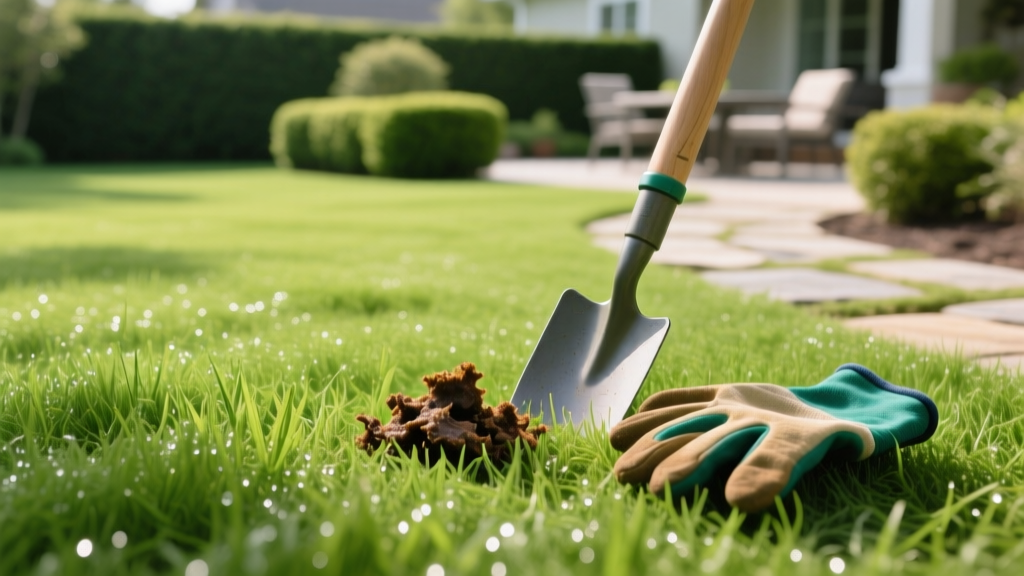
Can I Use Dog Poop for Fertilizer on Lawns? Safety & Risks
The Short Answer: Why Raw Dog Waste Burns Lawns
If you are asking, can I use dog poop for fertilizer directly on your turfgrass? The definitive answer is no. Applying raw dog feces to your lawn will not nourish the grass; it will actively destroy it and create a severe biohazard in your yard.
Unlike herbivore manure (such as cow or horse dung), which is rich in undigested plant matter and safe to age and spread, dog feces is the byproduct of a high-protein, meat-based diet. This dietary difference fundamentally alters the chemical composition of the waste. Dog poop is highly acidic and exceptionally dense in nitrogen. When applied directly to turfgrass, this concentrated nitrogen triggers a rapid osmotic imbalance, drawing moisture out of the grass blades and roots—a phenomenon known as 'fertilizer burn.' The result is localized desiccation, leaving dead, yellowed patches of Kentucky bluegrass, Bermuda, or fescue surrounding the waste site.
⚠️ Biohazard Warning: Beyond lawn damage, raw dog waste contains up to 23 million fecal coliform bacteria per gram. Leaving it on your lawn allows these pathogens to leach into the soil and eventually runoff into local storm drains and waterways, contributing to severe nonpoint source water pollution.
The Pathogen Problem: What is Really in Dog Feces?
Before considering any form of dog waste recycling, you must understand the biological risks. Dog feces is a primary vector for several zoonotic diseases—illnesses that can transfer from animals to humans. Children playing on the lawn and pets sniffing the turf are at the highest risk of exposure.
According to the Centers for Disease Control and Prevention (CDC), Toxocara canis (dog roundworm) eggs shed in feces can survive in soil for up to four years. Ingestion of microscopic amounts of contaminated soil can lead to toxocariasis, which may cause vision loss or respiratory issues in humans.
Common Pathogens in Dog Waste and Thermal Death Points
To safely repurpose dog waste, it must be subjected to rigorous thermal composting to destroy these specific biological threats. Standard backyard compost piles rarely achieve the necessary heat.
| Pathogen | Associated Disease | Soil Survival Time | Lethal Compost Temp |
|---|---|---|---|
| Toxocara canis (Roundworm) | Toxocariasis | Up to 4 years | 160°F (71°C) for 3 days |
| Ancylostoma caninum (Hookworm) | Cutaneous larva migrans | Several weeks (moist soil) | 145°F (63°C) for 3 days |
| Escherichia coli | Gastroenteritis | Up to 100 days | 140°F (60°C) for 1 day |
| Giardia duodenalis | Giardiasis | Months in cold environments | 145°F (63°C) for 30 mins |
| Salmonella spp. | Salmonellosis | Up to 6 months | 131°F (55°C) for 3 days |
How to Safely Compost Dog Waste (For Ornamental Use Only)
While you should never use dog waste compost on your lawn, vegetable garden, or fruit-bearing trees, properly processed dog compost can be used on non-edible ornamental flower beds and shrubs. The World Health Organization (WHO) emphasizes that breaking the transmission cycle of zoonoses requires strict biological controls, which in composting means rigorous temperature management.
Do not mix dog waste into your standard yard waste compost bin. You must establish a dedicated, isolated hot-composting system.
Step-by-Step Dedicated Dog Waste Composting Protocol
- Procure a Dedicated Bin: Use a sealed, dark-colored compost tumbler or a specialized hot compost bin (like the HotBin or a modified 55-gallon drum with aeration holes) placed in a shaded, well-drained area away from play zones.
- Balance the C:N Ratio: Dog feces is a 'green' (nitrogen-heavy) material. You must offset this with 'browns' (carbon). Mix 1 part dog waste with 3 parts high-carbon material (sawdust, shredded dry leaves, or pine needles) by volume. The ideal Carbon-to-Nitrogen ratio for this mix is 25:1 to 30:1.
- Monitor Moisture Levels: The pile should feel like a wrung-out sponge (40-60% moisture). If it is too dry, microbial activity stalls; if too wet, it goes anaerobic and produces toxic hydrogen sulfide gas. Add water or dry sawdust accordingly.
- Track Core Temperatures: Insert a 20-inch long-stem compost thermometer (such as the REOTemp J27C) into the center of the pile. The core must reach and maintain 160°F (71°C) for at least three consecutive days to guarantee the destruction of Toxocara canis eggs.
- Turn and Re-Monitor: Turn the pile every 3 days to bring outer, cooler materials into the hot center. Re-insert the thermometer. Continue this cycle until the pile no longer heats up after turning.
- Cure the Compost: Allow the material to cure for a minimum of 6 to 12 months. This secondary maturation phase allows beneficial fungi to colonize the compost and breaks down residual organic acids.
Expert Tip: Add a compost accelerator containing thermophilic bacteria strains (such as Bacillus stearothermophilus) to help the pile reach the critical 160°F threshold faster. Products like Espoma Organic Traditions Compost Starter provide the necessary microbial inoculants to jumpstart high-heat decomposition.
Dog Waste Compost vs. Traditional Lawn Fertilizers
Understanding why commercial lawn fertilizers are superior to dog waste for turfgrass helps clarify the nutritional needs of your lawn. Below is a comparison of nutrient profiles and safety metrics.
| Feature | Composted Dog Waste | Milorganite (Biosolid) | Synthetic 20-0-5 |
|---|---|---|---|
| N-P-K Ratio | Variable (approx. 1-1-0.5) | 6-4-0 | 20-0-5 |
| Nitrogen Release | Slow (Microbial breakdown) | Slow (Microbial breakdown) | Fast (Water-soluble) |
| Pathogen Risk | High (if improperly processed) | None (EPA Class A certified) | None |
| Lawn Safe? | No (Biohazard risk to pets/kids) | Yes | Yes |
| Best Application | Ornamental shrubs/flower beds | Lawns, trees, and gardens | Rapid turfgrass greening |
Alternative Lawn-Safe Dog Waste Disposal Methods
If the rigorous demands of hot composting seem impractical, there are highly effective, lawn-safe alternatives for managing canine waste without resorting to the trash can.
1. In-Ground Septic Digesters
Systems like the Doggie Dooley Model 3000 ($50–$65) function as miniature septic tanks. You bury the unit in your yard, drop in the waste, add water, and a specialized enzyme packet (containing protease and lipase enzymes). The enzymes break the waste down into a liquid that safely leaches into the subsoil. Crucial Caveat: Digesters only work in permeable soils (sandy or loamy). If you have heavy clay soil or a high water table, the unit will flood and fail. Always perform a percolation test (digging a 1-foot hole and filling it with water) before purchasing.
2. Enzymatic Surface Sprays
For small amounts of waste that you cannot physically remove, enzymatic dissolvers like NaturVet Yard Odor Eliminator or Doggie Doo Dissolver can be sprayed directly on the feces. These products utilize bacteria and enzymes to liquefy the waste over 3 to 5 days. While this eliminates the physical pile, it does not neutralize the high nitrogen content, meaning you may still see minor grass burn in the immediate vicinity.
3. Municipal Pet Waste Composting
An increasing number of municipalities (such as Seattle, WA, and Boulder, CO) now offer curbside pet waste collection. These facilities utilize industrial-scale aerated static pile (ASP) composting, which easily maintains temperatures above 160°F and processes the waste into commercial-grade, pathogen-free compost. Check your local waste management provider's 2026 guidelines to see if pet waste is accepted in your green bin.
Frequently Asked Questions
Can I bury dog poop directly in the garden?
No. Burying raw dog waste near the root zones of plants will cause root burn due to nitrogen toxicity and introduces hookworms and roundworms directly into the soil matrix where they can survive for years.
Does lime break down dog poop on lawns?
Is dog poop good for composting with food scraps?
Absolutely not. Never mix dog waste into a compost bin intended for vegetable gardens or fruit trees. The risk of cross-contamination with E. coli and Salmonella is too high. Keep dog waste composting strictly isolated and use the end product only on non-edible ornamentals.

