
Lawn Care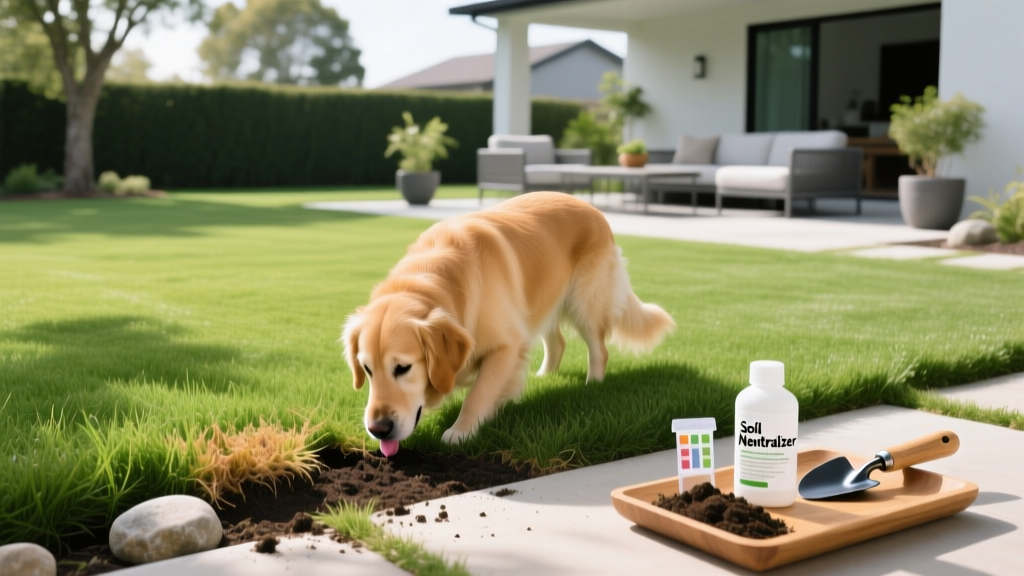
How to Stop Dogs Pee Killing Grass: Soil Neutralization Playbook
The Chemistry of Canine Urine Burns: Busting the pH Myth
To understand how to stop dogs pee killing grass, you must first understand the chemical mechanism destroying your turf. A pervasive myth in lawn care is that dog urine is highly acidic and "burns" the grass via low pH. In reality, canine urine typically has a pH between 6.0 and 6.5, which is slightly acidic to neutral and perfectly safe for most turfgrasses. The true culprit is nitrogen salt burn.
Dog urine is incredibly rich in urea, a byproduct of protein metabolism. When a 60-pound dog urinates, it deposits the nitrogen equivalent of roughly 2 pounds of commercial lawn fertilizer into a concentrated 4-inch circle. This massive, localized dose of nitrogen creates severe osmotic stress. The high salt concentration in the soil literally pulls water out of the grass roots, resulting in the classic "burn spot" with a dead center and a dark green, rapidly growing outer ring (where the nitrogen acts as a mild fertilizer at the diluted edges).
⚠️ CRITICAL WARNING: The Tomato Juice Trap
Do not feed your dog tomato juice, baking soda, or vitamin C to alter their urine pH. According to veterinary toxicologists, altering a dog's systemic pH to combat lawn damage is ineffective and dangerous. Forcing an alkaline or highly acidic urine pH can trigger the formation of struvite or calcium oxalate bladder stones, leading to thousands of dollars in emergency veterinary surgeries. Treat the lawn, not the dog.
Do not feed your dog tomato juice, baking soda, or vitamin C to alter their urine pH. According to veterinary toxicologists, altering a dog's systemic pH to combat lawn damage is ineffective and dangerous. Forcing an alkaline or highly acidic urine pH can trigger the formation of struvite or calcium oxalate bladder stones, leading to thousands of dollars in emergency veterinary surgeries. Treat the lawn, not the dog.
Immediate Triage: The 8-Minute Flush Protocol
If you catch your dog in the act, you have a narrow window to prevent osmotic root burn before the urea binds to the soil cation exchange sites. The 8-Minute Flush Protocol requires immediate, high-volume dilution.
- Volume Requirement: You need a minimum of 2 to 3 gallons of water per urine spot. A light spray from a hose nozzle is insufficient; it merely wets the grass blades and pushes the nitrogen salts into the upper root zone where they do the most damage.
- Application Method: Use a 2-gallon pump sprayer filled with plain water, or set your hose nozzle to a "flat" or "shower" setting to avoid soil erosion. Flood the 12-inch radius surrounding the spot.
- The Surfactant Trick: Add 1 ounce of liquid yucca extract or a non-toxic soil surfactant (like Simple Lawn Solutions Liquid Aerating Soil Loosener) to your flush water. This breaks the surface tension of the water, forcing the urea salts deeper into the soil profile and away from the shallow turf roots.
Soil Neutralization & Repair Matrix
When flushing isn't possible, or when you are dealing with accumulated historical damage, you must amend the soil to bind the excess nitrogen salts and repair the soil structure. Below is a comparison of the three most effective soil amendments for canine urine remediation, based on 2026 market pricing and agronomic efficacy.
| Amendment | Mechanism of Action | Application Rate | Est. Cost (2026) | Best Use Case |
|---|---|---|---|---|
| Pelletized Gypsum (Calcium Sulfate) | Calcium displaces sodium and nitrogen salts from soil clay particles, allowing them to be flushed out. Sulfur aids in microbial breakdown of urea. | 2 lbs per 100 sq ft, watered in heavily. | $18 - $24 per 40lb bag (e.g., Pennington) | Heavy clay soils with severe, recurring burn spots. |
| Clinoptilolite Zeolite | A microporous mineral with a massive negative electrical charge. It acts as a molecular sponge, trapping ammonium ions (from urea) and releasing them slowly over time. | 5 lbs per 100 sq ft, top-dressed and raked in. | $32 - $40 per 40lb bag (e.g., Ida-Ore) | Sandy soils or high-traffic "potty zones" needing long-term buffering. |
| Liquid Humic Acid | Increases the soil's Cation Exchange Capacity (CEC). Chelates excess salts and stimulates microbial activity to rapidly decompose urea. | 2 oz per gallon of water, applied every 14 days. | $25 - $30 per 32oz bottle (e.g., Simple Lawn Solutions) | Routine maintenance and rapid recovery of existing yellow spots. |
Repairing Dead Spots: The Overseeding Protocol
Once the soil salts are neutralized via gypsum or zeolite, the dead grass in the center of the burn spot will not recover. The root crown is destroyed. You must physically remove the dead tissue and reseed.
Step-by-Step Burn Spot Renovation
- Excavation: Use a hand trowel or a stand-up weeder (like the Grampa's Weeder) to dig out the dead grass and the top 1 inch of salt-contaminated soil.
- Backfill: Fill the divot with a 50/50 mix of compost and coarse sand. The compost introduces microbes to break down residual urea, while the sand ensures drainage.
- Seed Selection: Sow a handful of grass seed that matches your existing lawn. For cool-season lawns, Perennial Ryegrass is the fastest to germinate (5-7 days) and will camouflage the spot quickly, even if your primary lawn is Kentucky Bluegrass.
- Protection: Cover the spot with a thin layer of weed-free straw or a biodegradable seed mat. Dogs are naturally drawn to the smell of turned earth and compost; if you do not cover it, they will dig it up or immediately urinate on the fresh soil.
Turfgrass Selection: Urine-Resistant Varieties
If you are planning a full lawn renovation or overseeding, selecting the right turfgrass species is your best long-term defense. According to University of Minnesota Turfgrass Science, grass species vary wildly in their tolerance to nitrogen salts and urea.
"Tall fescue and perennial ryegrass are the most tolerant to dog urine damage. Kentucky bluegrass and bermudagrass are highly susceptible, often suffering severe necrosis from a single exposure. Fine fescues fall in the middle but struggle with the physical wear of dog traffic."
— Turfgrass Science Extension Research
For homeowners in the Transition Zone or Northern climates dealing with severe dog damage, transitioning to a Turf-Type Tall Fescue (TTTF) blend is highly recommended. Modern TTTF cultivars (such as 'Titan Ultra' or 'Firecracker GTF') possess deep, extensive root systems that can better withstand osmotic stress and recover from minor burn rings via lateral rhizome growth.
Hardscaping & Training: The "Pee Post" Strategy
Ultimately, the most foolproof method to stop dogs pee killing grass is to remove the grass from the equation entirely by training your dog to use a designated hardscape zone. The American Kennel Club notes that dogs naturally prefer to mark vertical objects. You can leverage this instinct to protect your prime lawn real estate.
Building a Designated Potty Zone
- Location: Choose a low-visibility corner of the yard, ideally downwind from your patio and in a partially shaded area to reduce ammonia off-gassing odors in the summer heat.
- The Sub-Base: Excavate a 4x6 foot rectangle to a depth of 3 inches. Lay down a heavy-duty, permeable geotextile landscape fabric to prevent weeds and soil mixing.
- The Drainage Layer: Fill the bottom 1.5 inches with washed river rock or pea gravel. This ensures rapid drainage and prevents the area from becoming a muddy, anaerobic mess.
- The Surface Layer: Top with 1.5 inches of cedar mulch or engineered dog-safe artificial turf. Cedar naturally repels fleas and masks odors. Avoid cocoa bean mulch, which is highly toxic to dogs if ingested.
- The Marking Post: Drive a 3-foot wooden post, a large decorative stone, or a specialized "Pee Post" (infused with pheromones) into the center of the zone.
- Training: Lead your dog to the zone on a leash immediately after meals and upon waking. Use a specific command ("go potty") and reward with a high-value treat (like freeze-dried liver) immediately upon completion. It typically takes 14 to 21 days of consistent leash-training to establish the habit.
By combining immediate flush protocols, targeted soil amendments like clinoptilolite zeolite, and strategic hardscaping, you can maintain a pristine, dark green lawn without sacrificing your dog's freedom to roam. Stop treating the symptom with unproven dietary hacks, and start managing the soil chemistry and turf selection like a professional groundskeeper.

