
Lawn Care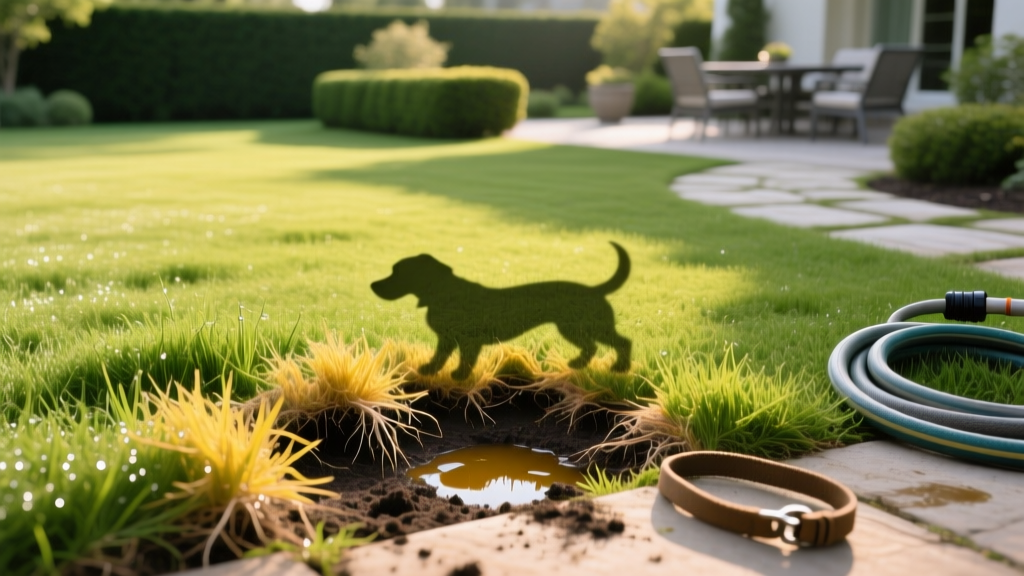
Dog Wee Kills Grass: Step-by-Step Repair and Prevention Guide
The Chemistry of the Burn: Why Dog Wee Kills Grass
When dog wee kills grass, it is rarely a pH issue. The primary culprit is a massive overdose of nitrogen and salts. Dog urine typically contains 15 to 30 grams of nitrogen per liter, largely in the form of urea. When a dog urinates on the lawn, this concentrated liquid acts like a localized application of synthetic fertilizer at 10 to 20 times the recommended rate.
This sudden influx causes osmotic shock. The high salt concentration in the soil draws moisture out of the grass roots, leading to rapid desiccation and cell death. The result is the classic "burn patch": a dead, straw-brown center surrounded by a dark green halo where the diluted edges of the urine acted as a mild fertilizer.
Data Highlight: Urine Nitrogen Load
A single 50-pound dog deposits approximately 2.5 to 3.5 grams of nitrogen per urination event in a concentrated 2-to-3-inch radius. This equates to applying roughly 300 pounds of nitrogen per acre to that tiny patch—far exceeding the 2-4 pounds of nitrogen per 1,000 square feet recommended for annual turf health.
A single 50-pound dog deposits approximately 2.5 to 3.5 grams of nitrogen per urination event in a concentrated 2-to-3-inch radius. This equates to applying roughly 300 pounds of nitrogen per acre to that tiny patch—far exceeding the 2-4 pounds of nitrogen per 1,000 square feet recommended for annual turf health.
Immediate Triage: The First 24 Hours
If you catch your dog in the act, immediate dilution is the only way to prevent osmotic shock. Do not rely on rain or morning dew; the nitrogen must be physically moved past the root zone.
- The 3-Gallon Rule: Immediately pour 2 to 3 gallons of plain tap water over the spot. This dilutes the urea concentration below the phytotoxic threshold (typically below 1.0% nitrogen concentration in the soil solution).
- Avoid Baking Soda: Never apply sodium bicarbonate (baking soda) to "neutralize" the acid. Dog urine is usually slightly acidic to neutral (pH 6.0-6.5). Baking soda adds sodium to the soil, which destroys soil structure and worsens root dehydration.
- Skip the Enzymatic Sprays: Outdoor enzymatic sprays are largely ineffective on living soil. Soil microbes naturally break down urea within 48 to 72 hours via the enzyme urease. Adding commercial enzymes to a saturated, nitrogen-burned patch yields no measurable agronomic benefit.
Damage Assessment Matrix
Before initiating repairs, assess the current state of the patch. The visual symptoms dictate your exact maintenance procedure.
| Visual Symptom | Soil Condition | Required Action |
|---|---|---|
| Dark green, rapid growth (No brown center) | Mild nitrogen surplus | No action. Mow more frequently to manage growth. |
| Yellowing blades, brown tips | Moderate salt accumulation, mild root stress | Deep water flushing (1 inch daily for 3 days). |
| Straw-brown center, green halo | Severe osmotic shock, dead crowns | Complete soil flush, gypsum amendment, and overseeding. |
| Crusty, white-topped soil surface | Extreme sodium/salt buildup (often from repeated use) | Core aeration, heavy gypsum application, topdressing. |
Step-by-Step Soil and Seed Repair Protocol
For patches where the grass crowns are entirely dead, simple watering will not revive them. You must remediate the soil chemistry and re-establish the turf.
Step 1: Flush and Leach the Soil
Attach a hose-end sprayer or use a watering can to apply 1 to 1.5 inches of water to the damaged area. Allow it to soak for 30 minutes, then apply another 1 inch. This two-stage leaching process pushes soluble salts and excess nitrates below the 6-inch root zone. Repeat this process every 48 hours for one week.
Step 2: Amend with Calcium Sulfate (Gypsum)
Gypsum (calcium sulfate) is the industry standard for remediating salt-damaged soils. The calcium ions in gypsum displace sodium ions on the soil's cation exchange sites, allowing the sodium to be leached out while improving soil porosity.
- Product Recommendation: Use a pelletized product like Espoma Organic Gypsum or Jonathan Green Love Your Soil.
- Application Rate: Apply 20 pounds per 1,000 square feet (roughly 2 cups per individual burn patch).
- Cost Expectation: A 4-pound bag typically costs between $12 and $18 in 2026, treating multiple patches.
- Integration: Rake the gypsum into the top half-inch of soil and water it in immediately.
Step 3: Overseed with Urine-Tolerant Cultivars
Not all grasses handle nitrogen loads equally. According to University of Minnesota Turfgrass Science, Festuca species (Fescues) and Lolium perenne (Perennial Ryegrass) exhibit the highest tolerance to urine burns, while Poa pratensis (Kentucky Bluegrass) and Cynodon dactylon (Bermudagrass) are highly susceptible.
- Prep the Seedbed: Rake away dead thatch and loosen the top 1/4 inch of soil with a hand cultivator.
- Select the Seed: Use a 100% Tall Fescue blend like Pennington Smart Seed Tall Fescue ($35-$45 for a 7-pound bag). Avoid "contractor blends" that contain fast-germinating but shallow-rooted annual ryegrass.
- Sow and Cover: Apply seed at 5 to 8 pounds per 1,000 square feet (a heavy pinch per 4-inch patch). Topdress with 1/4 inch of screened compost to retain moisture.
- Germination Watering: Keep the top inch of soil constantly moist (watering 2-3 times daily for 5 minutes) until seedlings reach 2 inches in height, typically 10 to 14 days for Tall Fescue.
Long-Term Prevention Strategies
Repairing dead patches is labor-intensive. Modifying the environment and your dog's habits is the most sustainable long-term lawn maintenance procedure.
Designated Potty Zones
Train your dog to use a specific, non-turf area. Construct a 4x4 foot "potty patch" using pea gravel or cedar mulch over a base of drain rock. Because dogs rely heavily on olfactory markers, placing a single piece of sod from an existing urine patch into the center of the gravel zone will accelerate training.
Hydration and Dietary Adjustments
Increasing your dog's water intake dilutes the nitrogen concentration in their urine. Switch to wet food, add low-sodium bone broth to their kibble, or use a pet water fountain to encourage drinking. However, the American Kennel Club warns against manipulating urine pH without veterinary supervision, as forcing alkalinity can lead to struvite bladder stones.
Troubleshooting Common Myths
Myth: Feeding dogs tomato juice or commercial "lawn-saving" pills prevents grass burn.
Fact: Most commercial lawn-saving supplements contain DL-Methionine, an amino acid designed to acidify urine. However, grass burn is caused by nitrogen, not pH. Furthermore, artificially acidifying a dog's urine can cause severe calcium oxalate kidney stones. Always consult a veterinarian before altering your dog's diet.
Another persistent myth is that "Dog Rocks" (naturally occurring zeolite stones placed in a water bowl) prevent lawn burn. While zeolite can absorb ammonia in enclosed litter boxes, peer-reviewed agronomic studies show no statistically significant reduction in urinary nitrogen output when zeolite is submerged in a dog's drinking water. The only proven method to reduce nitrogen concentration is increasing the volume of water the dog consumes directly.
Mowing Height Adjustments
Taller grass has deeper root systems and more leaf surface area to intercept and dilute urine before it reaches the soil. Raise your mower deck to 3.5 or 4 inches for Tall Fescue and Kentucky Bluegrass lawns. This single maintenance adjustment increases the turf's overall resilience to osmotic stress and reduces the severity of burn patches when they do occur.

