
Lawn Care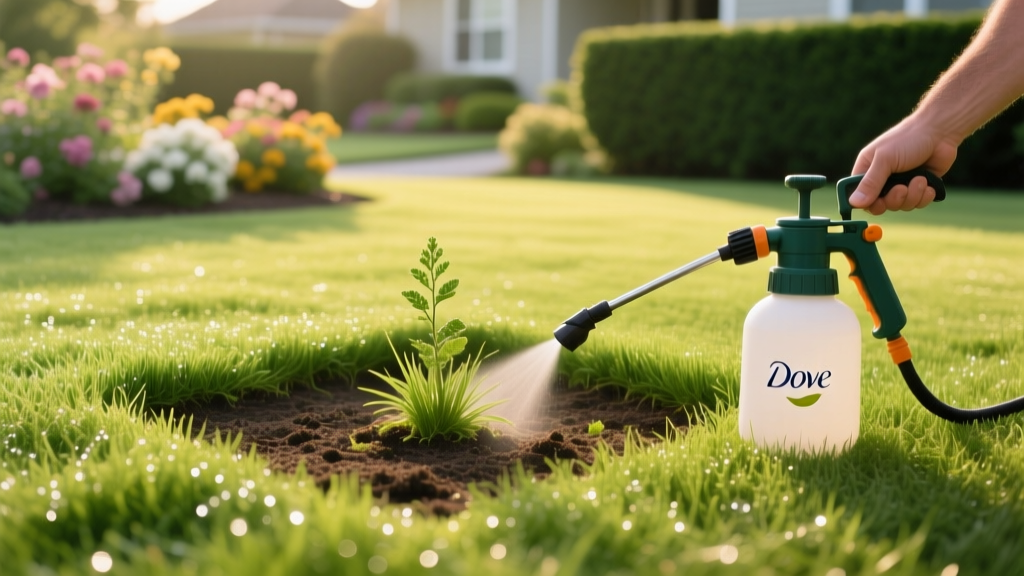
Dove Weed Plant Control: Spot-Treatment & Eradication Guide
The dove weed plant (Murdannia nudiflora) is a notoriously aggressive summer annual that plagues warm-season and transitional-zone turfgrasses. Often mistaken for crabgrass or nutsedge by inexperienced homeowners, doveweed features succulent, creeping stems that root at the nodes, glossy green leaves, and distinct small purple or blue flowers. When mowed, it emits a sharp, rubber-like odor. Eradicating this weed requires more than a generic broadleaf spray; its thick, waxy cuticle repels standard herbicides, demanding precise chemical selection, proper surfactant pairing, and strategic cultural adjustments.
Botanical Profile: Identifying the Dove Weed Plant
Accurate identification is the first critical step in spot-treatment. Misidentifying doveweed as crabgrass will lead you to use quinclorac or standard crabgrass preventers, which are largely ineffective against Murdannia nudiflora. According to NC State University TurfFiles, doveweed thrives in damp, compacted soils where turfgrass is already thinning.
| Feature | Dove Weed Plant | Crabgrass | Yellow Nutsedge |
|---|---|---|---|
| Stem Structure | Succulent, creeping, roots at nodes | Fibrous, branching, does not root at nodes | Erect, triangular in cross-section |
| Leaf Texture | Glossy, smooth, fleshy | Hairy, rough, dull green | Glossy, waxy, sharp tip |
| Flower Color | Purple / Blue (3 petals) | Green / Purplish seed heads | Golden / Yellow-brown spikelets |
| Odor When Mowed | Distinct rubber / chemical smell | Standard grass scent | Earthy, mild scent |
Environmental Triggers: Why It Invades Your Turf
Doveweed is an opportunistic indicator weed. It does not typically invade thick, healthy, well-drained turf. Instead, it exploits specific environmental failures. The University of Florida IFAS Extension notes that Murdannia nudiflora requires high soil moisture to germinate and spread. If you have a dove weed plant problem, your lawn is likely suffering from one or more of the following:
Primary Invasion Triggers:
- Overwatering: Irrigation schedules that keep the top 1-inch of soil perpetually saturated.
- Soil Compaction: Heavy clay soils or high-traffic areas where water pools rather than percolates.
- Low Mowing Heights: Scalping Bermuda or Zoysia below 1 inch, which removes turf canopy shade and exposes soil to doveweed seeds.
Post-Emergent Spot-Treatment Protocols
Once the dove weed plant has established, standard 2,4-D amine formulations will only burn the top foliage, allowing the weed to regenerate from its succulent nodes. You must use specialized herbicides paired with a high-quality surfactant to penetrate the plant's waxy cuticle.
1. Flumioxazin (Blindside 60DF)
For warm-season grasses like Bermudagrass and Zoysiagrass, Blindside is the industry gold standard for doveweed. Mixing Rate: 0.15 to 0.25 oz per 1,000 square feet. Cost: Approximately $120 for a 10 oz bottle (treats up to 4.5 acres at lower rates). Adjuvant Requirement: You MUST include a Non-Ionic Surfactant (NIS) at 0.25% v/v. Without it, the herbicide will bead up and roll off the glossy leaves.
2. Thiencarbazone + Iodosulfuron + Dicamba (Celsius WG)
Celsius WG is highly effective and exceptionally safe for St. Augustine and Centipedegrass, which are sensitive to many other chemicals. Mixing Rate: 0.085 to 0.113 oz per 1,000 square feet. Cost: Roughly $140 for a 10 oz bottle. Adjuvant Requirement: A Methylated Seed Oil (MSO) is recommended over NIS for Celsius WG when targeting mature, thick-stemmed doveweed.
3. Atrazine (Hi-Yield Atrazine Weed Killer)
Atrazine is a budget-friendly option for St. Augustine and Centipedegrass, acting as both a post-emergent and a short-residual pre-emergent. Mixing Rate: 1.5 fl oz per gallon of water for spot-spraying. Cost: ~$25 per quart.
CRITICAL WARNING: Never apply Atrazine to Bermudagrass, Zoysiagrass, or Bahiagrass. It will cause severe chlorosis and can kill the turf entirely. Furthermore, do not apply Atrazine when daytime temperatures exceed 85°F, as volatilization will damage surrounding ornamental plants.
Equipment Calibration for Spot-Spraying
Chemical selection is only half the battle; application technique dictates success. Doveweed requires thorough, uniform coverage without drenching the soil.
- Select the Right Nozzle: Use a flat fan nozzle, such as the TeeJet Turbo TeeJet Flat Fan 11002. Avoid cone nozzles, which deliver uneven droplet sizes and lead to chemical runoff on waxy leaves.
- Calibrate Pressure: Maintain your backpack sprayer between 20 and 30 PSI. Pressures above 40 PSI create fine mist droplets that drift onto desirable turf and fail to penetrate the doveweed canopy.
- Application Speed: Walk at a steady pace of 3 mph. Spray the dove weed plant until the leaves are visibly wet but not dripping. Dripping indicates you have wasted product and increased the risk of soil leaching.
"The waxy cuticle on mature doveweed is remarkably thick. If you spray on a cool morning when the plant's stomata are closed, the herbicide will sit on the leaf and degrade in the UV light. Always spot-treat doveweed in the late afternoon when temperatures are between 75°F and 85°F and the plant is actively translocating nutrients down to its root nodes."
Pre-Emergent Defense Strategies
Killing existing plants is reactive; stopping germination is proactive. Doveweed germinates later in the spring than crabgrass, typically when soil temperatures at the 1-inch depth consistently reach 60°F to 65°F.
- Prodiamine (Barricade): Apply at a rate of 0.35 oz per 1,000 sq ft in early spring. Prodiamine creates a chemical barrier in the top half-inch of soil. Note that heavy spring rains can fracture this barrier, allowing doveweed to breakthrough.
- Indaziflam (Specticle Flo): For high-end turf management, Indaziflam offers superior root-inhibition and longer residual control than Prodiamine. Apply at 0.31 to 0.63 fl oz per 1,000 sq ft. It is highly effective against doveweed but carries a higher price point (approx. $180 per 20 oz bottle).
Cultural Eradication: Fixing the Root Cause
Herbicides will fail long-term if the underlying environmental triggers are ignored. To permanently remove the dove weed plant from your lawn ecosystem, implement these cultural practices:
Core Aeration and Topdressing
Pull 2-to-3-inch soil plugs across the affected area in late spring. Immediately follow with a topdressing of coarse river sand or a 70/30 sand-to-compost mix. This physically breaks up the compacted clay layers that doveweed relies on for surface moisture retention.
Irrigation Auditing
Transition from frequent, shallow watering to deep, infrequent irrigation. Set your smart controller to deliver 0.5 to 0.75 inches of water per zone only when the turf shows signs of wilting (footprinting). This forces turfgrass roots to grow deep while starving shallow-rooted doveweed seedlings of the constant surface moisture they require to survive.

