
Lawn Care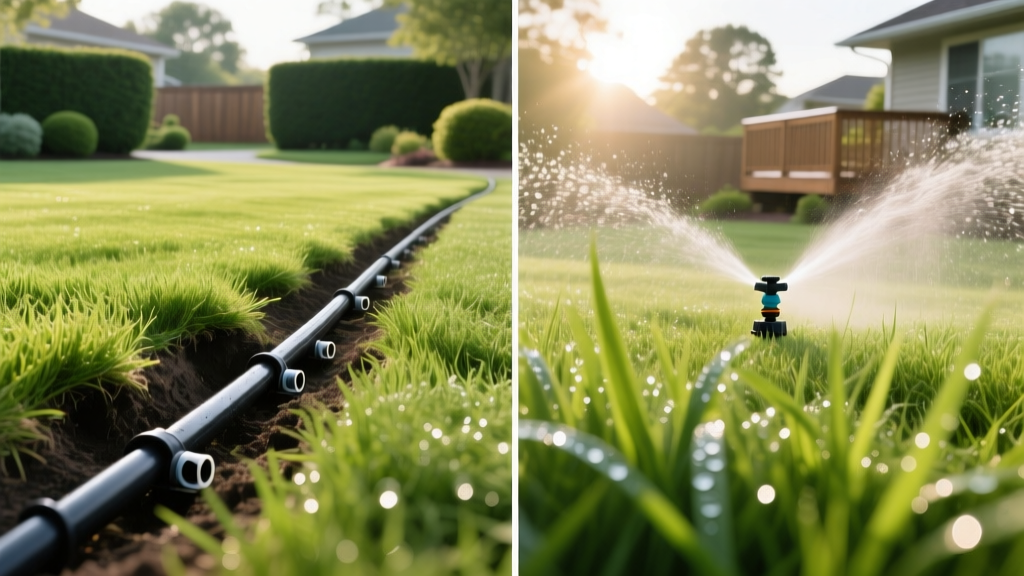
Drip Irrigation for Lawns: Subsurface Systems vs. Sprinklers
When homeowners search for drip irrigation for lawn applications, they often encounter a fundamental misunderstanding of turf irrigation. Traditional above-ground drip lines are designed for garden beds, shrubs, and row crops—not broad expanses of turfgrass. However, Subsurface Drip Irrigation (SDI) is a highly efficient, professional-grade solution specifically engineered for lawns. By delivering water directly to the root zone beneath the soil surface, SDI eliminates wind drift, evaporation, and runoff.
According to the EPA WaterSense program, subsurface drip systems can reduce outdoor water use by up to 50% compared to traditional spray heads. This guide breaks down the exact specifications, product recommendations, and installation frameworks required to successfully deploy an SDI system for your turf in 2026.
The Reality of Drip Irrigation for Lawn Turf
Before designing your system, you must distinguish between above-ground drip and subsurface drip. If your lawn consists of narrow strips (less than 8 feet wide) between sidewalks and streets, above-ground drip tubing can be pinned to the surface and covered with mulch. But for standard residential lawns, above-ground drip is a tripping hazard and mowing nightmare.
Subsurface Drip Irrigation (SDI) involves burying specialized dripline 4 to 6 inches below the soil surface. The tubing features built-in, pressure-compensating emitters that release water slowly and uniformly. Because the water is applied below the surface, the lawn remains dry on top, drastically reducing fungal diseases like brown patch and dollar spot.
Subsurface Drip vs. Traditional Overhead Sprinklers
How does SDI stack up against standard rotary and spray-head sprinkler systems? The following comparison matrix highlights the operational differences.
| Feature | Subsurface Drip (SDI) | Traditional Sprinklers |
|---|---|---|
| Water Application Efficiency | 90% - 95% | 65% - 75% |
| Evaporation & Wind Loss | Near Zero | High (15% - 30%) |
| Weed Germination | Reduced (dry surface) | High (wet surface) |
| Upfront Installation Cost | $1.85 - $2.60 / sq. ft. | $0.85 - $1.30 / sq. ft. |
| Maintenance Visibility | Hidden (harder to spot leaks) | Visible (easy to spot broken heads) |
Recommended SDI Product Lines for Turf
Not all drip tubing is created equal. Standard garden drip lines will quickly fail underground due to root intrusion and soil suction. You must use turf-specific SDI products featuring root-intrusion barriers.
- Rain Bird XFS Dripline with Copper Shield: This is the industry standard for turf SDI. The emitters feature a patented copper-lined barrier that physically prevents roots from growing into the emitter pathway. It operates at 0.6 GPH per emitter and is highly flexible for curved lawn borders.
- Netafim Uni-Line: A premium pressure-compensating dripline that ensures uniform water output regardless of elevation changes or long run lengths. Ideal for sloped lawns where traditional drip would suffer from low-head drainage.
- Toro SubSurface Dripline: Features built-in check valves that prevent low-head drainage and soil suction, making it an excellent choice for clay-heavy soils that drain slowly.
Installation Specifications and Spacing Rules
The success of your drip irrigation for lawn application hinges entirely on lateral spacing and burial depth. If lines are spaced too far apart, you will see alternating stripes of green and brown grass.
Soil-Type Spacing Matrix
Clay Soils: Water moves laterally in clay. Space drip lines 18 to 24 inches apart.
Loam Soils: Moderate lateral movement. Space lines 12 to 18 inches apart.
Sandy Soils: Water moves straight down with minimal lateral spread. Space lines 12 inches apart (maximum).
Burial Depth and Trenching
Trench the lines to a depth of 4 to 6 inches. This places the emitters directly in the primary root zone of most cool- and warm-season turfgrasses while protecting the tubing from core aeration tines and dethatching blades. Use a specialized drip plow for large areas, or a manual trenching shovel for existing lawns to minimize turf disruption.
Crucial System Components: Don't Skip the Vacuum Relief
The most common catastrophic failure in lawn SDI systems is emitter clogging caused by soil suction. When the irrigation valve shuts off, the water in the lines drains, creating a vacuum. If the system lacks a vacuum relief valve, this suction pulls fine soil particles directly into the emitters, permanently clogging them.
Required Setup: Install an automatic air/vacuum relief valve at the highest elevation point of every irrigation zone. Additionally, install a flush valve at the distal end of each lateral line to allow for seasonal flushing of sediment and biofilm.
Troubleshooting Common SDI Failure Modes
Even with premium materials, subsurface systems face unique environmental threats. Here is how to mitigate them:
- Rodent Damage: Voles and gophers will chew through polyethylene tubing to access water. If your region has high rodent activity, lay a galvanized wire mesh over the trenches before backfilling, or use specialized rodent-repellent tubing.
- Fertilizer Delivery (Fertigation): Because the surface is dry, granular fertilizers applied to the top of the lawn will not reach the root zone efficiently. You must either water heavily after granular applications to wash them into the soil, or install an inline fertigation injector (like the Mazzei 283) to deliver liquid nutrients directly through the drip system.
- System Flushing: Open the end-line flush valves for 2 minutes every spring and fall. The Alliance for Water Efficiency recommends regular flushing to maintain emitter flow rates and clear bacterial slime buildup inside the tubing.
Cost Analysis and ROI Timeline
As of 2026, professional installation of a subsurface drip system costs between $1.85 and $2.60 per square foot, compared to $0.85 to $1.30 for a high-efficiency MP Rotator sprinkler system. For a 5,000 sq. ft. lawn, expect to pay $9,250 to $13,000 for SDI.
While the upfront premium is roughly 60% higher, the ROI timeline is typically 4 to 7 years in arid regions (like the US Southwest) due to massive reductions in municipal water bills and the elimination of overspray onto hardscapes. In water-restricted municipalities that offer tiered rebates for subsurface irrigation, the payback period can drop to under 3 years.
Frequently Asked Questions
Can I use standard above-ground drip for my lawn?
Only for narrow parkways or medians less than 8 feet wide. For broad turf areas, above-ground drip will be destroyed by lawnmowers, UV degradation, and foot traffic.
How do I know if my underground drip line is leaking?
Because the lines are buried, leaks manifest as unusually lush, dark green patches of grass, or localized muddy spots. Monitor your smart irrigation controller's flow sensor data; a spike in baseline flow indicates a subsurface breach.
Will core aeration damage the buried lines?
If installed at the correct 4 to 6-inch depth, standard core aerators (which typically penetrate 2 to 3 inches) will not damage the tubing. Always mark your valve boxes and mainlines before aerating.

