
Lawn Care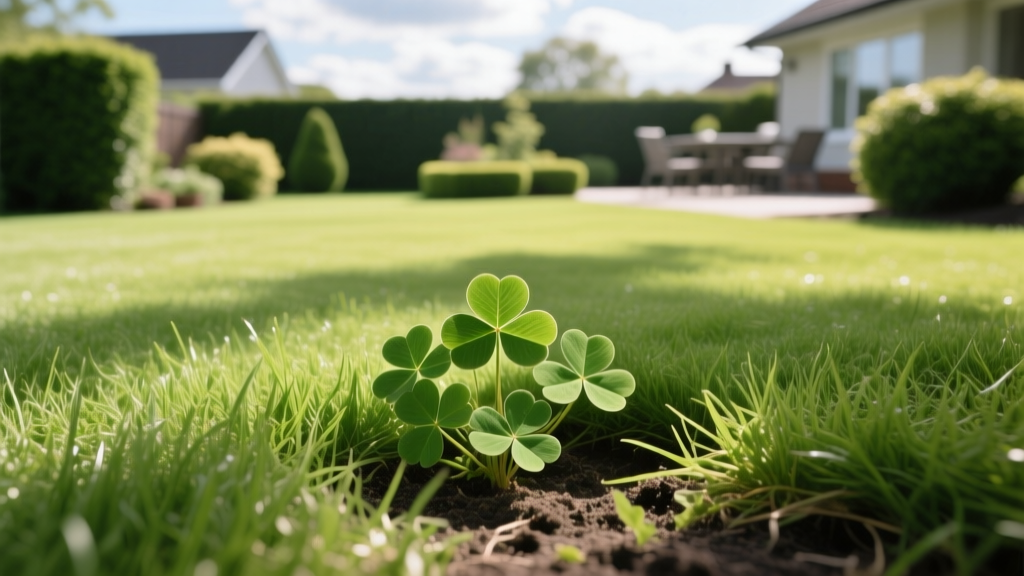
Spot-Treatment Guide: Managing a Dutch Clover Lawn Invasion
The Biology of Dutch Clover: Why It Outcompetes Turf
Dutch clover (Trifolium repens var. minus) is a low-growing, perennial broadleaf weed that aggressively colonizes nitrogen-deficient turf. Unlike larger white clover varieties, Dutch clover features smaller leaflets (typically under 0.5 inches across) and forms dense, low-lying mats via above-ground creeping stems called stolons. When homeowners notice a Dutch clover lawn invasion, it is almost always a biological indicator of underlying soil compaction and low nitrogen availability.
Clover possesses a symbiotic relationship with Rhizobium bacteria, allowing it to fix atmospheric nitrogen into the soil. While beneficial in eco-lawns, this trait makes it a formidable competitor in traditional turfgrass. When your soil lacks available nitrogen, the turfgrass starves and thins out, while the Dutch clover synthesizes its own fertilizer, rapidly filling the void. According to the University of California Statewide IPM Program, clovers thrive in poorly fertilized soils and can tolerate lower mowing heights than many desirable cool-season grasses, allowing them to survive standard maintenance routines that would otherwise suppress broader weeds.
Identification Checklist:
- Leaves: Trifoliate (three leaflets), often with a distinct white or pale green "V" or chevron marking on each leaflet.
- Growth Habit: Creeping stolons that root at the nodes, forming a dense mat close to the soil surface.
- Flowers: Small, spherical, white to pale pink flower heads (0.5 to 1 inch in diameter) on slender stalks, blooming from late spring through early fall.
Chemical Spot-Treatment Protocols (Selective Herbicides)
Eradicating Dutch clover requires selective broadleaf herbicides that target dicotyledonous plants without harming monocot turfgrasses. Because clover has a waxy leaf cuticle and a resilient stolon network, single-active-ingredient herbicides (like 2,4-D alone) often result in incomplete kill and rapid regrowth. Professional-grade combinations utilizing three or four active ingredients provide the most reliable spot-treatment results.
Top Selective Herbicide Formulations
| Product / Trade Name | Active Ingredients | Turf Safety | Speed of Kill | Approx. Cost (2026) |
|---|---|---|---|---|
| SpeedZone | Carfentrazone, 2,4-D, MCPP, Dicamba | Cool & Warm (check label for St. Augustine) | 24-48 hours (visible burn) | $45 / pint |
| Trimec Classic | 2,4-D, MCPP, Dicamba | Cool-season grasses | 7-14 days | $35 / gallon |
| Ortho WeedClear (RTU) | 2,4-D, Quinclorac, Dicamba | Most residential turfgrasses | 3-7 days | $15 / 32oz spray |
For severe Dutch clover lawn infestations, SpeedZone is the industry standard. The addition of Carfentrazone-ethyl provides rapid contact activity, disrupting cell membranes and causing visible necrosis within 24 hours, while the systemic auxins (2,4-D, MCPP, Dicamba) translocate down into the stolon nodes to prevent regrowth. Mix SpeedZone at a rate of 1.5 fluid ounces per 1,000 square feet in 1 to 2 gallons of water.
Organic and Non-Selective Spot-Treatment Options
If you are managing an organic landscape or want to avoid synthetic auxins, spot-treating Dutch clover requires a different approach. Non-selective organic herbicides will burn the clover but can also damage surrounding turf if not applied with precision.
- Iron HEDTA (e.g., Fiesta Turf Weeder): Chelated iron (FeHEDTA) is highly toxic to broadleaf weeds but safe for most turfgrasses. It works by inducing rapid oxidative stress in dicot leaves. Apply at 3 to 5 fluid ounces per 1,000 sq ft. Limitation: It primarily burns foliage; you will need a second application 3 to 4 weeks later to kill the stolons.
- Horticultural Vinegar (20% Acetic Acid): Provides rapid desiccation of clover leaves. Failure Mode: Acetic acid is strictly a contact burn agent. It will not penetrate the waxy cuticle to kill the deep taproots or creeping stolons of perennial Dutch clover. Expect a 90% regrowth rate within 14 days, making this a poor long-term solution for established mats.
- Flame Weeding: Using a propane torch to briefly pass over the clover mats ruptures plant cells. This is highly effective for spot-treating clover in driveway cracks or garden bed edges, but poses an unacceptable fire risk and turf-damage risk in the middle of a dry lawn.
Step-by-Step Application Guide for Liquid Concentrates
Proper calibration and application technique dictate the success of your chemical spot-treatment. Follow this protocol to maximize herbicide uptake and minimize turf stress.
- Wait for Optimal Conditions: Apply when daytime temperatures are between 65°F and 80°F. Soil moisture should be adequate (water the lawn 24 hours prior if the soil is bone dry), as actively growing clover translocates herbicides much faster than drought-stressed clover.
- Add a Non-Ionic Surfactant (NIS): Dutch clover leaves are notoriously hydrophobic. Add an NIS (like Dyne-Amic or Hi-Yield Spreader Sticker) at a rate of 0.25% v/v (approximately 1/2 teaspoon per gallon of mixed solution). This breaks the surface tension, allowing the herbicide to spread evenly across the leaf rather than beading up and rolling off.
- Use a Flat-Fan Nozzle: Equip your 2-gallon pump sprayer with an 8002 or 11002 flat-fan nozzle. Avoid cone nozzles, which produce fine droplets prone to wind drift. You want medium-coarse droplets that coat the clover leaf without bouncing off.
- Spot-Spray Technique: Do not broadcast spray the entire lawn. Walk the property and spray only the clover mats until the leaves are visibly wet (glistening), but not dripping. Over-application does not increase kill rates; it only wastes product and increases the risk of soil residual damage.
- Post-Application Wait: Do not mow for 48 hours before or 48 hours after application. Allow the herbicide maximum time to absorb through the foliage and move into the root system. Ensure no rainfall is forecast for at least 6 hours post-application.
⚠️ WARNING: Volatilization and Drift Risks
Never apply ester-based herbicides (or products containing 2,4-D and Dicamba) when temperatures exceed 85°F. At high temperatures, these chemicals can volatilize (turn into a gas) and drift onto non-target ornamental shrubs, vegetable gardens, or neighboring properties, causing severe twisting and cupping damage to sensitive broadleaf plants.
Cultural Remediation: Preventing the Clover from Returning
Herbicides only treat the symptom; cultural practices treat the cause. As noted by Rutgers NJAES turfgrass specialists, broadleaf weeds like clover are opportunistic. If you kill the clover but do not fix the environment, crabgrass or spurge will simply take its place. To permanently defend against a recurring Dutch clover lawn invasion, implement the following cultural controls:
1. Correct the Nitrogen Deficit
Dutch clover thrives when soil nitrogen drops below 2 lbs per 1,000 sq ft annually. Transition to a high-nitrogen, slow-release fertilizer program. Apply 1 lb of actual nitrogen per 1,000 sq ft in early fall and again in late spring. Use a product with at least 50% water-insoluble nitrogen (WIN), such as milorganite or sulfur-coated urea, to provide a steady feed that thickens the turf without causing rapid, disease-prone flushes of growth.
2. Raise the Mowing Height
Clover stolons require sunlight to root at the nodes and spread. By raising your mower deck to 3.5 to 4.0 inches, the turfgrass canopy will shade the soil surface, drastically reducing the photosynthetic capacity of the low-growing clover. Tall fescue and Kentucky bluegrass perform optimally at these heights, while the shade suppresses clover stolon expansion.
3. Relieve Soil Compaction
Clover tolerates compacted, low-oxygen soils far better than turfgrass roots. Perform core aeration in the fall, pulling 3-inch deep plugs at a spacing of 2 to 3 inches apart. Top-dress the aerated lawn with 1/4 inch of screened compost to improve soil structure, increase microbial activity, and promote deep turfgrass rooting.
"Clover is not the enemy; it is a messenger. A heavy clover presence is the lawn's way of telling you that the soil biology is starving for carbon and nitrogen. Feed the soil, and the turf will naturally outcompete the weeds." — Dr. Frank Rossi, Professor of Turfgrass Science
Frequently Asked Questions
Will pulling Dutch clover by hand work?
Hand-pulling is only effective for very young, isolated seedlings. Mature Dutch clover develops deep taproots and extensive stolon networks. If you pull it, the stolons will snap, leaving root fragments and nodes in the soil that will rapidly regenerate new plants within two weeks. For mature patches, chemical or iron-based spot-treatment is significantly more effective.
Is Dutch clover bad for bees?
No. Dutch clover is an excellent nectar and pollen source for honeybees and native pollinators. If your goal is to support local pollinator populations, consider leaving the clover in less visible areas of the yard or transitioning to a mixed turf-clover eco-lawn. However, if you require a uniform, high-traffic recreational turf surface, the clover must be managed.
How long does it take for SpeedZone to kill Dutch clover?
SpeedZone contains Carfentrazone, which causes visible leaf burn (desiccation and browning) within 24 to 48 hours. However, the complete translocation of the systemic ingredients (2,4-D, MCPP, Dicamba) into the roots and stolons takes 10 to 14 days. The clover may look dead on top in two days, but do not disturb or rake the area until the 14-day mark to ensure the root system is fully eradicated.

