
Lawn Care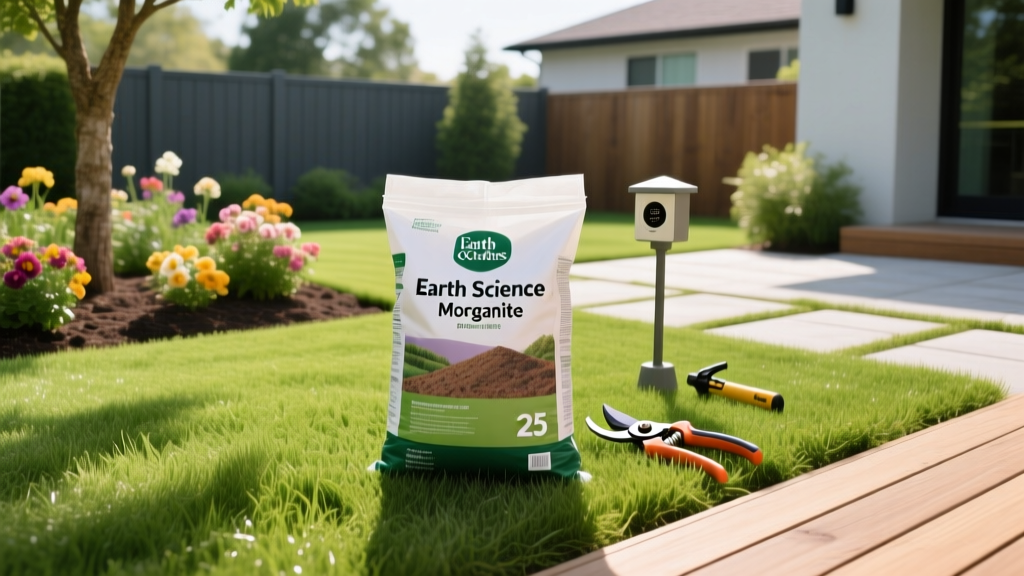
Earth Science Moorganite 25 lb: Dosage, Coverage & Cost Guide
Understanding Earth Science Moorganite: The 5-2-0 Biosolid Profile
Earth Science Moorganite is a biosolid-based, slow-release organic fertilizer that serves as a direct, often more affordable competitor to Milorganite. Packaged in a 25 lb bag, this all-purpose granular amendment is engineered to feed both your turf and the underlying soil microbiome. Unlike synthetic urea-based fertilizers that deliver a rapid, short-lived nitrogen spike, Moorganite relies on microbial breakdown to release nutrients.
The guaranteed analysis is 5-2-0 (5% Total Nitrogen, 2% Available Phosphate, 0% Soluble Potash). Crucially, 4% of that nitrogen is water-insoluble (slow-release), meaning it will not leach into groundwater or burn your lawn during summer heat. It also contains 2.5% non-staining iron, which promotes deep greening without the rapid, unnatural flush associated with synthetic iron chelates. Because it is derived from treated municipal biosolids, it introduces valuable organic carbon to the soil matrix, improving moisture retention in sandy soils and loosening compacted clay over time.
Exact Dosage and the 100-Square-Foot Calibration Method
The most common failure point with organic biosolid fertilizers is miscalculating the spreader dial. Manufacturer dials are notoriously inconsistent across different spreader models. To achieve the target application rate of 10 lbs per 1,000 square feet (delivering 0.5 lbs of Nitrogen per 1,000 sq ft), you must calibrate your specific equipment.
Step-by-Step Spreader Calibration
- Measure a Test Zone: Mark off a 100-square-foot area on your driveway or a tarp (e.g., 10 ft x 10 ft).
- Weigh the Product: Weigh out exactly 1.0 lb of Moorganite (10 lbs per 1,000 sq ft divided by 10).
- Set and Sweep: Set your rotary spreader to a middle setting (usually 5 or 6 on a Scotts rotary). Walk the 100 sq ft area at your normal mowing pace.
- Evaluate: If you have product left over, open the dial one notch. If you run out before finishing the area, close the dial one notch. Repeat until exactly 1.0 lb covers the 100 sq ft zone.
Pro Tip: Moorganite granules are slightly larger and more irregular than synthetic prills. If your spreader stalls or clogs, ensure the granules are completely dry. Store the 25 lb bag in a climate-controlled area to prevent the hygroscopic organic matter from clumping.
Coverage Calculator: How Far Does a 25 lb Bag Go?
At the standard maintenance rate of 10 lbs per 1,000 sq ft, a single 25 lb bag of Earth Science Moorganite covers exactly 2,500 square feet. If you are attempting a heavy renovation or pushing maximum growth on a highly degraded lawn, you may increase the rate to 15 lbs per 1,000 sq ft, which reduces coverage to 1,666 square feet per bag.
| Lawn Size (Sq Ft) | Bags Needed (Per Application) | Total Weight Applied | Nitrogen Delivered |
|---|---|---|---|
| 2,500 | 1 Bag | 25 lbs | 1.25 lbs N |
| 5,000 | 2 Bags | 50 lbs | 2.50 lbs N |
| 10,000 | 4 Bags | 100 lbs | 5.00 lbs N |
| 15,000 | 6 Bags | 150 lbs | 7.50 lbs N |
Cost Analysis: Moorganite vs. Synthetics vs. Competitors
When evaluating fertilizer economics, looking at the price per bag is a trap. You must calculate the Cost Per Pound of Actual Nitrogen. As of 2026, a 25 lb bag of Earth Science Moorganite retails for approximately $13.50 to $16.00, depending on regional big-box store pricing. We will use an average of $14.50.
- Moorganite (5-2-0): 25 lbs x 0.05 = 1.25 lbs of Nitrogen. Cost: $14.50. Cost per lb of N = $11.60
- Milorganite (5-4-0): 32 lbs x 0.05 = 1.60 lbs of Nitrogen. Cost: $19.00. Cost per lb of N = $11.87
- Synthetic Urea (46-0-0): 40 lbs x 0.46 = 18.4 lbs of Nitrogen. Cost: $45.00. Cost per lb of N = $2.44
While synthetic nitrogen is vastly cheaper per pound, it provides zero organic matter, degrades soil biology over time, and requires frequent reapplication due to leaching. Moorganite's value proposition lies in its dual-action: feeding the turf while building the soil's cation exchange capacity (CEC). For homeowners focused on long-term soil health rather than sheer bulk nitrogen, Moorganite offers a slight cost advantage over its primary competitor, Milorganite, while delivering nearly identical agronomic results.
Seasonal Application Calendar & Protocol
Because Moorganite requires microbial activity to break down the organic nitrogen bonds, it is entirely dependent on soil temperature. Soil microbes go dormant below 55°F. Therefore, applying this product in late fall or early spring when soils are cold is a waste of capital.
| Season | Timing | Soil Temp Requirement | Application Notes |
|---|---|---|---|
| Spring | Mid-to-Late May | Consistent 60°F+ | Apply after the first 3 mows. Avoid early spring to prevent snow mold promotion. |
| Summer | July / August | Up to 85°F | Safe for summer use. Will not burn turf. Iron helps combat summer chlorosis. |
| Fall | Early September | Cooling to 70°F | Ideal timing. Microbes are highly active, storing nutrients in the root zone for winter. |
Application Best Practices
Always apply Moorganite to a dry lawn, but water it in lightly (about 1/4 inch of irrigation) immediately after application. This washes the granules off the grass blades and into the soil surface, preventing the iron from oxidizing on the leaf tissue and accelerating microbial contact. You can mow your lawn immediately after watering without fear of picking up the granules, as they will have settled into the thatch layer.
Edge Cases, Troubleshooting, and Safety
The Biosolid Odor Factor
Earth Science Moorganite is a treated biosolid product. When first applied and watered in, it will emit a distinct, earthy, and somewhat unpleasant odor reminiscent of damp soil or mild sewage. This smell is entirely normal and typically dissipates within 48 to 72 hours as the product integrates into the soil profile. If you have an outdoor event planned, apply the fertilizer at least four days in advance.
Hardscape Staining Protocols
Warning: While Moorganite claims 'non-staining' iron, any organic iron product can leave rust-colored spots on porous concrete, limestone, or light-colored pavers if left wet. Always use a leaf blower to sweep stray granules off driveways and sidewalks immediately after spreading, before you turn on your irrigation system.
Heavy Metals and EPA Part 503 Compliance
Homeowners frequently express concern regarding heavy metals in biosolid fertilizers. It is critical to understand that all municipal biosolid fertilizers sold in the United States must comply with the EPA's 40 CFR Part 503 regulations. These rules establish strict ceiling concentrations for nine heavy metals, including arsenic, cadmium, lead, and mercury. Earth Science continuously tests its feedstock to ensure it falls well below the EPA's 'Exceptional Quality' (EQ) thresholds. According to turfgrass researchers at the University of Minnesota Extension, the long-term application of EQ biosolid fertilizers at agronomic rates does not pose a heavy metal accumulation risk to residential soils or groundwater.
Pet and Wildlife Safety
Moorganite is generally safe for pets once watered in. However, the high organic carbon content and residual scent can attract dogs, leading them to dig or roll in the treated areas. Furthermore, the iron content, while beneficial for grass, can cause gastrointestinal distress in dogs if they consume large quantities directly from the bag. Always store the 25 lb bag in a secure, elevated location out of reach of pets and wildlife.

