
Lawn Care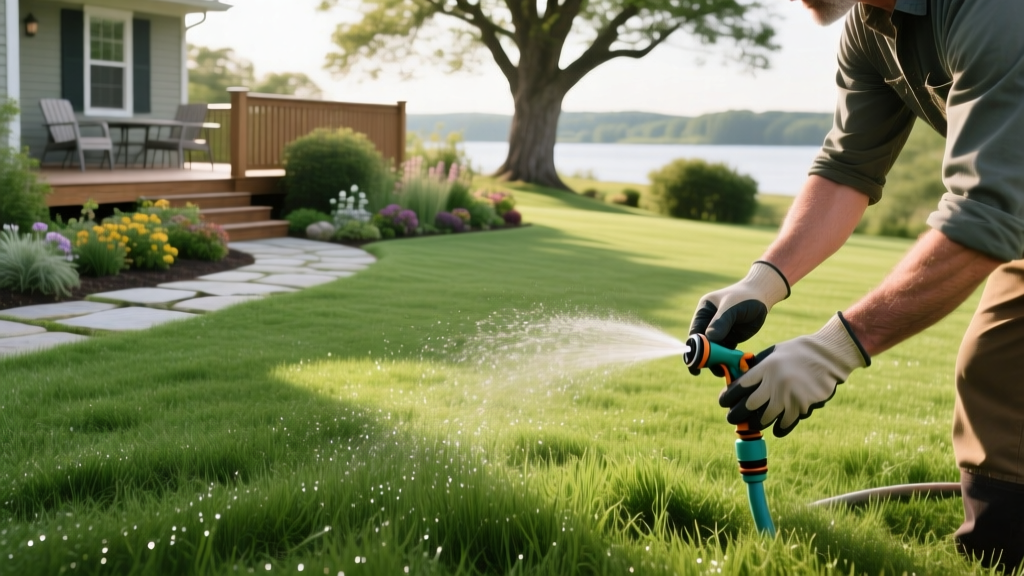
The Complete Guide to Lawn Installation in East Greenwich, RI
Understanding East Greenwich's Microclimate and Soil Profile
East Greenwich, Rhode Island, sits squarely in USDA Hardiness Zone 6b to 7a, characterized by humid, coastal-influenced summers and freezing, snow-heavy winters. According to the USDA Plant Hardiness Zone Map, this transitional climate dictates that only cool-season grasses will survive long-term. However, the primary challenge for lawn installation in this specific Kent County municipality is not the temperature, but the native soil architecture.
The predominant soil types in East Greenwich are the Paxton and Woodbridge series. These are glacial till soils formed over dense bedrock. They are naturally acidic (typically pH 4.5 to 5.5), heavily compacted, and riddled with subsurface stones. More critically, Paxton soils feature a 'fragipan'—a dense, impermeable subsoil layer located roughly 18 to 24 inches below the surface. This hardpan restricts deep root growth and causes severe water pooling during spring thaws and heavy autumn rains.
Pro Tip for East Greenwich Homeowners: Before purchasing a single bag of seed, submit a soil sample to the URI Cooperative Extension Soil Testing Lab. Request a standard nutrient analysis with organic matter and pH buffering. This $15 investment will dictate your exact lime and phosphorus requirements, preventing hundreds of dollars in wasted amendments.
Selecting the Right Cool-Season Grass Seed
Because of the fragipan drainage issues and summer heat stress, a monoculture lawn will inevitably fail in East Greenwich. You need a multi-species blend that balances drought tolerance, disease resistance, and self-repairing capabilities. Avoid cheap 'contractor grade' mixes sold at big-box stores, which often contain annual ryegrass or high percentages of weed seed.
| Grass Species | Best Use Case in East Greenwich | Recommended Cultivars | Maintenance Level |
|---|---|---|---|
| Tall Fescue | Full sun, high traffic, drought-prone areas | Titan Ultra, Faith, Scorch | Low to Moderate |
| Kentucky Bluegrass | Sun to partial shade, bare spot repair | Midnight, Award, NuGlade | High (Requires frequent water/fertilizer) |
| Fine Fescue | Deep shade under mature oak/pine canopies | Navigator, Spartan, Jade | Low (Minimal nitrogen required) |
The Ideal East Greenwich Mix: For a standard suburban yard with mixed sun exposure, target a blend of 70% Turf-Type Tall Fescue, 20% Kentucky Bluegrass, and 10% Fine Fescue. The Tall Fescue provides deep roots to combat summer drought, the KBG spreads via rhizomes to fill in winter damage, and the Fine Fescue handles the shaded edges near your home's foundation.
Step-by-Step Soil Preparation and Amendment
Proper seedbed preparation is where 90% of East Greenwich lawn installations succeed or fail. Follow this exact sequence to overcome the native glacial till.
- Clear and Rough Grade: Remove all existing weeds, rocks larger than 2 inches, and debris. Use a walk-behind rototiller to break up the top 4 to 6 inches of soil. If you hit the Paxton hardpan, do not attempt to till through it; instead, focus on amending the topsoil layer above it.
- Apply Calcitic Lime: East Greenwich soils are deficient in calcium. Apply pelletized calcitic lime (not dolomitic lime, as magnesium levels are usually adequate) at a rate of 50 lbs per 1,000 square feet to raise the pH from 5.0 to roughly 6.0. This unlocks bound nutrients in the soil.
- Incorporate Organic Matter: Spread a 1-inch layer of fully composted leaf mulch or aged manure over the tilled soil. Till it into the top 3 inches. This organic matter acts as a sponge, mitigating the drainage issues caused by the subsoil hardpan.
- Apply Starter Fertilizer with Mesotrione: This is a critical, often-missed step. Apply a starter fertilizer (e.g., Scotts Turf Builder Starter Food 24-25-4) that contains mesotrione (the active ingredient in Tenacity). Mesotrione acts as a pre-emergent weed control that prevents crabgrass and broadleaf weeds from germinating, but it is completely safe for germinating cool-season grass seed. This gives your new lawn a massive competitive advantage.
- Fine Grade and Roll: Rake the seedbed smooth, ensuring a 1-inch-per-foot slope away from your home's foundation. Use a water-filled lawn roller (filled halfway for 150 lbs of pressure) to firm the seedbed. This prevents seed washout during heavy New England rainstorms.
Seeding, Hydroseeding, or Sod? Cost & Timeline Breakdown
Choosing your installation method depends on your budget, the size of your East Greenwich property, and how quickly you need erosion control. Below is a breakdown of current market rates for Kent County.
| Method | Estimated Cost (per 1,000 sq ft) | Time to Usable Lawn | Best For |
|---|---|---|---|
| DIY Drop Seeding | $60 - $120 | 8 - 12 weeks | Budget-conscious, flat yards, small patches |
| Professional Hydroseeding | $180 - $350 | 6 - 8 weeks | Large lots, sloped terrain, erosion control |
| Professional Sod Installation | $1,200 - $2,500 | 2 - 3 weeks | Instant results, high-end landscaping, late fall installs |
Note: Hydroseeding in Rhode Island typically utilizes a wood-fiber mulch matrix mixed with a 100% Tall Fescue or KBG blend. Ensure your contractor uses a certified weed-free seed mix, not generic pasture seed.
Post-Installation Watering and Germination Schedule
The optimal window for lawn installation in East Greenwich is between August 15 and October 1. This allows 6 to 8 weeks of root development before the ground freezes in late November. If you must plant in spring, wait until mid-April, but be prepared to battle aggressive crabgrass pressure in July.
The 30-Day Germination Watering Protocol
- Days 1 to 14 (Germination Phase): Water 2 to 3 times daily for 5 to 10 minutes per zone. The goal is to keep the top 1 inch of soil consistently moist, not muddy. Never let the seed dry out, or the embryonic root will desiccate and die.
- Days 15 to 21 (Establishment Phase): Reduce frequency to once daily, but increase duration to 20 minutes. This encourages the young roots to stretch downward toward the moisture.
- Days 22 to 30 (Deep Root Phase): Transition to watering every other day for 30 to 40 minutes. This builds drought tolerance and forces roots to navigate the challenging Paxton soil profile.
Frequently Asked Questions
Can I lay sod over existing East Greenwich clay soil?
No. Laying sod directly over unamended, compacted glacial till will result in a shallow root system that dies during the first July heatwave. You must rototill the top 3 inches and incorporate compost before laying sod to ensure the roots can penetrate the native soil.
When should I apply my first round of winterizer fertilizer?
For a newly established cool-season lawn in Kent County, apply a high-potassium winterizer (e.g., 10-0-20) in late October or early November, just before the grass stops growing but while the ground is still unfrozen. This stores carbohydrates in the root system to survive the Rhode Island freeze-thaw cycles.
How do I handle shade from mature trees on my property?
East Greenwich features many mature oak and pine trees. Grass requires at least 4 hours of dappled sunlight. If your yard is heavily shaded, prune lower tree branches to raise the canopy. For areas receiving less than 3 hours of light, abandon grass entirely and install shade-tolerant groundcovers like Pachysandra or microclover.

