
Lawn Care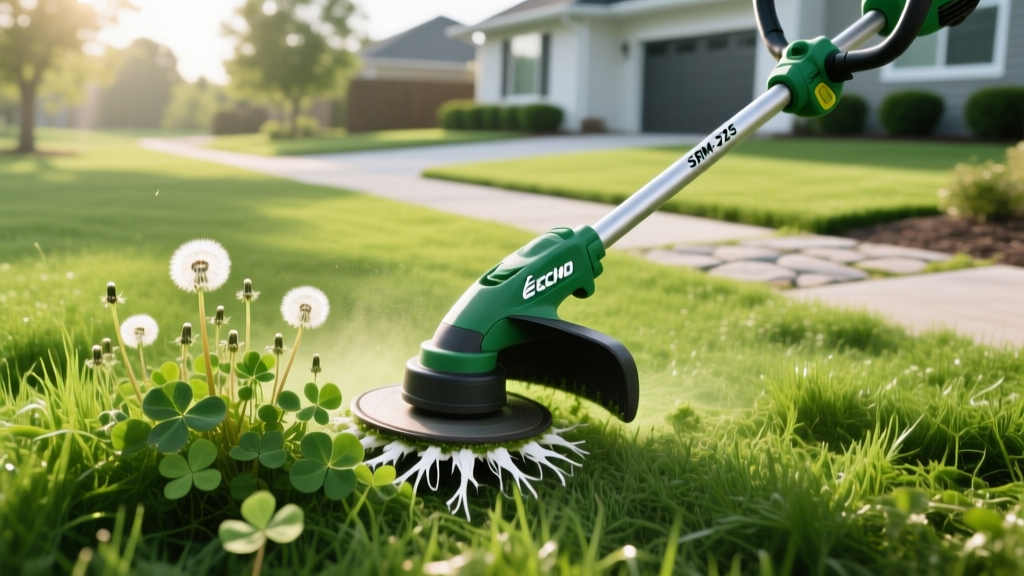
Echo SRM-225 Weed Eater: Spot-Treatment Guide for Tough Lawn Weeds
The Role of Mechanical Intervention in Weed Spot-Treatment
Broadcast herbicide applications rarely solve severe, localized weed infestations. Deep-rooted perennial grasses and aggressive sedges often require a two-pronged approach: mechanical reduction followed by targeted chemical application. The Echo SRM-225 weed eater, powered by a 21.2cc commercial-grade 2-stroke engine, is uniquely suited for this task. Unlike lighter 18cc residential trimmers that stall in thick vegetation, the SRM-225 delivers the low-end torque necessary to slice through dense dallisgrass clumps and overgrown perimeter weeds without bogging down.
Effective spot-treatment is not about scalping the lawn; it is about precise biomass reduction. By removing excess top growth with the Echo SRM-225, you prepare the weed for optimal herbicide uptake while minimizing chemical waste and environmental runoff. According to University of Minnesota Extension, integrating mechanical mowing or trimming with spot-spraying significantly improves the efficacy of systemic herbicides on mature perennial weeds.
Weed Species Profile and SRM-225 Cutting Matrix
Different weed species demand specific trimming geometries and line types. The 17-inch cutting swath of the Echo SRM-225 allows for broad clearing, but precision spot-treatment requires utilizing only the outer 2 to 3 inches of the trimmer line. Below is a decision matrix for tackling the three most stubborn lawn weeds.
| Weed Species | Growth Habit | Recommended SRM-225 Line | Cutting Technique | Follow-Up Chemical |
|---|---|---|---|---|
| Dallisgrass | Clumping, deep rhizomes | 0.105-inch Twisted | Base-cutting at soil level | Fluazifop or MSMA (where legal) |
| Yellow Nutsedge | Upright, nutlet-producing | 0.095-inch Round | Top-trimming seed heads only | Halosulfuron-methyl |
| Crabgrass | Low-spreading, prostrate | 0.095-inch Multi-sided | Angled edging along hardscapes | Quinclorac |
Optimizing the Speed-Feed 400 Head for Weed Eradication
The Echo SRM-225 comes equipped with the Speed-Feed 400 trimmer head, a bump-feed system designed for rapid line advancement. However, line geometry drastically alters cutting performance and engine strain.
Line Diameter and Engine Load
While the SRM-225 can technically accept up to 0.105-inch line, using a solid 0.105-inch round line in dense weed patches creates excessive aerodynamic drag, causing the 21.2cc engine to over-rev and overheat. For heavy spot-treatment, spool the Speed-Feed 400 with 0.105-inch twisted line. The twisted profile cuts through fibrous dallisgrass stems 30% faster than round line, reducing engine load while maximizing shear force.
Warning: Scalping Risks with Warm-Season Turf
When spot-treating weeds in Bermuda or Zoysia lawns, keep the trimmer head strictly parallel to the ground. Tilting the Echo SRM-225 forward exposes the lower guard and cuts the desirable turf below its growing point, leading to permanent scalp marks that take weeks to recover.
Step-by-Step: Spot-Treating Dallisgrass and Nutsedge
Executing a mechanical spot-treatment requires timing and precision. Follow this protocol to prepare stubborn weeds for chemical elimination.
- Identify the Weed and Hydrate: Water the target area 24 hours before trimming. Hydrated weed stems are turgid and cut cleanly; dry, brittle stems shatter, leaving jagged edges that heal over and block herbicide absorption.
- Set the Throttle: Engage the Echo SRM-225 cruise control lever to maintain a steady 8,500 RPM. Consistent line speed ensures a uniform cut across the weed clump.
- Execute the Cut: For dallisgrass, sweep the outer 3 inches of the line across the base of the clump, removing the top 70% of the biomass. For yellow nutsedge, only remove the top third of the plant to eliminate the seed head without stimulating the underground nutlets to sprout new shoots.
- Wait 48 Hours: Do not apply herbicide immediately. As noted by UC Statewide IPM Program, allowing the weed to regenerate 1 to 2 inches of fresh, tender leaf tissue provides the ideal surface area for systemic herbicides to enter the plant's vascular system.
- Apply Targeted Herbicide: Use a handheld 1-gallon pump sprayer with a shield to apply your chosen chemical directly to the freshly trimmed weed, avoiding the surrounding desirable turf.
Integrating Mechanical Edging for Perimeter Weed Control
Weeds like crabgrass and goosegrass thrive in the microclimates created by hardscape edges, where soil temperatures are higher and turfgrass is naturally thinner. The Echo SRM-225 can be rotated 90 degrees to function as an edger, severing the rhizomes of invasive grasses creeping over driveways and sidewalks.
When edging, drop the RPMs slightly to prevent throwing debris and gravel. Use a 0.095-inch multi-sided (square or star) line. The sharp edges of the square line act like a blade, slicing cleanly through the thick, fibrous stolons of crabgrass that typically wrap around and stall standard round lines.
SRM-225 Maintenance During Peak Weed Season
Heavy weed spot-treatment puts immense strain on the trimmer. Cutting thick, wet, or fibrous weeds forces the engine to work harder, increasing fuel consumption and carbon buildup. To maintain peak performance during the summer weed flush, adhere to this maintenance schedule:
- Spark Arrestor Screen: Located inside the muffler, this screen clogs rapidly when running the engine at high loads in dusty conditions. Remove the muffler cover every 25 hours of heavy weed cutting and scrub the screen with a brass wire brush. A clogged arrestor causes the SRM-225 to bog down and stall when engaging thick clumps.
- Carburetor Tuning (LA Screw): If the engine dies when you release the throttle after a heavy cut, the idle mixture is too lean. Locate the LA (idle speed) screw on the carburetor and turn it counter-clockwise by 1/8th of a turn to stabilize the idle.
- Air Filter Care: The SRM-225 features a pleated paper air filter. Do not use compressed air to clean it, as this drives fine weed dust deeper into the pleats. Tap it gently against a hard surface or replace it annually.
Frequently Asked Questions
Can I attach a metal brush blade to the Echo SRM-225 for woody weeds?
Yes, the Echo SRM-225 supports metal blade attachments via the appropriate adapter kit. However, for lawn weed spot-treatment, metal blades are generally unnecessary and dangerous near desirable turf. Stick to heavy-duty twisted polymer lines for grassy and sedge weeds to avoid damaging the lawn's root zone.
Why does my SRM-225 line keep welding together inside the Speed-Feed 400 head?
Line welding occurs when the spool overheats due to friction, melting the nylon layers together. This is common when using undersized line (like 0.080-inch) in thick weeds, forcing the user to bump the head excessively. Upgrade to 0.095-inch or 0.105-inch line, and ensure you are winding the line tightly and evenly in the correct directional arrows inside the spool.
How do I dispose of the weed clippings after trimming?
Never leave trimmed dallisgrass or nutsedge clippings on the lawn. These species can reproduce from stem nodes and rhizomes left in the thatch layer. Rake the clippings immediately after spot-treatment and dispose of them in municipal yard waste bins, not in your home compost pile where temperatures are rarely high enough to kill weed seeds and nutlets.

