
Lawn Care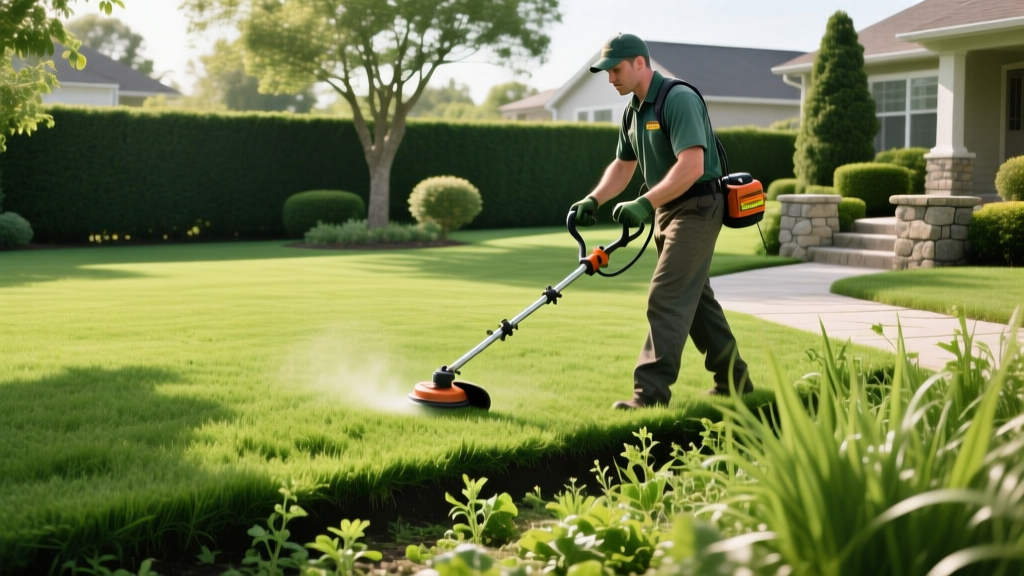
How to Edge With a Weed Eater to Stop Invasive Weed Spread
Most homeowners view edging as a purely cosmetic task, a way to achieve the satisfying, crisp lines seen on professional golf courses and manicured estates. However, from a turf management and weed species spot-treatment perspective, edging is a critical mechanical control strategy. Invasive rhizomatous grasses and aggressive broadleaf weeds do not respect property lines or hardscape borders. Without a properly maintained physical barrier, species like Common Bermudagrass (Cynodon dactylon), Torpedograss, and Quackgrass will silently infiltrate flower beds, sidewalk cracks, and vegetable gardens.
Understanding how to edge with a weed eater specifically for weed containment transforms your string trimmer from a simple grooming tool into a vital component of your integrated pest management (IPM) arsenal. This guide details the exact techniques, equipment specifications, and chemical pairings required to halt invasive weed migration at your lawn's borders.
The Mechanics of Weed Migration at Lawn Borders
To effectively edge for weed control, you must understand how invasive species spread. Weeds like Bermudagrass and Johnsongrass spread via rhizomes (underground stems) and stolons (above-ground runners). When these runners reach the edge of your turf, they don't just stop; they dive under sidewalks or reach across mulch gaps to establish new root nodes.
According to the UC Statewide IPM Program, mechanical disruption of these rhizome networks is a foundational step in managing invasive perennial weeds. By using a weed eater to cut a vertical trench along the lawn border, you physically sever these underground highways. More importantly, severing the rhizomes exposes the internal vascular tissue of the weed, making subsequent spot-treatments with systemic herbicides significantly more effective.
Equipment Selection: Trimmer Specs for Weed Containment
Not all weed eaters are built for heavy-duty edging and rhizome severing. The lightweight, 20-volt curved-shaft trimmers designed for light grass trimming will bounce off compacted soil and thick weed stolons. For effective weed containment edging, you need specific equipment configurations.
Straight Shaft vs. Curved Shaft
Always opt for a straight-shaft trimmer (such as the Echo SRM-2620T or Stihl FS 91 R) when edging for weed control. Straight shafts transfer torque directly from the gearbox to the cutting head, providing the raw power needed to slice through dense, soil-bound rhizomes. Curved shafts use a flexible drive cable that can snap under the lateral stress of digging into hard soil edges.
Trimmer Line Diameter and Material
Standard .065-inch or .080-inch round lines will shatter when hitting the compacted soil and woody weed stolons found at lawn borders. Upgrade your spool based on the target weed species:
| Line Diameter | Line Profile | Target Weed Species & Soil Type | Recommended Use Case |
|---|---|---|---|
| .080 - .095 inch | Square / Star | Crabgrass, Spurge, soft loam soils | Standard maintenance edging for annual weeds |
| .095 - .105 inch | Twisted / Serrated | Bermudagrass, Zoysia, clay soils | Severing thick rhizomes and compacted clay borders |
| .130+ inch or Blade | Brush Blade / Steel | Torpedograss, Dallisgrass, rocky soil | Heavy trenching and woody stolon destruction |
Pro Tip for 2026 Battery Models: If you are using a modern 56V or 80V battery-powered trimmer (like the EGO Power+ ST15121T), ensure you are running the high-torque mode. Battery trimmers often default to an eco-mode that reduces RPMs to save battery, which will cause the string to stall when biting into tough weed rhizomes at the border.
Step-by-Step: How to Edge With a Weed Eater for Maximum Containment
The University of Minnesota Extension emphasizes that proper edging technique prevents turf damage while creating a definitive boundary. Follow this protocol to establish a weed-blocking trench.
- Mark the Boundary: Use a half-moon edger or a flat spade to score a straight line in the soil if you are establishing a new edge. For existing edges, clear away loose mulch and debris to expose the soil line.
- Position the Trimmer: Turn the weed eater 90 degrees so the guard is facing the lawn and the string is spinning vertically against the hardscape or bed boundary. Tilt the machine slightly toward the bed (about a 10-degree angle) to undercut the soil.
- Establish the Depth: Lower the spinning string into the soil until you reach a depth of 3 to 4 inches. This specific depth is critical; it cuts below the primary rhizome zone of most invasive grasses without severing the deep taproots of desirable turf.
- Walk at a Steady Pace: Move along the border at a walking speed of roughly 2 feet per second. Let the centrifugal force of the string do the cutting. Forcing the head into the dirt will stall the motor and snap the line.
- Clear the Trench: After edging, use a leaf blower or a stiff-bristled push broom to remove the severed soil and weed fragments from the trench. Leaving this debris in the trench creates a bridge that new weed stolons can use to cross the gap.
Warning: Avoid the 'Scalping' Trap
When edging near sidewalks, amateur operators often drop the trimmer head too low, scalping the turf right up to the concrete. This exposes bare soil directly adjacent to the hardscape. Bare, sun-baked soil is the primary germination zone for heat-loving weeds like Prostrate Spurge and Nutsedge. Always leave a 1-inch buffer of uncut turf leaning over the concrete to shade the soil edge.
When edging near sidewalks, amateur operators often drop the trimmer head too low, scalping the turf right up to the concrete. This exposes bare soil directly adjacent to the hardscape. Bare, sun-baked soil is the primary germination zone for heat-loving weeds like Prostrate Spurge and Nutsedge. Always leave a 1-inch buffer of uncut turf leaning over the concrete to shade the soil edge.
Pairing Mechanical Edging With Spot-Treatment Herbicides
Edging alone will not kill the root system of established perennial weeds; it only severs the current runners. To achieve total control, you must integrate your mechanical edging with targeted chemical spot-treatments. The freshly cut edge provides the perfect opportunity for herbicide application.
The 'Cut-and-Paint' Technique for Hardscapes
When dealing with invasive grasses pushing through driveway cracks or sidewalk joints, edging exposes the white, fleshy interior of the rhizomes. Within 15 minutes of making the cut, apply a non-selective systemic herbicide containing glyphosate (at a 2% active ingredient concentration) directly to the cut tissue using a sponge applicator or a precision gel pen. The plant's natural translocation process will pull the chemical down into the mother root system, killing the weed at its source without risking overspray onto your desirable lawn.
Selective Barrier Treatments in Mulch Beds
If you are edging between a Bermudagrass lawn and a mulched ornamental bed, mechanical edging must be followed by a selective chemical barrier. After clearing the 4-inch trench, apply a post-emergent grass-specific herbicide containing fluazifop-p-butyl (such as Ortho Grass B Gon) directly to any surviving weed stolons in the trench. Because fluazifop is selective, it will destroy the invasive grass runners without harming broadleaf ornamentals, shrubs, or flowers if accidental drift occurs.
Troubleshooting Edge Failures and Weed Blowouts
Even with perfect technique, certain environmental and biological factors can cause your edged borders to fail. Use this troubleshooting matrix to diagnose and fix common weed blowouts.
| Symptom | Underlying Cause | Corrective Action |
|---|---|---|
| Weeds crossing the trench within 2 weeks | Trench is too shallow (under 2 inches); stolons are growing over the top. | Re-edge to a 4-inch depth and install a physical plastic or metal edging barrier flush with the soil. |
| Desirable turf turning brown at the edge | Herbicide drift during spot-treatment or scalping the turf crown during edging. | Use a shielded spray nozzle for spot-treatments; raise the trimmer head 1 inch to protect the turf crown. |
| String breaks constantly at the border | Hitting hidden concrete footings or landscape lighting pucks beneath the soil. | Probe the soil edge with a screwdriver before edging; switch to a .105-inch twisted line for impact resistance. |
| Nutsedge emerging directly in the edging trench | Trench holds moisture and bare soil, creating a perfect Nutsedge germination bed. | Fill the bottom 2 inches of the trench with coarse gravel to improve drainage and block rhizome penetration. |
Mastering how to edge with a weed eater is about more than curb appeal; it is about establishing a defensible perimeter for your landscape. By combining the mechanical severing of invasive rhizomes with strategic, targeted herbicide spot-treatments, you can maintain pristine borders and drastically reduce the time and money spent fighting weed invasions throughout the growing season. For further reading on safe trimmer operation and maintenance, consult the Clemson University Home & Garden Information Center.

