
Lawn Care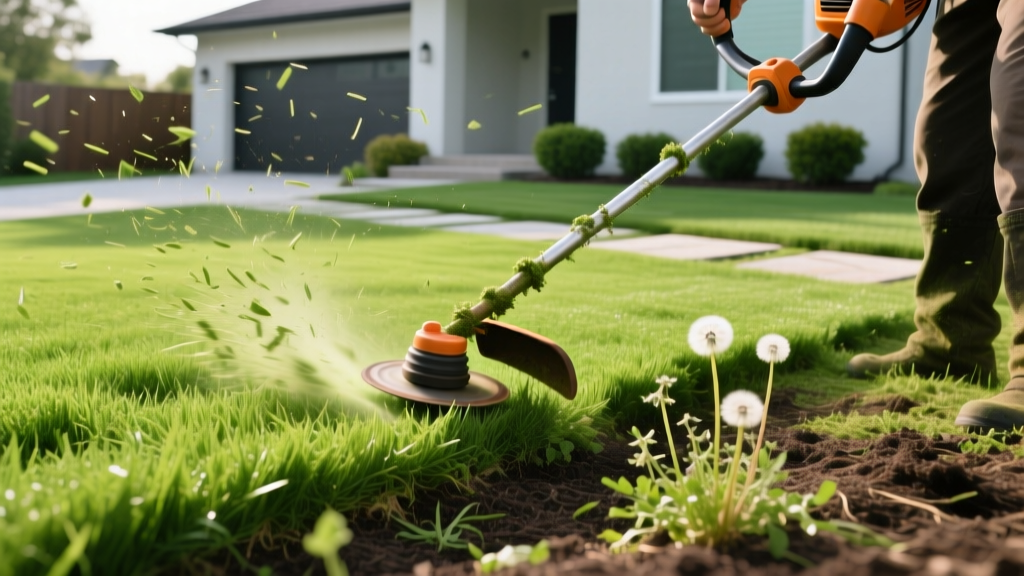
How Edging With Weed Wacker Triggers Weeds & Spot-Treatment Fixes
Using a string trimmer turned on its side is the fastest way to define hardscape borders, but edging with weed wacker attachments creates a hidden agronomic problem. The high-speed nylon line doesn't just cut grass; it pulverizes the soil surface, scalps the turf canopy, and throws organic debris into the expansion joints of driveways and sidewalks. This mechanical violence creates a highly disturbed, heat-radiating micro-climate that serves as an incubator for aggressive weed species.
Rather than treating the entire lawn, professional turf managers isolate these hardscape borders for targeted chemical and mechanical intervention. Below is a technical breakdown of the specific weed species triggered by string trimmer edging, the exact active ingredients required to eradicate them, and structural fixes to stabilize the soil.
The Hardscape Micro-Climate: Why Edges Fail
Concrete and asphalt absorb and radiate solar heat, elevating the soil temperature in the adjacent 6-inch border zone by 10°F to 15°F compared to the lawn's interior. When you edge with a weed wacker, you strip the protective thatch and turf canopy, exposing bare soil to this amplified heat. This thermal advantage accelerates the germination of summer annuals, while the physical trenching traps runoff water, creating the perfect moisture profile for sedges.
Agronomist Warning: Never use a 0.095-inch or thicker trimmer line for edging against concrete. The heavy line acts as a blunt instrument, fracturing the soil crust and exposing dormant weed seeds to light. Drop down to a 0.065-inch or 0.080-inch round line to slice the grass cleanly without tilling the soil border.
Top 4 Edge Weeds Triggered by Trimmer Scalping
Different weeds exploit the specific types of soil disturbance caused by string trimmers. Identifying the exact species is critical, as broad-spectrum herbicides often fail on the perennials and sedges that dominate hardscape borders.
| Weed Species | Trigger Cause | Active Ingredient | Product Example & Avg Cost |
|---|---|---|---|
| Crabgrass | Bare soil exposed to light/heat | Quinclorac / Fenoxaprop | Drive XLR8 ($65) / Acclaim ($80) |
| Dallisgrass | Compacted soil & rhizome spreading | Thiencarbazone + Iodosulfuron | Celsius WG ($120) |
| Yellow Nutsedge | Trapped moisture in edge trenches | Halosulfuron-methyl | SedgeHammer+ ($28/box) |
| Prostrate Spurge | Micro-cracks in concrete joints | Fluroxypyr / 2,4-D mix | SpeedZone ($55) |
1. Crabgrass (Digitaria sanguinalis)
Crabgrass requires light to germinate. The scalping effect of a weed wacker removes the turf canopy, allowing sunlight to hit the soil surface directly. According to Penn State Extension, soil temperatures consistently above 55°F at the 1-inch depth will trigger massive germination events in these bare edge zones.
Spot-Treatment Protocol: For post-emergent control, apply Quinclorac (Drive XLR8) at a rate of 0.75 oz per 1,000 sq ft. Quinclorac is highly effective on mature crabgrass but requires a non-ionic surfactant (like methylated seed oil) to penetrate the waxy cuticle of older tillers.
2. Dallisgrass (Paspalum dilatatum)
Dallisgrass is a deep-rooted perennial that thrives in the compacted, heavy soils often found along driveway edges where vehicles occasionally trespass. String trimmers cut the tall seed heads but leave the thick, fleshy rhizomes intact, allowing the weed to rebound in 7 to 10 days.
Spot-Treatment Protocol: Standard 2,4-D formulations will not kill Dallisgrass. You must use Celsius WG (a proprietary blend of thiencarbazone, iodosulfuron, and dicamba). Mix at 0.085 oz per gallon of water. Expect a 21-day kill timeline; the leaves will yellow and curl before the root system collapses.
3. Yellow Nutsedge (Cyperus esculentus)
Nutsedge is technically a sedge, not a grass, and it dominates the low-lying trenches created by aggressive edging. Water runoff from the lawn pools against the concrete barrier, providing the constant moisture nutsedge requires. The University of California IPM notes that pulling nutsedge by hand often leaves the nutlets (tubers) in the soil, which can remain viable for up to three years.
Spot-Treatment Protocol: Apply SedgeHammer+ (halosulfuron-methyl). The pre-measured water-soluble bags include the necessary surfactant. Spray directly on the foliage when the plant is in the 3-to-5 leaf stage. The chemical translocates down into the nutlet, arresting tuber production.
4. Prostrate Spurge (Euphorbia maculata)
Spurge doesn't just grow in the soil; it roots directly into the microscopic gaps between the concrete and the soil line. When a trimmer line repeatedly strikes the hardscape, it chips away the mortar or polymeric sand, widening these gaps. Spurge exudes a milky sap that can cause contact dermatitis, making manual pulling unpleasant and hazardous.
Spot-Treatment Protocol: Use a 3-way herbicide containing Fluroxypyr (such as SpeedZone). Fluroxypyr is specifically formulated to target broadleaf weeds with waxy leaves and milky sap. Apply in the early morning when temperatures are below 85°F to prevent turf phytotoxicity.
Step-by-Step Border Stabilization & Prevention
Eradicating the current weed flush is only half the battle. To stop the cycle of trimmer-induced weed germination, you must physically and chemically stabilize the hardscape border.
- Re-grade the Trench: Use a hand trowel to pull soil back from the concrete edge, creating a shallow 45-degree swale rather than a vertical 2-inch trench. This prevents water from pooling against the hardscape.
- Apply a Liquid Pre-Emergent Barrier: Spray Prodiamine 65 WDG (0.185 oz per 1,000 sq ft) strictly along the 12-inch border zone. Prodiamine creates a chemical barrier in the top 1 inch of soil that stops crabgrass and spurge seeds from germinating.
- Seal the Hardscape Joints: Sweep dry polymeric sand into the expansion joints between the concrete and the soil. Mist it lightly with a hose to activate the polymers. This locks the joint, denying spurge and nutsedge the physical space required to establish roots.
- Switch to a Dedicated Edger: For future maintenance, abandon the string trimmer for border work. A manual half-moon edger (like the Fiskars 39-Inch Steel Edger, approx. $35) cuts a clean, vertical line without pulverizing the soil surface or throwing debris into the lawn.
Chemical Application Safety Near Hardscapes
When spot-treating weeds along concrete and brick, drift and runoff are major concerns. Herbicides like Glyphosate or Imazapyr (often found in "ground clear" products) can leach through the soil and damage the roots of nearby ornamental trees and shrubs. Furthermore, spraying liquid herbicides directly onto porous concrete or brick pavers can cause permanent chemical staining.
Pro Tip: Always use a cardboard spray shield or a specialized plastic trimmer shield when applying liquid herbicides within 3 inches of a hardscape edge. Alternatively, switch to a foaming herbicide applicator. The foam clings to the weed foliage, drastically reducing bounce-back and runoff onto the concrete surface.
By understanding the mechanical damage caused by edging with weed wacker tools, you can shift from reactive weeding to proactive border management. Combining precise post-emergent spot treatments with physical soil stabilization will keep your hardscape lines sharp and entirely weed-free throughout the growing season.

