
Lawn Care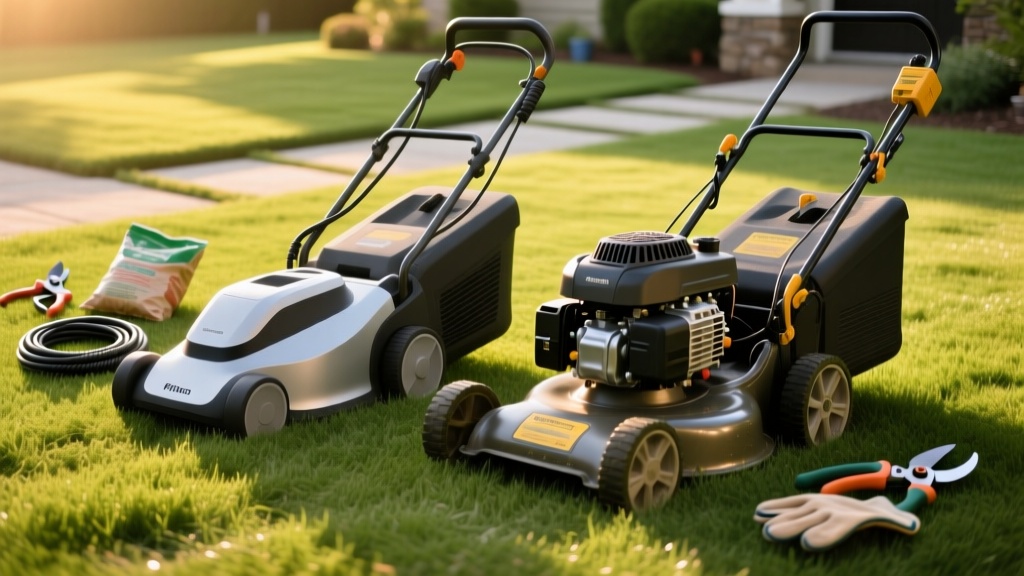
Electric Versus Gas Lawn Mower: Cost, Maintenance, and Power Compared
Executive Summary: The Equipment Landscape
The debate over the electric versus gas lawn mower has shifted from basic convenience to deep technical performance. High-voltage (56V-80V) brushless electric mowers now match 170cc gas engines in blade-tip speed, while eliminating the $120+ annual maintenance burden of small internal combustion engines. However, gas retains a distinct advantage in continuous runtime and torque delivery for properties exceeding 0.5 acres with thick, wet warm-season grasses.
The Physics of the Cut: Torque, RPM, and Voltage
When evaluating mowing equipment, homeowners often confuse motor size with cutting ability. The true metric for a clean cut is blade tip speed, measured in feet per minute (FPM). According to turfgrass management standards outlined by the University of Minnesota Extension, a clean cut requires high blade velocity to slice grass blades rather than tearing them, which invites fungal pathogens like brown patch.
Gas Engine Mechanics (CCs and Torque)
A standard 21-inch gas push mower, such as the Toro Recycler 22 equipped with a 170cc Honda GCV170 engine, generates approximately 5.2 lb-ft of gross torque. This internal combustion setup spins the blade at roughly 18,500 FPM. The advantage of gas is its sustained torque curve; when the mower hits a dense patch of wet St. Augustine grass, the engine's mechanical governor opens the throttle to maintain RPM, preventing stall-out.
Brushless DC Motors and Voltage
Modern lithium-ion mowers rely on brushless DC (BLDC) motors. Models like the EGO Power+ LM2102W utilize a 56V architecture. To understand the 'fuel tank' of an electric mower, you must calculate Watt-hours (Wh) by multiplying Voltage (V) by Amp-hours (Ah). A 56V system with a 7.5Ah battery yields 420Wh of energy. Because BLDC motors deliver instant peak torque at zero RPM, high-end electric mowers can achieve blade speeds of 19,000 FPM, actually outperforming mid-tier gas engines in cut quality, provided the battery can sustain the voltage draw under heavy load.
5-Year Total Cost of Ownership (TCO) Analysis
The initial purchase price of a gas mower is typically lower, but the long-term economics heavily favor battery platforms when factoring in fuel, winterization, and mechanical wear.
| Cost Category (5-Year) | Gas Mower (170cc) | Electric Mower (56V) |
|---|---|---|
| Initial Hardware Cost | $380 - $450 | $550 - $650 |
| Fuel / Electricity | $180 (Ethanol-free gas) | $25 (Grid charging) |
| Routine Maintenance (Oil, Plugs, Filters) | $110 | $0 |
| Major Repairs / Battery Replacement | $85 (Carb rebuild/Linkage) | $250 (New 7.5Ah Battery) |
| Estimated 5-Year TCO | $755 - $825 | $825 - $925 |
Note: While the 5-year TCO is nearly identical, the electric mower eliminates the physical labor of maintenance. By year 7, gas TCO rises sharply due to engine degradation, while electric platforms only require a second battery swap.
Maintenance Realities: Wrenches vs. Batteries
The most significant divergence in the electric versus gas lawn mower debate is the maintenance schedule. Small off-road engines (SORE) require meticulous care to prevent failure.
Gas Mower Maintenance Protocol
- Oil Changes: SAE 30 or 10W-30 must be changed every 50 hours or annually. Cost: $12/year.
- Air Filter: Paper or foam filters clog with grass dust, restricting the air-fuel mixture and causing the engine to run rich, leading to carbon buildup on the spark arrestor. Replace annually ($10).
- Ethanol Degradation: Standard pump gas (E10) attracts moisture and degrades rubber fuel lines. You must either use ethanol-free fuel (costing $6-$8/gallon) or add a stabilizer like STA-BIL and run the carburetor dry before winter storage.
Electric Mower Maintenance Protocol
- Battery Winterization: Lithium-ion cells degrade rapidly if stored at 100% or 0% charge in freezing temperatures. Store the battery indoors at 50°F-70°F with a 50% State of Charge (SOC).
- Deck Cleaning: Grass clippings trap moisture against the steel or composite deck. Scrape the deck with a plastic putty knife after every third mow to prevent rust and reduce aerodynamic drag on the blade.
- Blade Sharpening: Electric mowers do not have the sheer mass of gas engines to power through twigs. A dull blade on an electric mower will trigger the motor's thermal overload protector, shutting the mower down mid-cut. Sharpen the blade every 25 hours.
Expert Insight: The leading cause of premature death in electric mower batteries is leaving them on the charger in a hot, unventilated shed. Heat accelerates lithium-ion cell degradation. Always bring the battery inside a climate-controlled space after the charging cycle completes.
Decision Matrix: Which Mower Fits Your Yard?
Use this framework to select the correct powertrain based on your specific turf and property characteristics.
| Yard Profile | Recommended Powertrain | Why? |
|---|---|---|
| Under 1/4 Acre Flat terrain, cool-season grass (Fescue/Kentucky Bluegrass) |
40V Electric | Lightweight, lower cost, 40V provides ample 30-min runtime for small footprints. |
| 1/4 to 1/2 Acre Moderate slopes, mixed grass types |
56V - 80V Electric | High voltage handles slope-induced load spikes; dual-battery setups eliminate runtime anxiety. |
| Over 1/2 Acre Thick warm-season grass (Bermuda/Zoysia), wet conditions |
Gas (190cc+) | Gas engines sustain high torque in wet, dense turf without thermal throttling or battery voltage sag. |
| Steep Hills (>20% Grade) Any grass type |
Rear-Wheel Drive Gas | Electric mowers are often too light for steep traction; gas engines provide necessary weight and RWD grip. |
Environmental and Noise Ordinances
The regulatory environment is actively reshaping equipment selection. The California Air Resources Board (CARB) has implemented strict regulations phasing out the sale of new gas-powered small off-road engines (SORE), a legislative trend that is influencing municipal noise and emission ordinances nationwide.
Furthermore, gas mowers operate at approximately 90-95 decibels (dB), which violates weekend noise ordinances in many densely populated suburban HOAs. High-end electric mowers operate between 65-75 dB, allowing for early morning or late evening mowing without generating neighbor complaints. For homeowners in regions with strict noise covenants or impending gas-engine bans, investing in a high-voltage battery ecosystem now future-proofs your landscaping equipment against regulatory obsolescence.

