
Lawn Care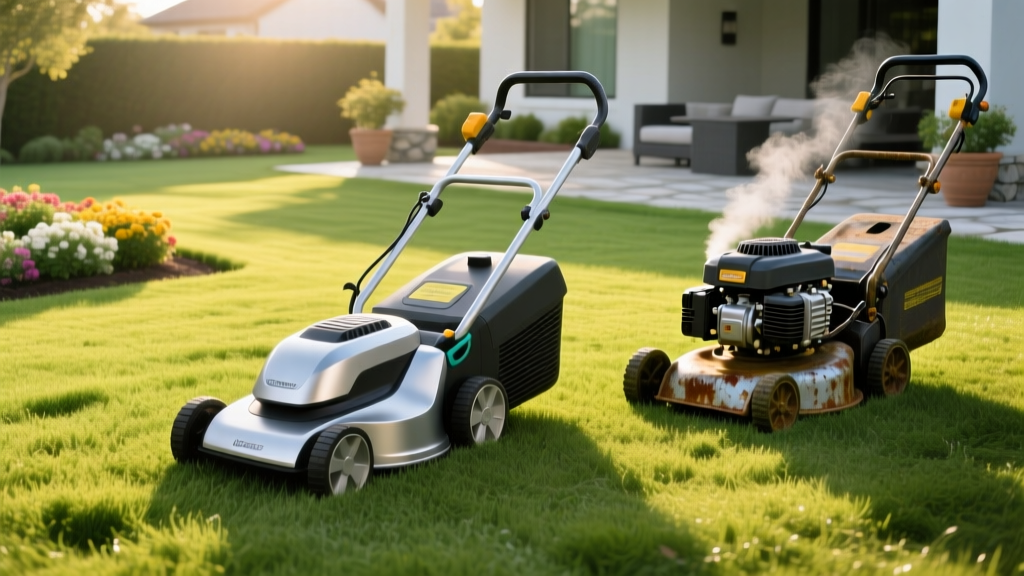
Electric vs Gas Mower: 2026 Cost & Performance Analysis
The 2026 Mower Landscape: Brushless Algorithms vs. Combustion Torque
The debate between battery-powered and internal combustion lawn equipment has shifted dramatically. While early lithium-ion mowers struggled with voltage sag in thick grass, 2026 models utilize advanced brushless motor controllers that dynamically adjust amperage to maintain blade RPM under heavy loads. However, gas mowers still retain distinct mechanical advantages in specific edge cases. Choosing between an electric vs gas mower is no longer about raw power alone; it requires analyzing total cost of ownership (TCO), thermal throttling limits, and long-term maintenance liabilities.
Data Highlight: According to the U.S. Environmental Protection Agency, operating a new gas-powered push mower for one hour produces the same amount of smog-forming emissions as driving a modern car for over 300 miles. This environmental reality is driving municipal noise and emission ordinances, making electric mowers a future-proof investment in many urban and suburban zones.
Total Cost of Ownership (TCO): 5-Year Matrix
Sticker price is a poor indicator of long-term value. Gas mowers generally cost less upfront but incur compounding maintenance and fuel costs. Electric mowers demand a higher initial investment for the battery ecosystem but reduce operational costs to pennies. Below is a 5-year TCO projection based on mowing a 1/4-acre lot 30 times per year.
| Cost Category | Honda HRX217VKA (Gas) | EGO Power+ LM2135SP (56V Electric) |
|---|---|---|
| Initial Purchase | $749 | $599 (w/ 7.5Ah Battery) |
| Fuel / Energy (5 Yrs) | $315 (15 gal/yr @ $4.20) | $18 (0.75 kWh per cut) |
| Routine Maintenance | $280 (Oil, plugs, filters) | $85 (Replacement blades) |
| Major Component Replacement | $0 | $249 (Year 5 Battery Swap) |
| 5-Year Total Cost | $1,344 | $951 |
Electric mowers win the financial analysis over a half-decade, primarily due to the elimination of winterization, carburetor cleanings, and volatile gasoline prices. However, if your battery degrades prematurely due to improper storage, that $249 replacement cost can scale rapidly.
Deep Dive: Torque, Wet Grass, and Thermal Throttling
The most critical point of failure for electric mowers is cutting wet, overgrown grass. Understanding how each powertrain handles mechanical resistance is vital for selecting the right equipment.
Combustion Momentum vs. Electronic Amperage
A gas engine like the 190cc Honda GCV190 relies on a heavy steel flywheel and the rotating mass of the blade to generate rotational inertia. When you push into thick, wet St. Augustine grass, the engine RPM drops, but the physical momentum of the heavy deck and blade pushes through the resistance.
Conversely, the EGO Power+ LM2135SP uses a lightweight composite deck and a brushless motor. When the blade hits dense grass, a microcontroller detects the RPM drop and instantly spikes the electrical current (amperage) from the 56V battery to force the motor back to 3,000 RPM. This provides excellent cutting performance, but it generates intense heat in the motor windings.
The Thermal Throttle Edge Case
If you attempt to mow 6-inch tall, wet fescue with a battery mower, the continuous amperage spike will trigger the mower's thermal protection circuit. The mower will shut down abruptly to prevent the motor from melting, requiring a 10-minute cooldown. Gas mowers do not have this electronic governor; they will stall if overloaded, but they will not electronically lock you out of finishing the job. If you frequently let your grass grow past 4 inches or mow immediately after heavy rain, gas retains a distinct operational advantage.
Maintenance Reality Check: What Actually Breaks?
Every mechanical system has a primary failure mode. Knowing what breaks first allows you to mitigate the issue before it voids your warranty.
Warning: Gas Carburetor Clogging
The number one killer of gas mowers is E10 (10% ethanol) gasoline left in the carburetor bowl over winter. Ethanol absorbs moisture from the air, leading to phase separation and a varnish-like residue that clogs the main jet. Fix: Either run the carburetor completely dry at the end of the season or exclusively use ethanol-free TruFuel (approx. $25/gallon), which remains stable for up to 5 years.
The number one killer of gas mowers is E10 (10% ethanol) gasoline left in the carburetor bowl over winter. Ethanol absorbs moisture from the air, leading to phase separation and a varnish-like residue that clogs the main jet. Fix: Either run the carburetor completely dry at the end of the season or exclusively use ethanol-free TruFuel (approx. $25/gallon), which remains stable for up to 5 years.
Warning: Lithium-Ion Calendar Degradation
Battery capacity loss is driven by heat and state-of-charge (SoC). Storing a 56V lithium-ion battery at 100% charge in a garage that reaches 100°F+ in the summer will permanently degrade the cell chemistry, reducing runtime by up to 30% in a single season. Fix: Store batteries indoors at climate-controlled temperatures and discharge them to roughly 50-60% SoC if they will sit unused for more than three weeks.
Battery capacity loss is driven by heat and state-of-charge (SoC). Storing a 56V lithium-ion battery at 100% charge in a garage that reaches 100°F+ in the summer will permanently degrade the cell chemistry, reducing runtime by up to 30% in a single season. Fix: Store batteries indoors at climate-controlled temperatures and discharge them to roughly 50-60% SoC if they will sit unused for more than three weeks.
Regulatory Tailwinds and Noise Ordinances
When evaluating an electric vs gas mower, local legislation must factor into your decision. The California Air Resources Board (CARB) has implemented strict phase-outs for new gas-powered small off-road engines (SORE), a regulatory framework that is increasingly being adopted by municipalities across the Northeast and Pacific Northwest. Furthermore, many Homeowner Associations (HOAs) enforce strict decibel limits before 8:00 AM on weekends. Gas mowers operate between 85-95 dB (requiring hearing protection), while premium electric mowers operate between 65-75 dB, allowing for early morning mowing without violating noise ordinances or waking neighbors.
Decision Framework: Which Powertrain Fits Your Lawn?
Use this diagnostic matrix to finalize your equipment selection based on your specific property variables.
- Choose Gas If: Your property exceeds 1/2 acre, features steep inclines (>15 degrees) where heavy steel decks provide better traction, you lack access to climate-controlled battery storage, or you frequently mow wet, overgrown pastures.
- Choose Electric If: Your lot is under 1/2 acre, you live in an area with strict noise or emission ordinances, you want to eliminate winterization chores, and you already own tools in a compatible battery ecosystem (e.g., EGO, Ryobi, DeWalt, Milwaukee).
Frequently Asked Questions
Can I upgrade the battery on my electric mower for more runtime?
Yes, but with caveats. Upgrading from a 5.0Ah to a 7.5Ah or 10.0Ah battery will increase runtime, but the added weight (a 10.0Ah 56V battery weighs over 8 lbs) can alter the mower's center of gravity, making it feel front-heavy and harder to maneuver on slopes. Always check the manufacturer's maximum recommended Ah rating to avoid voiding the motor warranty.
How do I properly sharpen a mulching blade?
Whether using gas or electric, mulching blades require a specific filing angle. Maintain the original 30-degree bevel on the cutting edge. Do not grind the curved 'wing' at the back of the blade; this wing creates the vacuum that lifts the grass for a clean cut and circulates clippings under the deck. An unbalanced blade will destroy the spindle bearings on a gas mower and trigger vibration-shutdowns on an electric model.

