
Lawn Care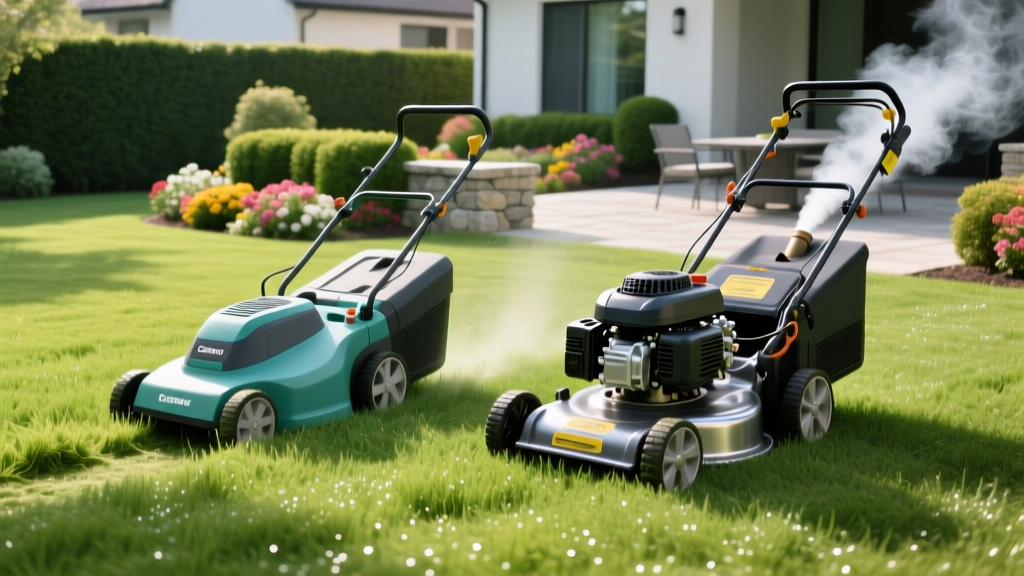
Electric vs Gasoline Lawn Mower: 2026 Cost & Performance Guide
The Torque & Cut Quality Matrix: Gas vs. Battery in 2026
The debate over electric vs gasoline lawn mower performance has shifted dramatically. Historically, 160cc to 190cc gas engines dominated thick, wet grass. Today, high-discharge lithium-ion platforms (like EGO's 56V ARC Lithium and Milwaukee's M18 Fuel) deliver peak torque that rivals entry-level gas engines. However, sustained torque under heavy mulching loads remains a differentiator.
According to Consumer Reports mower testing data, premium electric models now match gas mowers in evenness of cut and bagging efficiency, but gas still holds a 15% advantage in maximum blade-tip speed when bogged down in overgrown fescue.
| Feature | EGO Power+ LM2150SP (Electric) | Honda HRN216VKA (Gasoline) |
|---|---|---|
| Peak Torque | High (Brushless 1.5 kW motor) | High (160cc GCV170 4-stroke) |
| Deck Size & Material | 21-inch Stamped Steel | 21-inch Stamped Steel |
| Weight (with power source) | 62.6 lbs (incl. 7.5Ah battery) | 73 lbs (incl. oil/gas) |
| Noise Level | ~78 dB (Conversation level) | ~95 dB (Hearing protection advised) |
| Current Retail Price | $699 (with 7.5Ah battery) | $449 |
10-Year Total Cost of Ownership (TCO) Breakdown
Upfront, gas mowers are cheaper. But analyzing the electric vs gasoline lawn mower lifecycle requires calculating fuel, electricity, maintenance, and component replacement over a decade. Assume a 0.25-acre lot requiring 30 mows per year.
Gasoline Mower 10-Year TCO
- Initial Purchase: $449
- Fuel Costs: $450 (0.375 gallons per mow @ $4.00/gal x 30 mows x 10 years)
- Oil & Filters: $150 (Annual oil changes and air filter replacements)
- Winterization & Tuneups: $120 (Fuel stabilizer, Sea Foam, occasional spark plugs)
- Blade Sharpening/Replacement: $80
- Total 10-Year Cost: $1,249
Electric Mower 10-Year TCO
- Initial Purchase: $699
- Electricity Costs: $22 (0.42 kWh per charge @ $0.17/kWh x 300 charges)
- Battery Replacement: $299 (56V 7.5Ah battery replaced at Year 6 due to cell degradation)
- Blade Sharpening/Replacement: $80
- Total 10-Year Cost: $1,100
💡 Financial Insight: Electric mowers break even with gas mowers around Year 5. If you already own batteries from a brand's outdoor power ecosystem (e.g., Ryobi 40V, DeWalt 20V MAX), buying a 'bare tool' electric mower drops your initial cost to ~$350, making electric the undisputed financial winner from Day 1.
Hidden Maintenance Variables: Carburetors vs. Cell Degradation
Equipment selection is only half the battle; maintenance dictates longevity. The mechanical realities of these two power sources require entirely different care protocols.
Gasoline: The Ethanol Enemy
Modern E10 (10% ethanol) gasoline attracts moisture and degrades within 30 days. The most common failure mode for gas mowers is a clogged carburetor jet from varnished fuel. To prevent this, you must either drain the carburetor bowl completely before storage or use a non-ethanol fuel mixed with a stabilizer like STA-BIL. Pulling the recoil starter cord on a cold engine also stresses the flywheel brake and pawl assembly over time.
Electric: Thermal & Voltage Management
Lithium-ion batteries do not require mechanical tune-ups, but they are highly sensitive to temperature and state-of-charge (SoC). Storing a 56V battery at 100% charge in a 95°F garage accelerates electrolyte degradation, permanently reducing capacity. Conversely, attempting to draw 40 amps from a battery stored at 20°F can trip the Battery Management System (BMS) or damage the cells.
⚠️ Critical Storage Warning: Never store lithium-ion mower batteries at 0% or 100% during the off-season. Discharge or charge them to roughly 40-50% (usually indicated by 2 solid LEDs on the battery) and store them indoors in a climate-controlled environment between 50°F and 70°F.
Yard Size & Terrain Decision Framework
Use this practical framework to determine which power type aligns with your specific property characteristics.
- Under 1/4 Acre (Flat to Moderate Slope): Choose a 20-21 inch Electric Push Mower. A 4.0Ah to 5.0Ah battery provides 45 minutes of runtime, which is more than enough. The lighter weight (approx. 45 lbs) reduces operator fatigue.
- 1/4 to 1/2 Acre (Mixed Terrain & Thick Grass): Choose a 21 inch Electric Self-Propelled Mower with a 7.5Ah or 10.0Ah battery. You need the high-capacity battery to sustain the self-propel motor and the blade motor simultaneously without voltage sag.
- Over 1/2 Acre (Steep Hills, Wet Grass, or Overgrowth): Choose a Gasoline Self-Propelled Mower or upgrade to an electric riding mower. Gas mowers do not suffer from battery thermal throttling when pushed to their limits on 15-degree inclines, and you can instantly refuel a gas tank if you run out of power mid-mow.
Environmental & Regulatory Impact
The regulatory landscape for small off-road engines (SORE) is tightening. The California Air Resources Board (CARB) has implemented strict phase-outs on the sale of new gas-powered SORE equipment, a trend that is influencing national availability and parts manufacturing for gas mowers.
Furthermore, the EPA notes that landscape equipment is a significant contributor to volatile organic compounds (VOCs) and nitrogen oxides (NOx), which form ground-level ozone. A single hour of mowing with an older, unregulated gas mower can emit the same amount of smog-forming pollution as driving a modern sedan for 300 miles. While newer 4-stroke gas mowers are cleaner, they still emit carbon monoxide and particulate matter directly into the operator's breathing zone—eliminated entirely by electric models.
Expert Verdict: Which Should You Buy?
For 85% of suburban homeowners maintaining less than half an acre, the electric self-propelled mower is the superior choice in 2026. The elimination of carburetor cleaning, oil changes, and winterization saves an average of 4 hours of annual maintenance labor, while the 10-year TCO ultimately undercuts gas.
However, if you manage a rural property exceeding 3/4 of an acre, frequently mow damp or overgrown pasture grass, or lack access to indoor climate-controlled battery storage, a commercial-grade gasoline mower with a sealed fuel system remains the most reliable, high-torque workhorse available.

