
Lawn Care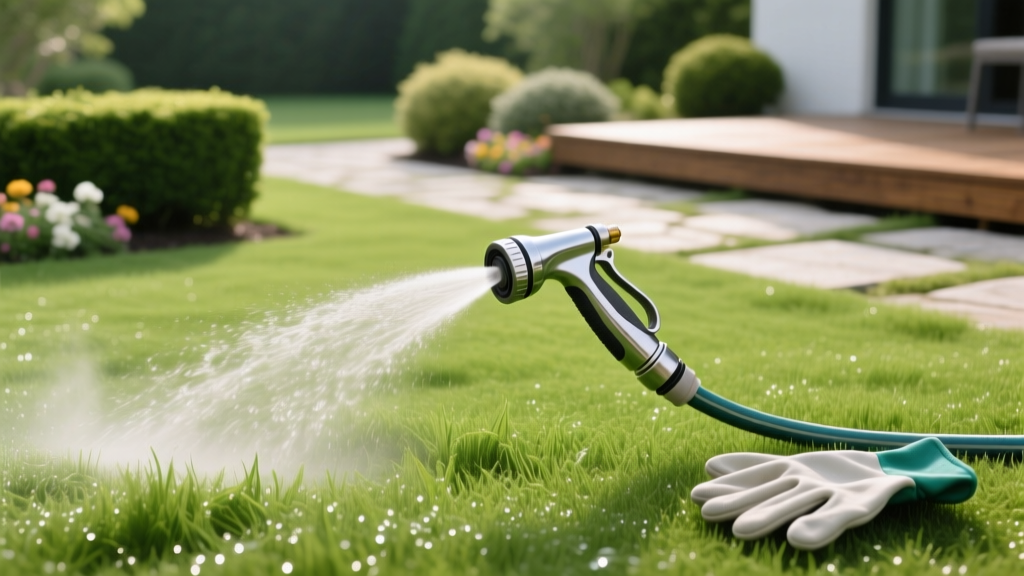
Eley Garden Hose Nozzle Review: Precision Lawn Watering Guide
The Hidden Bottleneck in Manual Lawn Irrigation
When homeowners invest in lawn care, they typically focus on soil amendments, premium grass seed, and rotary mowers. The hose nozzle is almost universally treated as a disposable afterthought. However, from a fluid dynamics perspective, the nozzle is the final flow-restriction point before water impacts your turf. A standard 5/8-inch garden hose supplied at 60 PSI can deliver roughly 17 Gallons Per Minute (GPM). Yet, attaching a standard big-box plastic trigger nozzle often chokes this flow down to 8 or 9 GPM due to restrictive internal routing and undersized orifices.
This restriction doesn't just slow down your watering routine; it fundamentally alters the spray pattern, increasing water velocity in a way that causes soil compaction and seed washout. The Eley garden hose nozzle—specifically their solid brass adjustable flow and poly-series models—engineers around this bottleneck. By utilizing full-port internal routing and precision-machined orifices, Eley nozzles maintain optimal GPM while allowing the user to manipulate the spray pattern without sacrificing the pressure required for deep soil infiltration.
Material Science: Solid Brass vs. Pot Metal Degradation
The primary failure point of inexpensive nozzles is material degradation. Most hardware store nozzles are cast from zinc alloy (often referred to as pot metal) or molded from ABS plastic. Zinc alloys are highly susceptible to dezincification and oxidation when exposed to municipal water treatments (chloramines) and UV radiation. Within 18 to 24 months, the internal valve seats pit, leading to chronic dripping, and the external finish flakes into a white, chalky residue.
Eley’s brass models are machined from drinking-water-safe brass, which strictly limits lead content and eliminates the porous casting flaws found in cheap overseas manufacturing. This ensures a perfectly smooth valve seat that seals completely when closed, preventing the low-pressure weeping that wastes hundreds of gallons over a summer season.
Flow Rate and Pressure Dynamics for Turfgrass
According to Penn State Extension, established lawns require 1 to 1.5 inches of water per week to maintain deep root systems and survive summer evapotranspiration. Achieving this via manual watering requires a nozzle that can output high volume without creating a high-velocity stream that causes surface runoff.
| Nozzle Type | Internal Orifice | Max Flow (GPM) | Pressure Drop | Soil Impact Risk |
|---|---|---|---|---|
| Standard Plastic Trigger | 0.22 inches | 8.5 GPM | High (Restrictive) | High (Compaction) |
| Eley Brass Adjustable | 0.35 inches | 15.2 GPM | Minimal (Full Port) | Low (Diffused Fan) |
| Standard Brass Twist | 0.30 inches | 13.0 GPM | Moderate | Moderate |
The Eley adjustable nozzle allows you to dial the spray from a concentrated jet to a wide, gentle fan. The wide fan setting reduces the terminal velocity of the water droplets. This is critical for clay-heavy soils, which have low infiltration rates (often less than 0.2 inches per hour). A high-velocity stream from a restricted nozzle will pool and run off into the street before it can penetrate the thatch layer, whereas the Eley’s diffused fan applies water at a rate the soil can actually absorb.
Real-World Lawn Watering Scenarios
Scenario 1: Post-Overseeding Mist Application
When overseeding cool-season fescue or warm-season bermudagrass, the seed must remain consistently moist but never submerged. A high-pressure jet will wash the seed out of the soil contact zone, clustering it in low spots. By adjusting the Eley nozzle to its widest fan pattern and reducing the flow via the integrated thumb dial, you create a gentle, rain-like mist. This keeps the top 1/2-inch of soil moist without displacing the seed or disrupting the starter fertilizer layer.
Scenario 2: Deep Root Soaking for Mature Lawns
Mature lawns require deep, infrequent watering to encourage roots to grow downward, seeking subsoil moisture. The EPA WaterSense program emphasizes that deep soaking reduces overall outdoor water use by training turf to become drought-resistant. Using the Eley nozzle’s full-flow setting, you can rapidly deliver the necessary volume to a specific zone, simulating a heavy rainfall event. The full-port design ensures you aren't standing in the sun for an extra 15 minutes waiting for a restricted nozzle to output the same volume.
10-Year Cost of Ownership Matrix
The upfront cost of premium irrigation tools often deters budget-conscious homeowners. However, calculating the 10-year lifecycle cost reveals a different financial reality.
- Big-Box Plastic/Zinc Nozzle ($12.00): Average lifespan of 14 months before trigger failure, O-ring blowout, or thread stripping. Over 10 years, you will purchase approximately 8.5 replacements. Total Cost: $102.00 (plus the hidden cost of water waste from dripping valves).
- Eley Solid Brass Nozzle ($38.00 - $45.00): Backed by a 10-year zero-leak guarantee. The only wearable part is the internal rubber washer, which costs $2.00 to replace if municipal water grit degrades it. Total 10-Year Cost: $40.00 - $47.00.
Beyond direct costs, a leaking cheap nozzle left attached to a hose bib can waste up to 15 gallons a day through micro-drips, adding hundreds of dollars to municipal water bills over a decade.
Maintenance and Winterization Protocol
While Eley nozzles are over-engineered for durability, brass fittings still require basic seasonal maintenance to prevent freeze-fractures and mineral buildup.
- Autumn Blow-Out: Before the first hard freeze, disconnect the nozzle from the hose. Compressed air is not strictly necessary for the nozzle itself, but you must shake out residual water. Water expands by 9% when it freezes; if trapped inside the brass valve chamber, it can crack the housing.
- Mineral Descaling: If you live in an area with hard water (high calcium/magnesium), mineral deposits will accumulate on the adjustable dial threads. Submerge the nozzle in a 50/50 solution of white vinegar and warm water for 30 minutes every two years to dissolve scale without damaging the polyurethane seals.
- Thread Lubrication: Apply a thin layer of silicone-based plumber’s grease to the male brass threads before screwing it onto your hose. Never use petroleum-based Vaseline, which degrades rubber hose gaskets over time.
Frequently Asked Questions
Will the Eley nozzle fit my expandable hose?
Yes, Eley nozzles feature standard 3/4-inch GHT (Garden Hose Thread) connections. However, expandable hoses often have restrictive internal diameters that limit GPM regardless of the nozzle attached. For optimal performance with an Eley nozzle, a 5/8-inch or 3/4-inch solid polyurethane or rubber hose is recommended to maximize the full-port flow rate.
Can I use this nozzle with a hose-end fertilizer sprayer?
The Eley adjustable nozzle should be removed when using siphon-style hose-end sprayers. Fertilizer sprayers rely on the Venturi effect, which requires a specific back-pressure and unrestricted flow to siphon the concentrate accurately. Leaving any restrictive or adjustable nozzle on the end will alter the siphon ratio, potentially burning your lawn with over-concentrated fertilizer.
Is the brass heavy to hold for long watering sessions?
The solid brass construction adds approximately 6 to 8 ounces compared to plastic models. For watering small garden beds or spot-treating dry patches, this weight is negligible. For watering large, multi-acre properties manually, homeowners typically transition to impact sprinklers or automated underground irrigation zones rather than relying on handheld nozzles for extended durations.

