
Lawn Care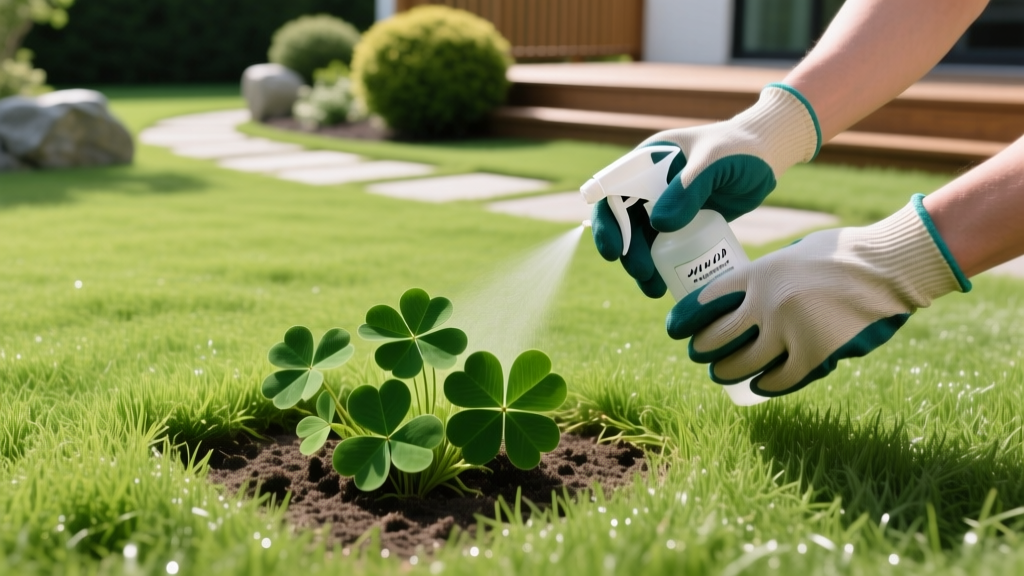
How to Get Rid of Clover Grass on Lawn: Spot Treatment Guide
The 'Clover Grass' Misconception: Why It Invades
When homeowners search for how to get rid of clover grass on lawn spaces, they are usually dealing with Trifolium repens (white clover). The first critical piece of information gain you need is that clover is not a grass at all; it is a broadleaf legume. This botanical distinction dictates your entire eradication strategy. Because it is a legume, clover possesses a symbiotic relationship with Rhizobium bacteria, allowing it to fix atmospheric nitrogen into the soil.
If clover is aggressively colonizing your turf, it is almost always a bio-indicator of nitrogen-deficient soil. While your cool-season or warm-season turfgrass is starving for nutrients, the clover is manufacturing its own fertilizer, allowing it to outcompete thinning grass blades. Eradicating it requires a two-pronged approach: targeted chemical or mechanical removal, followed by aggressive soil amendment to remove the ecological niche the clover exploits.
Expert Warning: Do not attempt to starve clover by withholding water or fertilizer. Clover has a deep taproot that survives drought, and withholding nitrogen will only kill your surrounding turfgrass, opening the canopy for more clover seeds to germinate.
Identification Matrix: Is It Actually Clover?
Before purchasing herbicides, confirm the weed species. Misidentifying lookalikes like oxalis or black medic will result in failed treatments and wasted money. Use this comparison matrix to verify your target.
| Feature | White Clover (Trifolium repens) | Yellow Woodsorrel (Oxalis) | Black Medic (Medicago lupulina) |
|---|---|---|---|
| Leaf Structure | Three oval leaflets, often with a white 'V' chevron mark | Three heart-shaped leaflets, no chevron | Three teardrop leaflets with a tiny spur at the tip |
| Flower Color | White or pale pink spherical clusters | Small yellow, five-petaled flowers | Tight yellow, burr-like clusters |
| Growth Habit | Creeping stolons (above ground runners) | Upright stems from a central taproot | Low, branching, sprawling stems |
Chemical Spot-Treatment Protocol
Because clover is a broadleaf weed, standard grassy weed killers (like Quinclorac) will not work. You need a selective broadleaf herbicide. However, mature white clover has a waxy leaf cuticle that repels water-based sprays. According to Penn State Extension, single-active-ingredient herbicides like basic 2,4-D often fail to kill mature clover. You must use a 3-way or 4-way ester/amine formulation.
Recommended Herbicide Formulations
- SpeedZone Broadleaf Herbicide (4-way): Contains 2,4-D, MCPP, Dicamba, and Carfentrazone-ethyl. The addition of carfentrazone provides rapid 'burn-down' of the waxy leaves, allowing the systemic chemicals to translocate to the taproot. Expect to pay around $55 to $65 for a 1-pint bottle, which treats up to 14,000 square feet when mixed correctly.
- Ortho WeedClear Lawn Weed Killer (Ready-to-Spray): A consumer-grade 3-way mix (2,4-D, Quinclorac, Dicamba). Priced around $18 to $22 per gallon. Less effective on mature patches but adequate for young, isolated seedlings.
- Tenacity (Mesotrione): If you have a cool-season lawn (Kentucky Bluegrass, Fescue, Ryegrass), Tenacity bleaches the clover white and kills it without harming the turf. It costs roughly $60 for a 4 oz bottle. Note: Do not use Tenacity on Bermudagrass or Zoysia.
Step-by-Step Mixing and Application
- Timing: Apply when daytime air temperatures are between 65°F and 85°F. Avoid spraying if rain is forecast within 24 hours or if wind speeds exceed 5 mph to prevent drift.
- The Surfactant Secret: You must break the clover's surface tension. Add a non-ionic surfactant (like Hi-Yield Spreader Sticker) to your tank mix at a rate of 0.5% by volume (approximately 1/2 teaspoon per gallon of water). If using a household alternative, one drop of liquid dish soap per gallon works in a pinch, though commercial surfactants yield 20% better absorption.
- Mixing Rate: For SpeedZone concentrate, mix 1.5 fluid ounces of herbicide per 1 gallon of water for spot treatments. This covers roughly 1,000 square feet.
- Application Technique: Use a 1-gallon pump sprayer with a fan-nozzle tip. Spray the clover until the leaves are uniformly wet and glistening, but not dripping onto the soil. The roots absorb the chemical through the foliage, not the soil.
Organic and Mechanical Eradication
If you maintain an organic lawn or have pets that frequently graze on the turf, chemical herbicides may not be viable. The NC State Turffiles database notes that mechanical removal is highly effective if the entire root system is extracted.
Pro-Tip for Hand Pulling: Wait until after a heavy rain or deeply irrigate the area the night before. Use a weeding fork or a dandelion digger to loosen the soil 4 inches deep around the stolon network. Pulling dry clover will snap the stolons, leaving the taproot intact to regenerate within 14 days.
Corn Gluten Meal Limitations: Many organic guides suggest corn gluten meal (CGM) to stop clover. CGM is a pre-emergent that inhibits seed germination. It will not kill existing clover patches. Furthermore, CGM contains 10% nitrogen by weight; once it breaks down, it actually fertilizes established clover, potentially making the infestation worse if applied to mature patches.
Post-Eradication: Fixing the Root Cause
Killing the clover is only 50% of the battle. If you leave bare soil and low-nitrogen conditions, new clover seeds (which can remain viable in the soil seedbank for up to 3 years) will germinate immediately.
- Adjust Mowing Height: Clover requires high light intensity to germinate and spread. Raise your mower deck to 3.5 or 4 inches. Taller turfgrass creates a dense canopy that shades the soil surface, physically blocking clover seeds from receiving the sunlight required for photosynthesis.
- Nitrogen Loading: Conduct a soil test. Most turfgrasses require 2 to 4 pounds of actual nitrogen per 1,000 square feet annually. Apply a slow-release, methylene-urea based fertilizer (like Milorganite or Scotts Turf Builder) at a rate of 1 lb N per 1,000 sq ft in early fall and again in late spring to force the grass to outcompete the weeds.
- Overseeding Bare Spots: Within 48 hours of the clover turning brown and dying from the herbicide, rake out the dead debris. Top-dress the bare spots with 1/4 inch of compost and overseed with a turf-type tall fescue or Kentucky bluegrass blend that matches your existing lawn. Keep the seed moist for 14 days to establish a dense turf matrix.
Frequently Asked Questions
Will vinegar kill clover grass?
Horticultural vinegar (20% to 30% acetic acid) will burn the top growth of clover, but it is a contact herbicide with no systemic action. It will not kill the deep taproot or the creeping stolons. The clover will typically regrow from the roots within 10 to 14 days. Furthermore, spraying high-concentration vinegar alters soil pH and can severely damage surrounding desirable turfgrass.
Why is my clover blooming with white flowers?
White clover blooms when it reaches maturity or experiences environmental stress, such as drought or heavy foot traffic. Once it flowers, it is actively producing seeds. You must apply your selective broadleaf herbicide before the flowers turn brown and drop seed, or you will be dealing with a secondary flush of germination the following spring.
Can I use Weed and Feed to kill existing clover?
Granular 'Weed and Feed' products rely on the herbicide granules sticking to the wet, waxy leaves of the broadleaf weed. Because clover leaves are small, angled downward, and highly waxy, granular herbicides often bounce off or fail to adhere properly, resulting in poor kill rates. Liquid spot-treatment with a surfactant is vastly superior for clover eradication.

