
Lawn Care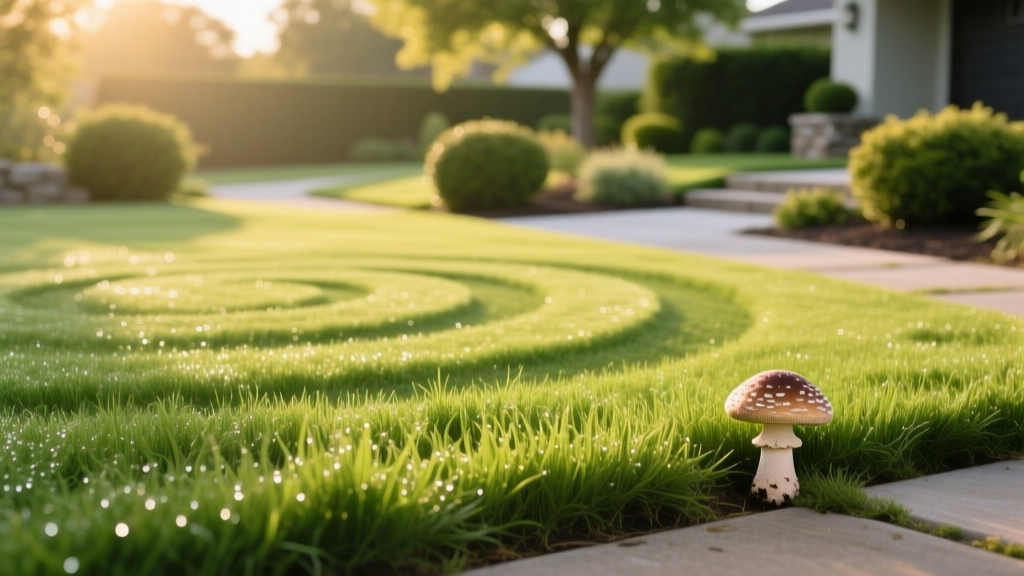
How to Stop Mushroom Growth on Lawn: Step-by-Step Guide
Mushrooms in your yard are not the enemy of your grass; they are the visible fruiting bodies of a vast, underground mycelium network working to decompose organic matter. However, when mushroom growth on lawn areas becomes excessive, it signals an imbalance in your turf's moisture, thatch, and soil aeration levels. While the fungi themselves are generally beneficial for soil ecology, their presence can be unsightly, disruptive to lawn maintenance, and potentially hazardous to pets.
Eliminating the mushrooms requires starving the underlying mycelium by altering the lawn's microenvironment. This step-by-step lawn maintenance procedure will guide you through the exact cultural practices required to halt fungal fruiting and restore a dense, healthy turf canopy.
The Root Cause: Why Fungi Fruit in Your Turf
Before executing removal procedures, you must understand the three environmental triggers that cause saprophytic fungi to produce mushrooms:
- Excess Moisture: Overwatering, poor drainage, or heavy clay soils that remain saturated for more than 24 hours after rainfall.
- Abundant Organic Food Sources: Buried construction debris, decaying tree roots, excessive thatch (over 0.5 inches), or decomposing grass clippings.
- Low Light and Poor Airflow: Dense tree canopies that prevent the turf surface from drying out in the morning.
⚠️ Pet and Child Safety Warning
While most common lawn mushrooms (like puffballs or ink caps) are benign, species such as Chlorophyllum molybites (false parasol) and Inocybe can cause severe gastrointestinal distress or neurological toxicity in dogs and small children. Always remove fruiting bodies immediately if pets have access to the yard, as cited by Clemson University HGIC.
While most common lawn mushrooms (like puffballs or ink caps) are benign, species such as Chlorophyllum molybites (false parasol) and Inocybe can cause severe gastrointestinal distress or neurological toxicity in dogs and small children. Always remove fruiting bodies immediately if pets have access to the yard, as cited by Clemson University HGIC.
Step 1: Immediate Physical Removal and Disposal
The first step is mechanical removal to prevent the spread of spores and eliminate immediate toxicity risks. Do not use a lawnmower to mulch the mushrooms, as this will distribute spores across the lawn and create a messy, slimy residue on your mower deck.
- Timing: Pull mushrooms early in the morning before the caps fully open and release spores.
- Technique: Wear gardening gloves, grasp the mushroom at the very base of the stipe (stem), and twist gently to extract the entire fruiting body.
- Disposal: Place them in a sealed plastic bag and dispose of them in your municipal trash. Do not add them to your home compost pile, as standard residential compost bins rarely reach the 140°F required to kill fungal spores.
Step 2: Moisture Calibration and Shade Management
Fungi require near-constant surface moisture to fruit. Adjusting your irrigation protocol is the most effective long-term deterrent.
Adjusting Irrigation Schedules
Transition from frequent, shallow watering to deep, infrequent cycles. Your lawn should receive exactly 1 to 1.5 inches of water per week, including rainfall. Apply this water in one or two early-morning sessions (between 4:00 AM and 6:00 AM). Watering in the evening leaves the grass blades and thatch layer wet overnight, creating an ideal incubator for mycelium.
Canopy Pruning
If mushrooms are concentrated under specific trees, prune the lower branches to raise the canopy. This allows morning sunlight to penetrate and dry the dew off the grass blades faster, while improving cross-breeze airflow at the soil level.
Step 3: Thatch Management and Soil Aeration
Thatch is a layer of dead and living shoots, stems, and roots that develops between the zone of green vegetation and the soil surface. When thatch exceeds 0.5 inches, it acts like a sponge, holding the moisture that fungi need to thrive.
Dethatching Protocol
Use a thatch rake for small areas or rent a power dethatcher (vertical mower) for larger lawns. Set the dethatcher blades to penetrate 0.25 inches into the soil surface. For cool-season grasses (fescue, Kentucky bluegrass), perform this in early fall. For warm-season grasses (Bermuda, Zoysia), dethatch in late spring after the grass has fully greened up.
Core Aeration
Compacted soil prevents water from percolating downward, forcing it to pool in the thatch layer. Rent a core aerator (typically $80 to $110 per day in 2026) to pull 2-to-3-inch soil plugs. Leave the plugs on the lawn to dry and break down; the soil microbes in the plugs will help break down the thatch layer naturally. According to University of Minnesota Extension, aeration drastically improves soil oxygen levels, which favors turfgrass roots over anaerobic fungal networks.
Step 4: Accelerating Organic Breakdown with Nitrogen
This is the most overlooked step in lawn maintenance procedures. The mycelium network is feeding on buried carbon (dead roots, wood chips, thick thatch). By introducing high levels of nitrogen, you stimulate soil bacteria to rapidly consume that same carbon source, effectively outcompeting the fungi and starving the mycelium.
Apply a high-nitrogen, quick-release or hybrid fertilizer to accelerate the decomposition of the organic matter feeding the mushrooms.
| Fertilizer Type | N-P-K Ratio | Application Rate | Best Use Case |
|---|---|---|---|
| Urea (Quick Release) | 46-0-0 | 1 lb per 1,000 sq ft | Rapid thatch breakdown; requires immediate watering to prevent burn. |
| Milorganite (Organic) | 5-2-0 | 32 lbs per 2,500 sq ft | Slow, steady bacterial feeding; safe for shaded, sensitive lawns. |
| Scotts Turf Builder | 32-0-3 | Per bag instructions | General lawn thickening to shade out future fungal fruiting bodies. |
Why Chemical Fungicides Fail Against Lawn Mushrooms
Homeowners frequently waste money on broad-spectrum chemical fungicides (like those containing propiconazole or myclobutanil) to kill lawn mushrooms. These products are designed to treat foliar diseases like brown patch or dollar spot. They do not penetrate deeply enough into the soil profile to kill the saprophytic mycelium network, which can extend several inches below the surface and span hundreds of square feet.
"Applying fungicides to lawn mushrooms is a temporary band-aid that disrupts beneficial soil biology without addressing the underlying food source. The mushrooms will simply return the next time it rains."
— Turfgrass Pathology Consensus
Instead of chemicals, focus your budget on mechanical aeration, dethatching, and nitrogen supplementation.
Troubleshooting Edge Case: Fairy Rings
If your mushroom growth on lawn areas forms distinct, expanding circles or arcs, you are dealing with a Fairy Ring (typically caused by Marasmius oreades). This fungus creates a dense, hydrophobic mycelial mat in the soil that repels water, causing the grass inside or outside the ring to die of drought stress while the mushrooms fruit along the perimeter.
The Fairy Ring Maintenance Protocol:
- Core Aerate heavily: Punch holes directly through the hydrophobic mat to allow water penetration.
- Wetting Agents: Apply a soil surfactant (like Aqua-Aid or a generic yucca-based wetting agent) to break the surface tension of the water-repellent mycelium.
- Masking: Apply a high-nitrogen fertilizer to the entire lawn to darken the surrounding grass, visually masking the dark green ring caused by the fungus releasing nitrogen as it decays organic matter.
By systematically removing the physical mushrooms, altering the moisture profile, and accelerating the breakdown of buried organics, you will naturally suppress the mycelium. Consistent execution of these lawn maintenance procedures will result in a denser turf canopy that leaves no physical or environmental room for mushrooms to fruit.

