
Lawn Care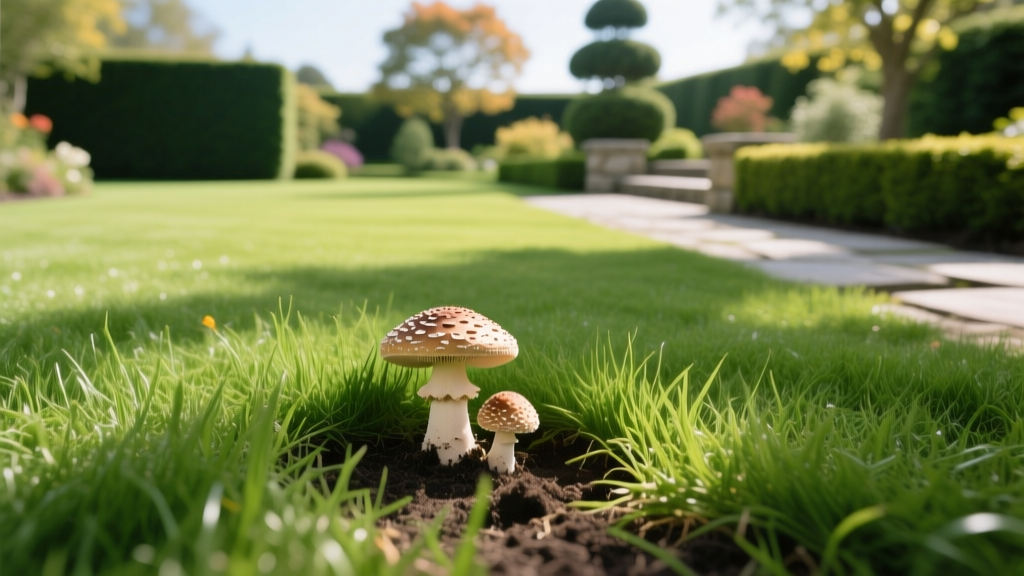
How to Get Rid of Toadstools in Grass: Step-by-Step Lawn Care Fix
The Root Cause: Why Toadstools Invade Your Turf
Toadstools in grass are not the actual organism; they are merely the temporary fruiting bodies of a vast underground fungal network called mycelium. This mycelium thrives on decaying organic matter—such as buried tree roots, construction lumber, and excessive thatch. When soil moisture is high and temperatures range between 60°F and 80°F, the fungi produce mushrooms to release spores. According to the University of Minnesota Extension, these fungi are generally beneficial to soil health because they break down complex organics into usable nutrients. However, for homeowners seeking a pristine, usable lawn, they are an aesthetic nuisance and a potential safety hazard.
⚠️ Pet and Child Safety Warning: Never attempt to identify lawn mushrooms by sight to determine toxicity. Species like the deadly Amanita phalloides (Death Cap) can easily be mistaken for benign varieties. Always assume toadstools are toxic to dogs and small children, and prioritize physical removal until the underlying environmental triggers are resolved.
Step-by-Step Procedure to Eradicate Toadstools in Grass
Eradicating toadstools requires altering the microenvironment so the mycelium starves or goes dormant. Fungicides are largely ineffective because they cannot penetrate deep enough to kill the root-like mycelium without destroying the turf. Follow this cultural maintenance protocol to reclaim your lawn.
Step 1: Physical Removal and Spore Disruption
Before altering the soil, remove the existing fruiting bodies to prevent the release of millions of new spores.
- Timing: Early morning when the caps are damp and less likely to shatter.
- Method: Wear gardening gloves and twist the toadstool at the base, pulling the entire stalk out of the soil. Do not just snap the cap off.
- Disposal: Place them in a sealed plastic bag and dispose of them in the municipal trash. Do not compost them, as home compost piles rarely reach the 140°F required to kill fungal spores.
- Mowing Protocol: If the infestation is too dense for hand-pulling, mow the lawn using a bagger attachment. Immediately empty the bagger into a sealed trash receptacle to prevent spore redistribution.
Step 2: Thatch Reduction (Eliminating the Food Source)
Thatch is the interwoven layer of living and dead stems and roots that accumulates between the soil surface and the green grass blades. A thatch layer thicker than 0.5 inches acts as a massive food reserve for fungal mycelium and traps the moisture they need to fruit.
- Measure the Thatch: Use a flat spade to cut a 3-inch deep wedge into your lawn. Measure the spongy, brown layer above the mineral soil. If it exceeds 0.5 inches, dethatching is mandatory.
- Execute Dethatching: For lawns under 1,500 square feet, use a manual thatching rake (e.g., Bully Tools 24-Tine Thatch Rake, approx. $45). For larger properties, rent a power dethatcher (vertical mower) from a local equipment yard, which typically costs $60 to $85 per day in 2026.
- Cleanup: Rake up all dislodged organic debris and remove it from the site.
Step 3: Core Aeration for Soil Drainage
Fungi require consistently damp soil to fruit. Compacted soil prevents water from percolating downward, leaving the top two inches of soil perpetually soggy. Core aeration relieves compaction and accelerates surface drying.
- Equipment: Use a gas-powered core aerator (e.g., Billy Goat walk-behind aerator) that extracts actual soil plugs. Avoid spike aerators, which merely punch holes and worsen lateral compaction.
- Depth and Spacing: Ensure the tines penetrate 2 to 3 inches deep and are spaced no more than 3 inches apart. Make two passes over the lawn in perpendicular directions for optimal coverage.
- Topdressing: After aerating, spread a thin layer (1/4 inch) of coarse, washed masonry sand over the lawn. Brush it into the aeration holes to permanently improve drainage channels.
Step 4: Canopy Pruning and Sunlight Penetration
Shade keeps turf damp for days after rainfall or irrigation. Toadstools thrive in these prolonged damp windows. Prune tree canopies to allow at least 4 to 6 hours of direct sunlight to reach the grass daily. Focus on removing lower limbs (up to 8 feet high) and thinning interior crossing branches to improve both light penetration and air circulation, which rapidly dries the grass blades and soil surface.
Step 5: Nitrogen Fertilization to Accelerate Decomposition
Counterintuitively, applying nitrogen helps eliminate toadstools. The UC Statewide IPM Program notes that nitrogen accelerates the breakdown of buried organic matter (like old tree roots) by feeding the bacteria that outcompete and decompose the fungal food source.
- Application Rate: Apply 0.5 to 1 lb of actual nitrogen per 1,000 square feet.
- Product Selection: Use a fast-acting synthetic nitrogen source like urea (46-0-0) or a balanced lawn fertilizer like Scotts Turf Builder (32-0-4). Avoid slow-release organic fertilizers (like Milorganite) during an active toadstool outbreak, as the slow breakdown can temporarily feed the fungal network.
- Watering In: Water the fertilizer in immediately with 0.25 inches of irrigation to move the nitrogen into the root zone without waterlogging the surface.
Cultural Practices vs. Chemical Fungicides
Many homeowners immediately reach for chemical treatments, but lawn care science heavily favors cultural modifications. Below is a comparison of the two approaches.
| Treatment Method | Mechanism of Action | Long-Term Efficacy | Cost & Effort |
|---|---|---|---|
| Cultural Practices (Aeration, Dethatching, Nitrogen) | Removes food source, dries soil, accelerates decomposition of buried wood. | High (Permanent if maintained) | $50 - $150 (Equipment rental + fertilizer) |
| Chemical Fungicides (e.g., Azoxystrobin, Propiconazole) | Inhibits fungal cell membrane synthesis; suppresses surface fruiting. | Low (Temporary suppression only) | $80 - $200+ (Requires repeated, precise applications) |
Troubleshooting Edge Cases: Fairy Rings and Buried Debris
If your toadstools are growing in a distinct, expanding circle or arc, you are dealing with a Fairy Ring. This is caused by a specific class of soil-inhabiting fungi that consume organic matter outward from a central point, often leaving a ring of dark green, rapidly growing grass (due to nitrogen release) or a ring of dead, hydrophobic soil.
Pro Tip for Fairy Rings: If the grass inside the ring is dying, the mycelium has created a hydrophobic (water-repellent) barrier in the soil. Use a soil surfactant or wetting agent (such as Aquatrols Revolution) at a rate of 3 oz per 1,000 sq ft to break the surface tension and allow water to penetrate the fungal mat.
For localized clusters of toadstools that appear in the exact same spot every spring, the cause is almost always buried construction debris, an old tree stump, or decaying roots. The only permanent fix for these localized outbreaks is physical excavation. Dig down 12 to 18 inches in the affected area, remove all decaying wood and root matter, backfill with fresh, sterile topsoil, and reseed or resod the patch.
Ongoing Maintenance Checklist
To ensure toadstools do not return in subsequent seasons, integrate these parameters into your annual lawn care calendar:
- Watering: Transition to deep, infrequent watering. Apply 1 inch of water per week in 1 or 2 sessions, rather than 15 minutes daily. This forces roots deep and allows the surface to dry out between waterings.
- Mowing: Maintain your turf at the upper end of its recommended height (e.g., 3.5 inches for Tall Fescue, 2.5 inches for Kentucky Bluegrass) to shade out weed seeds while allowing the soil surface to breathe.
- Grub Control: Apply a preventive grub treatment (like chlorantraniliprole) in early summer. Grubs feed on grass roots, creating dead organic matter that feeds the fungal mycelium network.

