
Lawn Care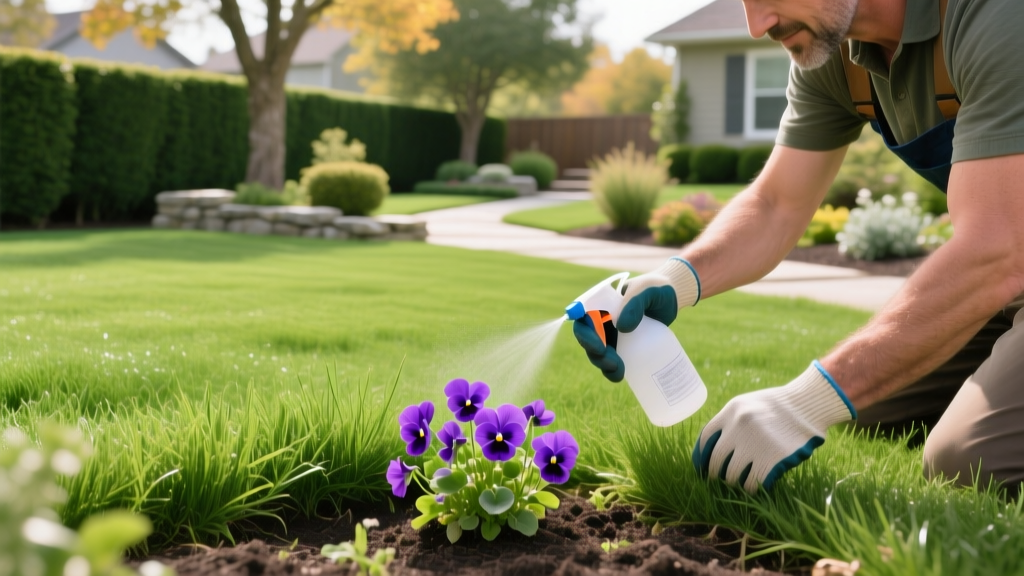
How to Eliminate Violets in Lawn: A Step-by-Step Maintenance Guide
The Biology of Wild Violets: Why They Invade
Wild violets (Viola sororia) are perennial broadleaf weeds that thrive in cool, moist, and shaded environments. Unlike annual weeds that die off in winter, wild violets spread aggressively through two mechanisms: self-seeding and underground rhizomes. These rhizomes form dense, mat-like networks just below the soil surface, making them incredibly resilient to standard lawn maintenance.
The primary reason homeowners struggle to eliminate violets in lawn environments is their unique leaf structure. Violet leaves possess a thick, waxy cuticle that actively repels water and standard liquid herbicides. When a homeowner sprays a generic 2,4-D amine weed killer, the droplets often bead up and roll off the leaf surface, resulting in failed eradication and wasted chemicals. To achieve total control, your step-by-step lawn maintenance procedure must bypass this waxy defense and target the root system.
Decision Matrix: Eradicate or Embrace?
Eradicate if: You are cultivating a monoculture turfgrass (like Kentucky Bluegrass or Bermuda) and require a uniform, high-traffic playing surface. Violets offer poor traffic tolerance and create uneven mowing surfaces.
Embrace if: Your lawn is heavily shaded, suffers from poor drainage, and you are transitioning to a low-maintenance, eco-friendly micro-clover or pollinator-friendly groundcover. Violets require zero fertilizer, fix minor soil imbalances, and support native bee populations.
Step-by-Step Eradication Protocol
If you have decided to reclaim your turfgrass, follow this precise, multi-phase maintenance procedure. Skipping steps will result in the rhizomes regenerating within 4 to 6 weeks.
Step 1: Soil Assessment and Core Aeration
Wild violets are indicator weeds. Their presence signals compacted soil, low nitrogen levels, and excessive shade. Before applying any treatments, address the underlying soil compaction.
- Test Soil Compaction: Push a 6-inch steel soil probe or a long screwdriver into the turf. If you cannot easily penetrate past 3 inches, your soil is severely compacted.
- Core Aeration: Rent a walk-behind core aerator and extract 3-inch deep soil plugs spaced 2 to 3 inches apart. This fractures the compacted clay, disrupts the shallow violet rhizome network, and prepares the soil for turfgrass overseeding.
- Leave the Plugs: Allow the extracted soil cores to break down naturally over the next two weeks. This deposits beneficial microbes onto the surface, which aids in thatch breakdown.
Step 2: Mechanical Extraction (For Small Infestations)
If the violet infestation covers less than 10% of your lawn, mechanical removal is viable, provided you use the correct technique. Standard hand-pulling snaps the taproot, leaving the rhizome intact to resprout.
The Garden Fork Method:
- Wait 24 hours after a heavy rainfall, or deeply water the target area to soften the soil profile.
- Insert a handheld garden fork 4 inches into the soil, directly beside the violet rosette.
- Lever the handle back gently to lift the entire soil plug and root mass.
- Shake the soil away and inspect the root ball. Ensure the thick, white rhizomes are fully removed. If any white root fragments remain in the hole, extract them with a weeding knife.
- Fill the void with a 50/50 mix of topsoil and compost, then press down firmly.
Step 3: Chemical Control (The Ester + Surfactant Method)
For moderate to severe infestations, chemical intervention is mandatory. However, you must select the correct formulation. According to Penn State Extension, standard amine-based herbicides struggle to penetrate the violet's waxy cuticle. You must use an ester-based formulation paired with a surfactant.
| Active Ingredient | Formulation | Efficacy on Violets | Best Application Temp |
|---|---|---|---|
| 2,4-D + Dicamba + MCPP | Amine (Water-based) | Poor to Fair (Beading occurs) | 65°F - 80°F |
| Triclopyr | Ester (Oil-based) | Excellent (Penetrates wax) | 55°F - 75°F |
| 2,4-D + Carfentrazone | Ester Blend (e.g., SpeedZone) | Excellent (Fast burn-down) | 55°F - 75°F |
The Surfactant Requirement: To ensure the herbicide sticks to the leaf and breaches the cuticle, add a Non-Ionic Surfactant (NIS) or Methylated Seed Oil (MSO) to your tank mix. The standard rate is 0.25% v/v (roughly 1 to 2 teaspoons per gallon of water). As noted by Michigan State University Extension, omitting the surfactant can reduce violet control efficacy by over 60%.
Step 4: Timing the Application
Timing is the most common failure point in lawn maintenance programs targeting perennial weeds. Do not spray violets in the spring when they are flowering. During spring, the plant's energy is moving upward into the blooms, meaning the herbicide will only kill the top growth while the rhizome survives.
The Fall Strategy: Apply your ester-based herbicide between mid-September and late October. During autumn, violets are actively pulling nutrients (and herbicides) down into their root systems to store for winter. This translocation ensures the chemical reaches and destroys the rhizomes. Apply when daytime temperatures are consistently between 60°F and 75°F, and ensure no rain is forecast for at least 24 hours.
Phase 5: Post-Eradication Lawn Rehabilitation
Once the violets are eradicated, you will be left with bare patches of soil. If you do not immediately fill these voids with desirable turfgrass, new weed seeds will colonize the space within weeks.
- Overseeding: Apply a shade-tolerant turfgrass seed blend (such as Fine Fescue or a high-endophyte Tall Fescue) at a rate of 4 to 5 lbs per 1,000 square feet.
- Starter Fertilizer: Apply a starter fertilizer with a high phosphorus content (e.g., 18-24-12) at 1 lb of actual nitrogen per 1,000 sq ft to promote rapid root establishment.
- Canopy Management: Prune lower branches on surrounding trees to increase sunlight penetration. Turfgrass requires at least 4 hours of dappled sunlight to outcompete shade-loving weeds.
Frequently Asked Questions
Can I use vinegar or boiling water to kill wild violets?
Horticultural vinegar (20-30% acetic acid) and boiling water are non-selective contact burn-downs. They will instantly scorch the violet leaves but will not penetrate the soil to kill the deep rhizomes. The plant will resprout within 10 days. Furthermore, these methods will sterilize the topsoil and kill beneficial microbes, making turfgrass rehabilitation more difficult.
Are wild violets harmful to my pets?
No. Viola sororia is non-toxic to dogs and cats. In fact, the leaves are edible for humans and contain high levels of Vitamin C. However, the chemical herbicides used to eradicate them (like Triclopyr and 2,4-D) are toxic. Keep pets off the lawn until the liquid herbicide application has completely dried, which typically takes 2 to 4 hours.
How many chemical applications are required for total control?
Expect to apply your ester-based herbicide a minimum of two times, spaced 21 to 28 days apart in the fall. The first application will cause severe leaf curl and stunt the plant; the second application will translocate into the surviving rhizomes and finish the eradication process.

