
Lawn Care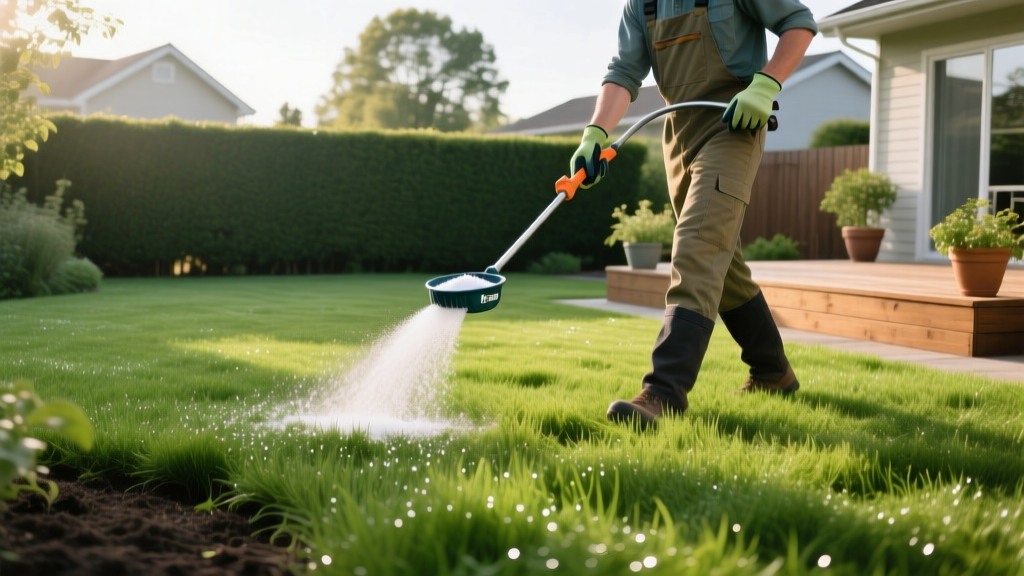
Epsom Salt for Lawns: Step-by-Step Application Guide
The Chemical Reality of Epsom Salt in Turfgrass
Epsom salt is not a miracle cure-all, nor is it a substitute for primary macronutrients. Chemically known as magnesium sulfate heptahydrate (MgSO₄·7H₂O), it contains approximately 10% magnesium and 13% sulfur by weight. Magnesium is the central atom in the chlorophyll molecule; without it, photosynthesis halts, and turfgrass loses its green pigmentation. Sulfur is essential for synthesizing amino acids and proteins. While standard NPK fertilizers (Nitrogen, Phosphorus, Potassium) drive vertical growth and root mass, Epsom salt specifically targets chlorophyll production and enzyme activation. Applying it blindly without a confirmed deficiency can lead to nutrient antagonism, specifically disrupting the plant's ability to uptake calcium and potassium.
⚠️ Critical Warning: Epsom salt is a secondary nutrient supplement, not a primary fertilizer. It will not fix a nitrogen-deficient lawn. Furthermore, never use Epsom salt as a DIY weed killer or pest deterrent. High concentrations applied directly to foliage will cause severe desiccation and leaf burn to your desired turfgrass just as quickly as it will to weeds.
Step 1: Confirm Magnesium Deficiency via Soil Analysis
Before purchasing agricultural-grade magnesium sulfate, you must verify that your soil actually lacks magnesium. Turfgrass growing in highly leached, sandy soils (common in coastal plains) or heavily acidic soils (pH below 5.5) is most prone to magnesium deficiency. Conversely, heavy clay soils often retain magnesium tightly. Furthermore, if your soil test reveals excessively high levels of potassium or calcium, these cations will compete with magnesium for root uptake sites—a phenomenon known as cation antagonism.
Order a comprehensive soil test from a university extension lab rather than relying on cheap, single-use digital pH meters which cannot measure cation exchange capacity (CEC) or base saturation percentages. The University of Minnesota Extension recommends testing every 2 to 3 years to monitor baseline nutrient shifts. Look specifically at the 'Base Saturation' section of your soil report; magnesium should ideally occupy 10% to 15% of the soil's CEC.
Step 2: Calculate Precise Application Rates
Over-applying magnesium sulfate can lead to salt buildup in the rhizosphere, causing osmotic stress that mimics drought damage. The standard agronomic recommendation for correcting a confirmed magnesium deficiency in turfgrass is 2 to 5 pounds of Epsom salt per 1,000 square feet per year, split into multiple applications. For rapid correction of severe interveinal chlorosis, a liquid foliar spray is vastly superior to granular application.
| Lawn Area (sq ft) | Granular Soil Application (lbs) | Liquid Foliar Mix (Tablespoons per 1 gal water) |
|---|---|---|
| 1,000 | 2.5 lbs | 2 Tablespoons |
| 2,500 | 6.25 lbs | 5 Tablespoons |
| 5,000 | 12.5 lbs | 10 Tablespoons (approx. 1/2 cup + 2 tbsp) |
| 10,000 | 25 lbs | 20 Tablespoons (approx. 1 cup + 4 tbsp) |
Step 3: Choose Your Delivery Method
The physical state in which you apply magnesium sulfate dictates how quickly the turfgrass will absorb it and how long the correction will last.
Liquid Foliar Spray (Fastest Results)
Dissolving Epsom salt in water and spraying it directly onto the grass blades allows the stomata to absorb the magnesium within 24 to 48 hours. This is the required method if your lawn is currently suffering from visible yellowing and you need immediate aesthetic correction. Use a pump sprayer for small areas (under 2,000 sq ft) or a hose-end sprayer calibrated to 2 ounces per gallon for larger properties. Ensure the salt is fully dissolved in warm water before transferring it to the sprayer tank to prevent nozzle clogging.
Granular Broadcast (Longer Lasting)
Applying dry Epsom salt via a rotary or drop spreader incorporates the magnesium into the soil profile, where it slowly dissolves and binds to soil colloids. This method is best for proactive maintenance in sandy soils prone to leaching. Note that standard pharmacy-grade Epsom salt is often crystallized and too coarse for broadcast spreaders; you must purchase 'agricultural-grade' or 'soluble fine-grade' magnesium sulfate to ensure it passes through the spreader auger without bridging.
Step 4: The Application Protocol
Follow this exact sequence to maximize uptake and minimize the risk of foliar burn.
- Mow the Turf: Cut your lawn to its standard height 24 hours prior to application. This removes excess thatch and exposes the lower leaf tissue and soil surface.
- Time the Weather: Apply only when temperatures are below 85°F (29°C). High heat combined with salt solutions will rapidly desiccate leaf tissue. Early morning or late evening applications are mandatory during summer months.
- Execute the Spread/Spray: Apply the calculated rate evenly. If using a broadcast spreader, use the 'half-rate crosshatch' pattern (half the material walking North-South, the other half East-West) to prevent striping.
- Water-In (Granular Only): If you applied dry Epsom salt, immediately run your irrigation system for 10-15 minutes to deliver approximately 0.25 inches of water. This washes the granules off the blades and into the root zone. Do not water-in liquid foliar sprays; allow the liquid to dry on the leaf surface for maximum absorption.
Differential Diagnosis: When Epsom Salt Fails
Many homeowners apply Epsom salt to yellowing grass, only to see zero improvement. This usually occurs because the yellowing is caused by a different nutrient deficiency. According to turf pathology data from NC State Turffiles, you must distinguish between mobile and immobile nutrient deficiencies by observing where the yellowing starts.
- Magnesium Deficiency (Mobile): Magnesium moves freely within the plant. When soil levels drop, the plant scavenges Mg from older leaves to support new growth. Therefore, Mg deficiency presents as interveinal chlorosis (yellowing between green veins) on the older, lower leaves first.
- Iron Deficiency (Immobile): Iron cannot be relocated within the plant. If iron is lacking, the newest, youngest leaves at the top of the canopy will turn bright yellow or white, while the older leaves remain dark green. Epsom salt will not cure iron chlorosis; you need a chelated iron (Fe-EDDHA) application instead.
- Nitrogen Deficiency: Presents as a uniform, pale green-to-yellow thinning across the entire plant, accompanied by stunted vertical growth and poor tillering. Requires a standard nitrogen fertilizer.
Pro-Tip on Sourcing: Skip the overpriced, small cardboard boxes of Epsom salt sold in the pharmacy aisle, which often cost $3.00 per pound. Purchase agricultural-grade magnesium sulfate from a local farm supply store or online agricultural retailer. A 50-pound bag typically costs between $25 and $35, bringing the price down to less than $0.70 per pound and providing enough material to treat multiple acres over several seasons.
Summary of Best Practices
Epsom salt is a highly effective, low-cost tool for correcting specific magnesium and sulfur deficiencies in turfgrass. However, its efficacy relies entirely on proper diagnosis via soil testing and precise application rates. By matching the delivery method (liquid for speed, granular for longevity) to your lawn's specific symptoms and ensuring you are not confusing magnesium deficiency with iron chlorosis, you can restore deep green pigmentation to your turf without disrupting the broader soil nutrient balance.

