Lawn Care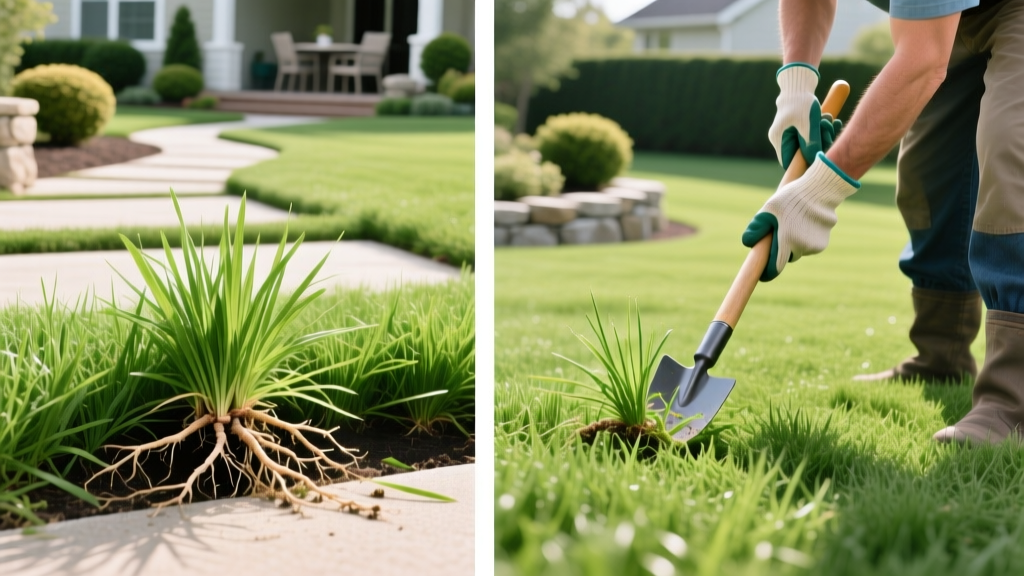
Step-by-Step Guide to Eradicating Nut Grass from Lawns
The Biological Reality: Why Nut Grass Defies Standard Herbicides
Nut grass (botanically classified as Cyperus and commonly known as nutsedge) is not a true grass; it is a sedge. This biological distinction is the primary reason standard broadleaf weed killers (like 2,4-D) and generic grassy weed preventers fail to control it. Sedges possess a complex, subterranean survival network consisting of rhizomes and tubers (nutlets) that can penetrate up to 14 inches deep into compacted soil.
When you pull nut grass by hand, the stem snaps at the soil line, leaving the tubers intact. A single tuber can produce over 1,000 new shoots in a single growing season. According to the Texas A&M AgriLife Extension, attempting to manually eradicate a mature nut grass infestation is counterproductive, as the physical disturbance actually stimulates dormant tubers to sprout. Permanent eradication requires a phased approach combining moisture management, targeted systemic herbicides, and turf density optimization.
Yellow vs. Purple Nut Grass Identification Matrix
Before purchasing herbicides, you must identify which species is invading your lawn. The two primary variants require slightly different chemical approaches and exhibit distinct growth habits.
| Feature | Yellow Nut Grass (C. esculentus) | Purple Nut Grass (C. rotundus) |
|---|---|---|
| Stem Cross-Section | Triangular ("Sedges have edges") | Triangular, often with reddish base |
| Seed Head Color | Golden-brown to yellow | Dark purple to reddish-brown |
| Maximum Tuber Depth | 8 to 10 inches | 12 to 14 inches |
| Tuber Taste/Smell | Sweet, almond-like (edible) | Bitter, sharp, medicinal |
| Hardiness & Spread | Nationwide, prefers cooler springs | Southeast/Southwest, highly aggressive |
Phase 1: Cultural Preparation and Moisture Management
Nut grass is an indicator weed. Its presence almost always signals poor soil drainage, overwatering, or severe soil compaction. The University of California Statewide IPM Program notes that reducing soil moisture is the most effective long-term cultural control method for sedges.
⚠️ The Moisture Warning: If you are running your irrigation system more than twice a week for shallow durations, you are actively cultivating nut grass. Switch to deep, infrequent watering (e.g., 1 inch of water once a week) to force your desirable turf roots deeper while allowing the topsoil to dry out between cycles, which inhibits shallow nutsedge rhizome expansion.
Action Steps for Phase 1:
- Aerate Compacted Zones: Use a core aerator to pull 3-inch plugs from heavily infested areas. This improves drainage and allows subsequent herbicide applications to penetrate the soil profile more effectively.
- Correct Grading Issues: If water pools in specific low spots, top-dress with a 70/30 sand-to-compost mix to raise the grade. For severe drainage failures, installing a French drain (averaging $20 to $30 per linear foot) may be necessary to permanently lower the water table in that zone.
- Adjust Mowing Height: Raise your mower deck to the maximum recommended height for your grass type (e.g., 3.5 inches for Tall Fescue, 2.5 inches for Bermudagrass). Taller turf shades the soil surface, depriving emerging nut grass seedlings of the photosynthesis required to establish new tubers.
Phase 2: Targeted Chemical Eradication Protocol
Because nut grass sprouts primarily from tubers rather than seeds, standard pre-emergent herbicides (like Prodiamine or Dithiopyr) offer zero control. You must use post-emergent herbicides specifically formulated to translocate down the stem and poison the subterranean nutlets.
Selecting the Active Ingredient
Choose your chemical based on your turf type, budget, and desired speed of control.
- Halosulfuron-methyl (e.g., SedgeHammer+): The industry standard. Priced around $28 to $35 for a box of ten 0.9g packets. It is a slow-acting systemic (takes 2 to 3 weeks for complete kill) but is safe for almost all warm- and cool-season turfgrasses. It effectively halts tuber production.
- Sulfentrazone (e.g., Dismiss): Priced higher at $75 to $90 for a 4 oz bottle. It provides rapid burndown (visible yellowing in 24 to 48 hours) and has some soil-residual activity to prevent new shoots. Safe for most turf, but check the label for specific cool-season grass sensitivities during high heat.
- Imazaquin (e.g., Image Kills Nutgrass): A budget-friendly consumer option ($15 to $20 for a 32 oz Ready-To-Spray bottle). Warning: This is strictly for warm-season grasses (Bermuda, Zoysia, Centipede, St. Augustine). It will severely damage or kill Fescue and Kentucky Bluegrass. It is very slow-acting, requiring 3 to 5 weeks for full control.
Step-by-Step Mixing and Application
For professional-grade results using Halosulfuron-methyl (SedgeHammer+), follow this exact mixing protocol:
- Timing: Apply in late spring or early summer when the nut grass is young (3 to 5 leaf stage) and actively growing. Avoid applications when ambient temperatures exceed 85°F to prevent turf phytotoxicity.
- The Mix: In a 1-gallon pump sprayer, combine 0.9 grams of Halosulfuron-methyl with 1 gallon of water. This treats approximately 1,000 square feet.
- Surfactant Requirement: Nut grass leaves are coated in a waxy cuticle that repels water. You must add a Non-Ionic Surfactant (NIS) at a rate of 0.25% to 0.5% v/v (roughly 1 to 2 teaspoons per gallon). Without surfactant, the herbicide will bead up and roll off the leaf.
- Nozzle Selection: Use a flat fan nozzle (such as a TeeJet 11002) rather than a cone nozzle. This ensures an even, overlapping broadcast pattern that coats the foliage without wasting product on the soil.
- Post-Application: Do not water the lawn or allow rainfall for at least 48 hours to allow maximum foliar absorption and translocation to the tubers.
Phase 3: Post-Treatment Monitoring and Lawn Recovery
Eradication is rarely achieved in a single application. Because tubers are staggered at different soil depths, they emerge at different times throughout the summer.
The 21-Day Rule: Monitor the treated area closely. If new shoots emerge 21 to 30 days after the initial application, apply a second follow-up treatment immediately. These new shoots are drawing energy from deeper, secondary tubers. Hitting them before they reach the 5-leaf stage prevents the formation of a new tuber generation.
Overseeding and Turf Density
Once the nut grass is chemically suppressed, the bare patches left behind must be filled immediately. Nut grass thrives in thin, open turf. For cool-season lawns, core aerate and overseed with a premium Tall Fescue or Kentucky Bluegrass blend in early fall. For warm-season lawns, apply a balanced 16-4-8 fertilizer to encourage aggressive lateral stolons and rhizomes to fill the voids before the next spring emergence.
Frequently Asked Questions
Can I use vinegar or boiling water to kill nut grass organically?
No. Horticultural vinegar (20% acetic acid) and boiling water are contact burners. They will destroy the visible top growth of the nut grass within hours, but they will not penetrate the soil to kill the 14-inch-deep tubers. The weed will simply resprout within a week, making organic contact burners a waste of time and resources for sedges.
Does pulling nut grass by hand make it spread faster?
Yes. The physical tension of pulling the stem triggers a biological stress response in the plant, signaling the subterranean tubers to break dormancy and send up multiple new shoots. Always use targeted systemic herbicides rather than mechanical extraction.
Will standard pre-emergent crabgrass preventers stop nut grass?
Standard pre-emergents like Prodiamine (Barricade) or Pendimethalin create a chemical barrier in the top 1/2 inch of soil to stop seeds from germinating. Because nut grass primarily reproduces via deep tubers that sprout well below this chemical barrier, standard pre-emergents are entirely ineffective against it.