
Lawn Care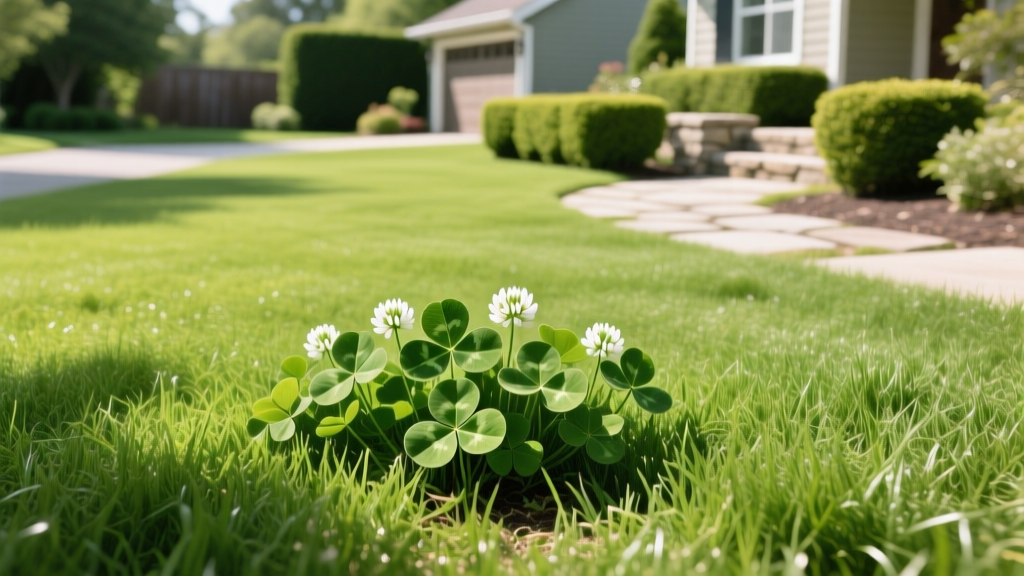
Spot-Treatment Guide: Eradicating White Clover Ground Cover in Lawns
The White Clover Paradox: Ground Cover vs. Turf Invader
White clover (Trifolium repens) presents a unique challenge in modern lawn care. While eco-conscious landscapers sometimes seed it intentionally as a drought-tolerant white clover ground cover or eco-lawn mix, it becomes a relentless broadleaf weed when it infiltrates traditional turfgrass. Its creeping stolons and deep taproots allow it to choke out Kentucky bluegrass, tall fescue, and bermudagrass by monopolizing sunlight and soil moisture.
Because clover spreads laterally via stolons that root at the nodes, broadcast spraying an entire lawn is often unnecessary and environmentally taxing. Instead, precision spot-treatment is the most effective, cost-efficient strategy for reclaiming your turf. According to the University of California Integrated Pest Management program, targeted post-emergent applications combined with cultural adjustments yield the highest long-term eradication rates.
Visual Identification: Confirming the Target
Before mixing any herbicide, confirm you are dealing with true white clover. Misidentifying lookalikes like black medic or oxalis will result in failed treatments, as these species require different active ingredients. White clover is characterized by its trifoliate (three-leaflet) leaves, distinct white crescent or chevron markings on the leaflets, and dense, spherical white-to-pinkish flower heads.
| Feature | White Clover (Trifolium repens) | Black Medic (Medicago lupulina) | Creeping Woodsorrel (Oxalis corniculata) |
|---|---|---|---|
| Leaf Structure | Three oval leaflets, white chevron markings | Three teardrop leaflets, no markings, small stipules | Three heart-shaped leaflets, folds down at night |
| Growth Habit | Creeping stolons, roots at nodes | Upright to prostrate, branching taproot | Prostrate, stolons and taproot |
| Flowers | Spherical, white/pink, 1/2 to 1 inch | Small, dense yellow clusters | Small, solitary yellow, 5-petal |
| Best Herbicide | Triclopyr, Fluroxypyr | 2,4-D, Dicamba | Triclopyr, Fluroxypyr |
The Spot-Treatment Decision Matrix
Choose Your Eradication Protocol
- Chemical (Synthetic): Best for large patches (>10 sq ft) and severe infestations. Fastest results (7-14 days). Requires careful calibration to avoid turf phytotoxicity.
- Organic (Iron-Based): Best for spot treatments near edible gardens or waterways. Slower results (requires 2-3 applications). Causes rapid desiccation of broadleaf tissue.
- Manual Extraction: Best for isolated, single-plant invasions (1-3 sq ft). Labor-intensive but 100% chemical-free. High risk of regrowth if stolons are left behind.
Chemical Spot-Treatment Protocols: The Heavy Hitters
White clover is notoriously tolerant of 2,4-D when used as a standalone active ingredient. For reliable eradication, you must use a multi-active-ingredient formulation where Triclopyr or Fluroxypyr is the primary driver. Penn State Extension notes that clover's waxy leaf cuticle also repels water-based solutions, making the addition of a surfactant non-negotiable.
Formulation Selection by Turf Type
- Cool-Season Lawns (Fescue, Bluegrass, Ryegrass): Use an ester-based 3-way or 4-way herbicide containing Triclopyr + 2,4-D + Dicamba (e.g., SpeedZone or Cool Power). Esters penetrate the clover's waxy cuticle faster, especially in spring and fall temperatures between 60°F and 75°F.
- Warm-Season Lawns (Bermuda, Zoysia, St. Augustine): Use an amine-based formulation or products specifically labeled with Quinclorac and Fluroxypyr (e.g., Celsius WG). Ester formulations can severely burn warm-season grasses during summer heat.
Mixing and Application Specs
- Calibration: For spot-treating, mix 1.5 fluid ounces of 3-way concentrate per 1 gallon of water. This treats approximately 1,000 square feet.
- Surfactant: Add a Non-Ionic Surfactant (NIS) at a rate of 0.25% v/v (roughly 1/2 teaspoon per gallon). This breaks the surface tension, allowing the herbicide to coat the clover leaves evenly rather than beading up and rolling off.
- Application: Use a 1- or 2-gallon pump sprayer with a cone-spray nozzle. Apply only until the clover leaves are wet, not dripping. Avoid spraying on days where wind exceeds 5 mph or temperatures are above 85°F to prevent herbicide volatilization and drift.
Organic Eradication: Chelated Iron (FeHEDTA)
If you maintain an organic lawn program, synthetic auxin herbicides are off the table. The most effective organic alternative is Iron HEDTA (FeHEDTA), commonly sold under brand names like Fiesta Turf Weed Killer.
The Science of Iron Herbicides: Broadleaf weeds (dicots) absorb and translocate iron much more rapidly than turfgrasses (monocots). When clover absorbs the chelated iron, it triggers severe oxidative stress, leading to rapid cellular necrosis (browning) within 24 to 48 hours, while the surrounding grass simply utilizes the iron to green up.
Application Strategy: FeHEDTA does not translocate deeply into the root system like synthetic Triclopyr. Therefore, a single application will burn back the top growth, but the taproot will likely push out new shoots. You must plan for a three-application cycle:
- Application 1: Spray thoroughly to coat all foliage. Expect browning in 48 hours.
- Application 2: Wait 21 days. Spray the regrowth emerging from the surviving taproot.
- Application 3: Wait another 21 days. Apply a final spot treatment to exhaust the root's energy reserves.
Manual Extraction: Avoiding the Stolon Snap
Hand-pulling white clover is highly effective for minor incursions, but it requires specific technique. Clover spreads via stolons (above-ground runners). If you grab a handful and pull, the stolon will snap at the nodes, leaving the rooted crown and tap intact in the soil to regenerate within weeks.
Use a stand-up weeding tool with a serrated claw (such as the Fiskars Uproot Weeder) or a traditional dandelion digger. Insert the tool at a 45-degree angle directly beneath the central taproot crown. Lever the tool back to lift the entire root mass. Inspect the extracted plant: if the primary taproot (which looks like a pale, thick carrot) is missing, use the tool to dig deeper into the void.
Post-Eradication Turf Recovery: The Nitrogen Void
A critical step often missed in clover eradication is addressing the soil chemistry shift. White clover is a legume; it hosts Rhizobium bacteria in its root nodules, fixing atmospheric nitrogen into the soil. A dense patch of white clover ground cover can fix up to 1.5 to 2.0 lbs of nitrogen per 1,000 square feet annually, essentially acting as a slow-release fertilizer for the surrounding grass.
When you kill the clover, that localized nitrogen supply abruptly halts. The turfgrass immediately surrounding the dead clover patch will often turn chlorotic (yellow) due to acute nitrogen deficiency.
The Recovery Protocol
- Nitrogen Supplementation: Once the clover has fully necrotized (turned brown and brittle), apply a fast-release nitrogen fertilizer, such as Urea (46-0-0), at a rate of 0.5 lbs of actual nitrogen per 1,000 sq ft directly to the treated area.
- Overseeding: Clover leaves behind a dense mat of dead thatch and bare soil. Rake out the dead clover debris aggressively. Top-dress the void with 1/4 inch of screened compost and overseed with a turf-type tall fescue or Kentucky bluegrass blend matching your existing lawn.
- Pre-emergent Caution: Do not apply pre-emergent herbicides (like Prodiamine) to the recovered area if you intend to overseed, as it will halt grass seed germination. Instead, rely on a dense turf canopy to naturally shade out future clover seedlings.
Frequently Asked Questions
Will corn gluten meal kill existing white clover?
No. Corn gluten meal is strictly a pre-emergent herbicide and a mild nitrogen fertilizer. It will only inhibit the germination of new clover seeds. It has zero post-emergent activity on established clover plants and will actually fertilize existing patches, making them lusher.
How long should I wait to reseed after applying Triclopyr?
Most Triclopyr-based 3-way herbicides have a soil residual activity that can harm germinating grass seed. Check the specific product label, but standard industry guidance dictates waiting at least 3 to 4 weeks after the final spot-treatment before overseeding the affected zones.
Does raising my mowing height help prevent clover?
Yes. White clover thrives in thin, over-mowed turf where it can access direct sunlight. Raising your mower deck to 3.5 or 4 inches allows cool-season grasses to develop deeper roots and cast dense shade at the soil line, which severely inhibits clover seedling establishment and stolon spread, as noted by North Carolina State University Extension.

