
Lawn Care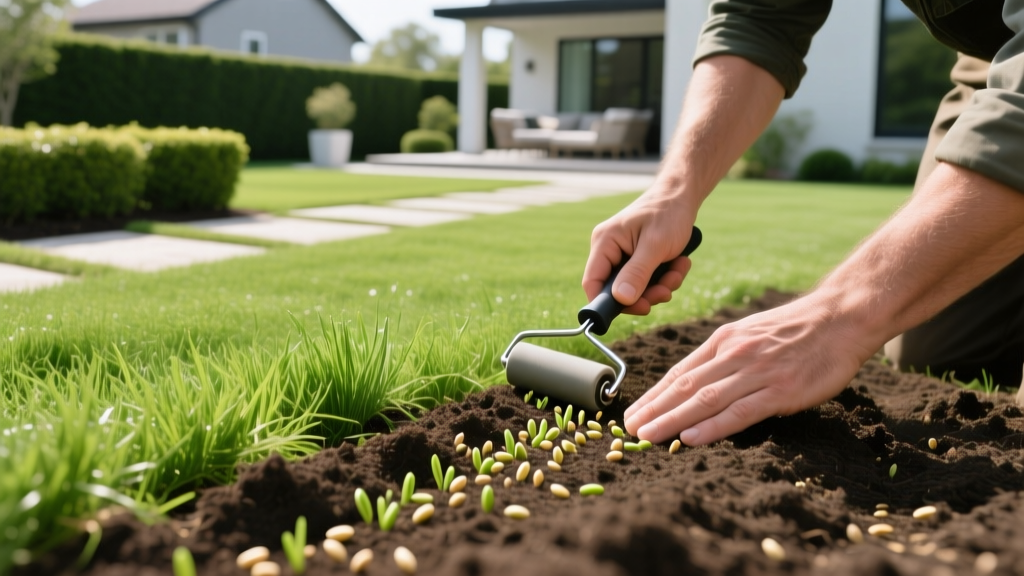
Best Grass Seed for a Fast Growing Lawn: Planting Guide
The Biology of Rapid Germination
Establishing a fast growing lawn from seed requires more than simply scattering grass seed over bare dirt and turning on the hose. Rapid turf establishment relies on the biological process of imbibition, where the seed coat absorbs moisture to trigger enzymatic activity. If soil temperatures, moisture levels, and seed-to-soil contact are not perfectly calibrated, germination stalls, leaving your soil vulnerable to erosion and weed invasion.
To achieve visible growth in under 10 days, you must select aggressively germinating cool-season or warm-season species and pair them with a high-phosphorus starter fertilizer. According to turfgrass research from the University of Minnesota Extension, maintaining consistent moisture in the top 1.5 inches of soil is the single most critical variable for rapid seedling emergence.
Grass Species Comparison Matrix
Not all grasses are engineered for speed. Kentucky Bluegrass, while highly desirable for its rhizomatous spreading, can take 21 to 30 days to germinate, making it a poor choice for rapid coverage. Instead, focus on these three high-velocity species.
| Grass Species | Germination Window | Optimal Soil Temp | Seeding Rate (lbs/1,000 sq ft) | Best Climate Zone |
|---|---|---|---|---|
| Perennial Ryegrass | 5 – 10 Days | 50°F – 65°F | 5.0 – 7.0 | Northern / Transition |
| Tall Fescue | 10 – 14 Days | 55°F – 70°F | 6.0 – 8.0 | Transition / Deep South |
| Bermudagrass (Seeded) | 10 – 21 Days | 65°F – 75°F+ | 2.0 – 3.0 (Hulled) | Southern / Warm-Season |
Pro Tip: For the absolute fastest visual results in cool-season zones, use a mix of 80% Perennial Ryegrass and 20% Creeping Red Fescue. The ryegrass acts as a rapid nurse crop, while the fescue provides long-term shade tolerance.
The 30-Day Establishment Protocol
Phase 1: Soil Architecture (Days 1–3)
Fast germination fails in compacted or nutrient-starved soil. Begin by rototilling the top 4 to 6 inches of your planting area. If a soil test reveals a pH below 6.0, apply pelletized lime at a rate of 50 lbs per 1,000 square feet to correct acidity, which otherwise locks up vital nutrients.
Before seeding, apply a dedicated starter fertilizer. Look for an NPK ratio heavily weighted toward phosphorus (the middle number), such as Lesco Starter Fertilizer 18-24-12 or Scotts Turf Builder Starter Food 24-25-4. Phosphorus is non-mobile in soil and must be physically incorporated into the top 2 inches of the seedbed to fuel initial root radicle emergence.
Phase 2: Precision Seeding and Rolling (Day 4)
Use a calibrated broadcast spreader (like the Scotts Elite Spreader) to ensure even distribution. Split your total seed volume in half. Apply the first half walking horizontally across the lawn, and the second half walking vertically. This cross-hatch pattern eliminates striping and bare spots.
Immediately after seeding, rent a 150 lb water-filled lawn roller. Rolling the seedbed presses the seed firmly into the soil micro-topography, eliminating air pockets that dry out the seed coat and halt imbibition.
Phase 3: The 14-Day Hydration Matrix
Watering a newly seeded lawn is a precision task. You are not watering the grass; you are watering the seed. The goal is to keep the top 1 inch of soil perpetually moist without creating standing water, which displaces seeds and invites fungal pathogens.
- Days 1–10: Water 3 to 4 times daily for 5 to 8 minutes per zone. Adjust based on evaporation rates; if the soil surface looks dry or gray, it needs water immediately.
- Days 11–14: As seedlings reach 1 inch tall, reduce frequency to twice daily but increase duration to 10–15 minutes to encourage deeper root chasing.
- Days 15–30: Transition to a single, deep watering session (20–30 minutes) early in the morning to harden off the turf and promote drought-resistant root architecture.
⚠️ CRITICAL WARNING: The Pre-Emergent Trap
Never apply pre-emergent crabgrass preventers (like Prodiamine or Dithiopyr) within 60 days of seeding a fast growing lawn. These chemicals create a chemical barrier in the soil that stops cell division in all germinating seeds, including your expensive turfgrass. If crabgrass is a concern, rely on the dense canopy of your rapidly growing ryegrass or fescue to naturally shade out weed seeds.
Troubleshooting Germination Failures
Even with perfect execution, environmental variables can disrupt establishment. Here is how to diagnose and correct common failure modes:
Symptom: Seed Washout and Erosion
Cause: Heavy rainfall or overwatering on sloped terrain.
Fix: Apply a seed mulch immediately after rolling. Avoid agricultural hay, which introduces thousands of weed seeds. Instead, use clean wheat straw (applied at 1 bale per 1,000 sq ft) or a hydraulic tackifier like PennMulch. The mulch absorbs the kinetic energy of raindrops and holds moisture against the seedbed.
Symptom: Seedlings Turn Yellow and Collapse
Cause: Pythium Blight (Damping Off), a water-mold fungus that thrives in hot, humid, and constantly wet conditions.
Fix: Immediately reduce watering frequency and ensure you are only watering in the early morning. If the outbreak is severe, apply a preventative fungicide containing Azoxystrobin (e.g., Scotts DiseaseEx) at the curative rate specified on the label.
Symptom: Hard, Cracked Soil Crust
Cause: High clay content soils drying out between watering cycles, forming a physical barrier that tender shoots cannot penetrate.
Fix: Lightly drag a leaf rake or a piece of chain-link fence over the crusted areas to break the surface tension without uprooting seedlings, then resume frequent, light misting.
The First Mow and Transition to Maintenance
The transition from a newly seeded bed to a mature, fast growing lawn hinges on your first mow. Do not mow based on a calendar schedule; mow based on height. Wait until the majority of the turf reaches 3.5 inches in height.
Follow the 1/3 rule: never remove more than one-third of the leaf blade in a single pass. Set your mower deck to 2.5 inches. Ensure your mower blades are freshly sharpened; dull blades tear tender new grass tips, leaving them vulnerable to desiccation and fungal entry points. Leave the clippings on the lawn to recycle nitrogen back into the soil, and prepare to apply your first post-establishment fertilizer application 4 to 6 weeks after germination.
For comprehensive regional planting dates and soil preparation metrics, consult the Clemson University Home & Garden Information Center, which provides localized turfgrass establishment calendars tailored to specific hardiness zones.

