
Lawn Care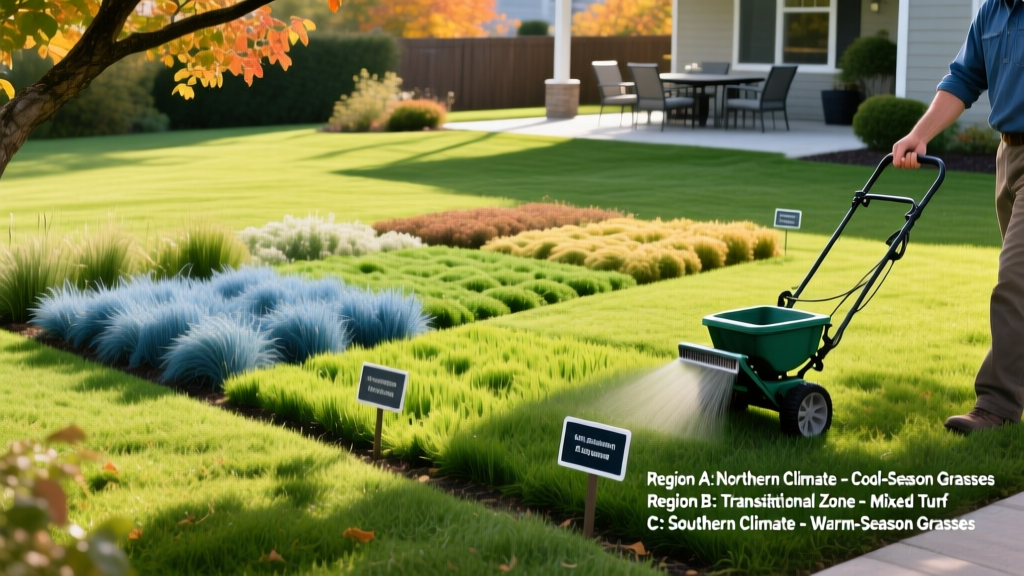
When to Apply Fall Fertilizer for Lawns by Region and Grass Type
Applying fall fertilizer for lawns is the single most impactful agronomic practice you can execute to ensure a thick, weed-resistant turf the following spring. However, the most common point of failure for homeowners is relying on calendar dates rather than environmental triggers. A blanket "apply in October" approach ignores the vast climatic differences between a fescue lawn in North Carolina and a Kentucky bluegrass lawn in Minnesota. To maximize carbohydrate storage and root mass development, you must align your nitrogen and potassium applications with specific soil temperature thresholds and regional dormancy windows.
The Soil Temperature Trigger: Why Calendars Fail
Grass roots do not read calendars; they respond to thermal cues. The primary goal of autumn feeding is to stimulate root growth and store carbohydrates in the crown before winter dormancy, without pushing excessive top-growth that depletes energy reserves. This physiological sweet spot occurs when air temperatures are cooling, but soil temperatures remain warm enough for active root uptake.
The 55°F to 65°F Soil Temp Rule: For cool-season grasses, the optimal window for late-fall fertilization occurs when soil temperatures at a 2-inch depth consistently drop below 65°F but remain above 55°F. At this range, top-growth slows significantly, but root systems continue to absorb and store nitrogen.
To measure this accurately, use a digital soil thermometer inserted 2 inches into the turf canopy in a shaded area of your lawn during the mid-morning. Relying on ambient air temperature or standard regional almanacs often results in applying nutrients too early (causing winter turf diseases like snow mold) or too late (resulting in nitrogen leaching before uptake).
Cool-Season Grass Regional Timing Matrix
Cool-season grasses (Kentucky bluegrass, tall fescue, perennial ryegrass) thrive in the Northern and Transition zones of the United States. These lawns require a two-part fall feeding strategy: an early-fall application to recover from summer stress, and a late-fall "winterizer" application for spring root initiation.
| Region | Primary Grass Types | Early Fall Window | Late Fall Window | Target Soil Temp (Late) |
|---|---|---|---|---|
| Upper Midwest / Northeast | Kentucky Bluegrass, Fine Fescue | Late Aug - Early Sept | Late Oct - Early Nov | 50°F - 55°F |
| Mid-Atlantic / Transition Zone | Tall Fescue, Perennial Ryegrass | Early Sept - Mid Sept | Mid Nov - Early Dec | 55°F - 60°F |
| Pacific Northwest | Perennial Ryegrass, Bentgrass | Mid Sept - Early Oct | Late Nov - Mid Dec | 50°F - 58°F |
According to University of Minnesota Extension, late-fall applications should utilize fast-release nitrogen sources (like urea or ammonium sulfate) because the microbial activity required to break down slow-release organics drops off sharply as soil temperatures approach 50°F. Aim for 1.0 to 1.5 lbs of actual nitrogen per 1,000 square feet during this late window.
Warm-Season Grass Regional Timing Matrix
Warm-season grasses (Bermuda, Zoysia, St. Augustine, Centipede) operate on an entirely different physiological schedule. The most critical mistake homeowners make in the South is applying high-nitrogen fall fertilizer for lawns too late in the season, which delays dormancy and drastically increases the risk of winter kill and Spring Dead Spot disease.
The "Winterizer" Myth for Southern Lawns
Marketing often pushes high-nitrogen "winterizers" to southern homeowners. For warm-season turf, this is agronomically dangerous. Instead, late-summer and early-fall applications should focus heavily on potassium (K) to enhance cold hardiness and cellular wall thickness, while nitrogen should be tapered off completely 6 to 8 weeks before the historical first frost date.
- Bermuda & Zoysia: Stop nitrogen applications by mid-September in the Deep South. Apply a 0-0-20 or 5-10-30 potassium-heavy formulation in early October to fortify against freezing temperatures.
- St. Augustine & Centipede: These are highly sensitive to nitrogen-induced cold damage. Cease all nitrogen by late August. A light application of potassium sulfate (0-0-50) at 2 lbs per 1,000 sq ft in September improves overwintering survival rates in marginal zones like the Carolinas and Arkansas.
Product Specifications and Cost Analysis
Selecting the correct N-P-K ratio is just as critical as the timing. Below is a breakdown of three distinct fall fertilizer formulations, categorized by their optimal use-case and release mechanics.
1. Scotts Turf Builder WinterGuard (32-0-10)
Best For: Late-fall cool-season applications (Northern US).
Mechanics: High fast-release nitrogen for immediate uptake when soil microbes are dormant; 10% potassium for mild stress tolerance.
Cost & Coverage: ~$38.00 for a 14 lb bag covering 5,000 sq ft ($0.0076 per sq ft).
Spreader Setting: Scotts Classic Drop Spreader: 6.5
2. Milorganite (5-2-0)
Best For: Early-fall cool-season recovery (Labor Day application).
Mechanics: Slow-release organic nitrogen. Requires active soil microbes and warmer soil (above 65°F) to break down into usable ammonium. Will not burn turf if over-applied.
Cost & Coverage: ~$22.00 for a 36 lb bag covering 2,500 sq ft ($0.0088 per sq ft).
Spreader Setting: Scotts EdgeGuard Rotary: 13
3. Jonathan Green Winter Survival (10-0-20)
Best For: Transition zone tall fescue and warm-season cold-hardiness prep.
Mechanics: Lower nitrogen to prevent excessive blade growth; exceptionally high potassium (20%) to regulate osmotic pressure within grass cells, preventing freeze-induced desiccation.
Cost & Coverage: ~$45.00 for a 30 lb bag covering 5,000 sq ft ($0.0090 per sq ft).
Step-by-Step Application Protocol
- Core Aerate First: For cool-season lawns, perform core aeration immediately before the early-fall fertilizer application. This physically opens the soil profile, allowing nutrients to bypass the thatch layer and reach the root zone directly.
- Mow Low: Drop your mower deck by one notch (to roughly 2.5 inches) for the late-fall application. This reduces the surface area of the grass blade, minimizing nutrient interception by the foliage and maximizing soil contact.
- Calibrate the Spreader: Never guess the spreader setting. Weigh out the exact amount of product needed for a 10x10 test area (100 sq ft), set your spreader, and walk the test area. Adjust the dial until the product runs out exactly at the end of the 100 sq ft.
- Watering In: Synthetic, fast-release fall fertilizers (like urea-based WinterGuards) require roughly 0.25 inches of irrigation immediately after application to wash the prills off the grass blades and into the soil, preventing foliar burn and activating the nutrient exchange.
Common Fall Fertilization Mistakes to Avoid
Even with the right product, execution errors can negate your investment or actively harm the turf.
"Applying nitrogen to warm-season grasses in late fall forces the plant to break dormancy and produce tender new shoots just as freezing temperatures arrive. This is the primary catalyst for severe winter kill in Bermuda and Zoysia lawns."
— Adapted from Penn State Extension Turfgrass Management Guidelines
- Fertilizing Frozen Ground: If the soil temperature drops below 45°F, cool-season grass roots enter a state of metabolic suspension. Any fertilizer applied at this stage will not be absorbed and will instead leach into the groundwater or run off into municipal waterways during winter thaws.
- Ignoring Phosphorus Bans: Many states and municipalities strictly prohibit the application of phosphorus (the middle number in N-P-K) unless a soil test explicitly indicates a deficiency or you are establishing a new lawn from seed. Using a standard 10-10-10 fertilizer in these jurisdictions can result in municipal fines.
- Overlapping Spreader Passes: Failing to use a spreader with an edge-guard feature near garden beds, or overlapping wheel tracks by more than 10%, results in localized nitrogen toxicity, which manifests as yellow, necrotic streaks in the turf by early spring.
By shifting your focus from arbitrary calendar dates to precise soil temperature metrics and selecting region-specific N-P-K formulations, you transform fall fertilization from a routine chore into a highly targeted agronomic strategy that guarantees a denser, more resilient lawn the following year.