
Lawn Care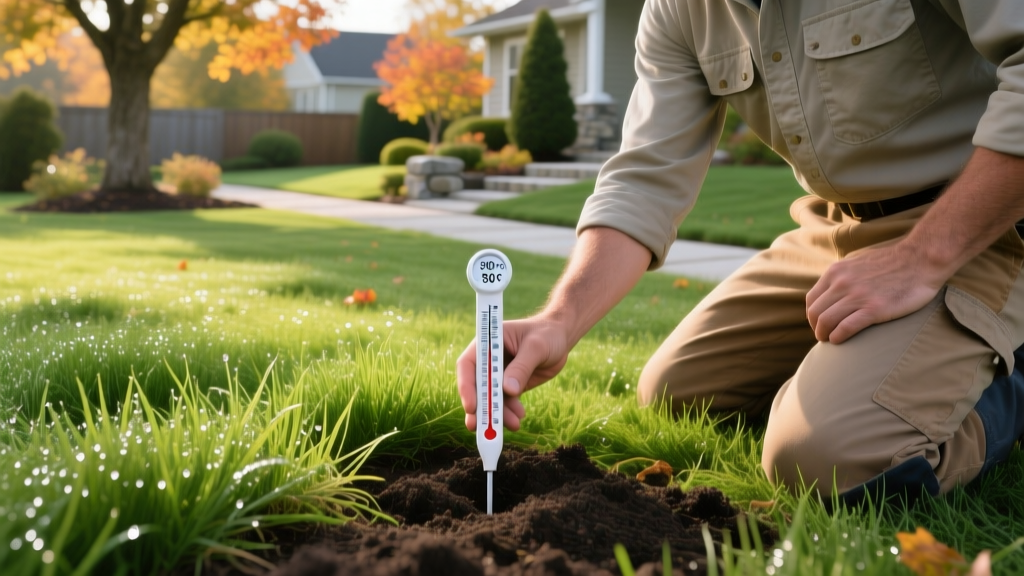
When to Start Fall Fertilizing: A Regional Soil Temperature Guide
The Science of Fall Fertilizing: Why Soil Temperature Beats the Calendar
Air temperature is a deceptive metric for lawn care. While mornings in September may feel crisp, the soil retains summer heat, keeping turfgrass roots highly active. The single most critical metric for fall fertilizing is soil temperature at a 2-inch depth. Relying on a calendar date often leads to missed windows, nutrient runoff, or late-season growth that invites winter diseases.
For cool-season grasses (Kentucky Bluegrass, Tall Fescue, Perennial Ryegrass), the primary goal of autumn feeding is carbohydrate storage in the root crown. This stored energy dictates winter survival and the speed of spring green-up. According to Penn State Extension, cool-season turfgrass root growth peaks when soil temperatures drop into the 55°F to 65°F range, making this the optimal window for heavy nitrogen applications.
Conversely, warm-season grasses (Bermudagrass, Zoysia, St. Augustine) enter dormancy as soil temperatures drop below 65°F. Applying nitrogen late in the season forces tender new growth that will be killed by the first frost. Instead, warm-season lawns require a potassium-heavy application to fortify cell walls against freeze damage, a practice detailed extensively by Texas A&M AgriLife Extension.
Regional Fall Fertilizing Calendars
Because soil cooling rates vary drastically by USDA Hardiness Zone and local microclimates, use the following regional matrix to time your applications. Always verify with a digital soil probe rather than guessing based on the calendar.
| Region / USDA Zone | Grass Type | Target Soil Temp (2-inch) | Primary Application Window | Nutrient Focus (N-P-K) |
|---|---|---|---|---|
| Northern (Zones 3-5) MI, MN, ME, ND |
Cool-Season | 60°F - 55°F | late August – Mid September | High Nitrogen (32-0-10) |
| Transition (Zone 6) PA, OH, MO, KS |
Cool-Season / Mixed | 65°F - 55°F | Mid September – Early October | Balanced / Slow-Release (24-4-12) |
| Upper South (Zones 7-8) NC, TN, AR, TX Panhandle |
Warm-Season & Transition | 70°F dropping to 60°F | Early September (Warm) / Late Sept (Cool) | Potassium Winterizer (0-0-25) |
| Deep South (Zones 9-10) FL, Gulf Coast, SoCal |
Warm-Season | Below 75°F | Mid October – Early November | Potassium & Iron (0-0-20 + Fe) |
Zone 3-5: The Northern Cool-Season Protocol
In northern climates, the window for fall fertilizing is tight. You want to apply a fast-acting synthetic nitrogen right as the grass stops pushing top growth but while roots are still actively pulling nutrients from the soil profile. This typically aligns with the time you are raking the first heavy leaf drops. If you miss this window and the soil drops below 45°F, microbial activity slows to a crawl, and granular fertilizers will sit on the surface until spring, risking runoff into local waterways.
Zone 7-10: The Warm-Season Winterization Strategy
For Bermudagrass and Zoysia, fall fertilizing is entirely about stress tolerance, not growth. As University of Minnesota Turfgrass Science notes in their comparative regional studies, potassium (the third number in the N-P-K ratio) acts as an antifreeze for plant cells, regulating stomatal closure and preventing winter desiccation. Apply a 0-0-25 or 0-0-20 sulfate of potash product roughly 6 weeks before your region's historical first hard freeze.
N-P-K Ratios and Product Selection for Autumn Applications
Choosing the right fertilizer requires looking past the marketing labels and analyzing the guaranteed analysis on the bag. Below is a comparison of top-performing fall fertilizers based on current 2026 market pricing and agronomic efficacy.
| Product Name | N-P-K Ratio | Type & Release Rate | Est. Cost (per 1,000 sq ft) | Best Use Case |
|---|---|---|---|---|
| Scotts Turf Builder WinterGuard | 32-0-10 | Synthetic (Fast + Slow blend) | $0.003 - $0.004 | Late fall cool-season carbohydrate loading. |
| Milorganite | 6-4-0 | Organic Biosolid (Microbe-dependent) | $0.008 - $0.010 | Early fall application; requires warm soil microbes to break down. |
| Jonathan Green Organic Winter Feeder | 10-0-2 | Organic (Feather meal & Kelp) | $0.007 - $0.009 | Transition zone lawns needing moderate N and trace minerals. |
| Lesco Potassium Plus | 0-0-25 | Synthetic Sulfate of Potash | $0.005 - $0.006 | Warm-season winterization; disease and freeze resistance. |
Agronomic Insight: Avoid using Milorganite or other purely organic fertilizers for your late fall application (when soil temps drop below 55°F). Organic fertilizers require soil microbes to mineralize the nutrients into a plant-available form. When soil temperatures drop, microbial activity ceases, rendering the organic nitrogen locked and useless until the following spring.
Step-by-Step Application Protocol
To maximize nutrient uptake and prevent chemical burn, follow this precise application sequence:
- Core Aerate First (Cool-Season Only): If your soil is compacted, core aerate 7-10 days before fertilizing. This opens direct channels to the root zone, increasing fertilizer efficiency by up to 40%.
- Measure and Calibrate: Weigh out the exact amount of product needed for your lawn's square footage. Set your rotary spreader to the manufacturer's recommended setting, then do a test pass on your driveway to check the spread pattern.
- Apply in a Crisscross Pattern: Apply half the required rate walking North-South, and the second half walking East-West. This eliminates striping and ensures uniform coverage.
- Sweep Hardscapes: Immediately use a leaf blower or broom to sweep any granules off driveways and sidewalks back onto the grass to prevent phosphorus runoff into storm drains.
- Watering In: Apply 0.25 inches of irrigation immediately after application to wash the prills off the grass blades and into the soil profile, preventing foliar burn.
Common Fall Fertilizing Mistakes and Edge Cases
Even experienced homeowners make critical errors during autumn lawn care. Watch out for these specific edge cases:
- The 'Weed and Feed' Trap: Never use a combination weed-and-feed product in the fall if you plan to overseed. The pre-emergent or broadleaf herbicides (like 2,4-D or Quinclorac) will inhibit grass seed germination or kill young seedlings. Use a straight fertilizer instead.
- Ignoring Soil pH: If your soil pH is below 6.0 (acidic) or above 7.5 (alkaline), nutrient lockout occurs. You can apply 50 lbs of nitrogen per acre, but the grass will absorb almost none of it. Run a Michigan State University style soil test in August. If pH is low, apply pelletized lime concurrently with your early fall fertilizer.
- Fertilizing Diseased Turf: If your lawn is currently suffering from Large Patch (Rhizoctonia solani) or Dollar Spot, applying high nitrogen will act like pouring gasoline on a fire. Fungicide treatment must precede any fall nutritional applications.
By anchoring your fall fertilizing schedule to soil temperature data rather than arbitrary calendar dates, and by matching the N-P-K ratio to your specific turfgrass species, you will build a root system capable of surviving harsh winters and exploding with vigorous growth the moment spring temperatures rise.

