
Lawn Care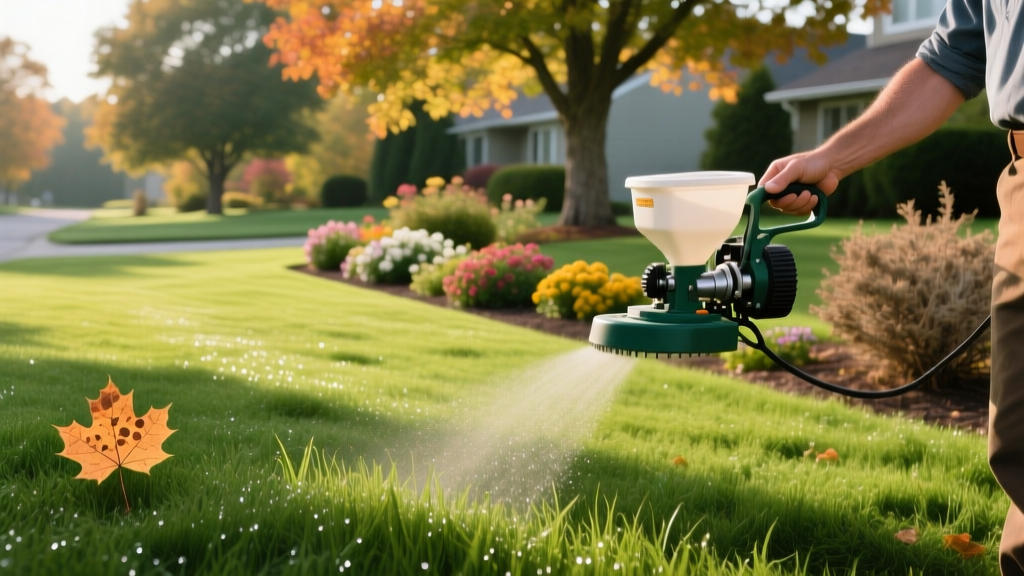
When to Apply Fall Weed and Feed: Regional Timing Guide
Determining exactly when to apply fall weed and feed is the single most critical factor in autumn lawn maintenance. Unlike spring applications, which are driven by air temperature and visible weed growth, fall applications must be timed around soil temperature thresholds and the specific dormancy cycles of your grass type. Applying these combination products too early wastes the pre-emergent herbicide barrier, while applying them too late fails to deliver the necessary winterizing nutrients before the ground freezes.
The Soil Temperature Trigger: Why Calendar Dates Fail
Most homeowners rely on calendar dates (like Labor Day or the first frost) to schedule lawn care. This is a fundamental mistake. Herbicide efficacy and root nutrient uptake are governed by soil temperature at a 2-inch depth, not the air temperature outside your window.
The 55°F to 60°F Rule: For fall pre-emergent weed control (targeting Poa annua and late-germinating crabgrass), soil temperatures must consistently drop below 70°F and sit in the 55°F to 60°F range. For post-emergent broadleaf control (targeting dandelions and clover), daytime air temperatures should be between 65°F and 75°F, ensuring weeds are actively photosynthesizing and pulling the herbicide down to their roots.
To measure this accurately, use a dedicated soil probe thermometer inserted 2 inches into the turf canopy in a shaded area of your lawn, ideally in the early morning. Relying on local weather app soil readings can be inaccurate, as they often measure bare agricultural soil rather than insulated turf environments.
Regional Application Calendars for Cool-Season Grasses
Cool-season grasses (Kentucky Bluegrass, Tall Fescue, Perennial Ryegrass) experience their peak root growth in autumn. The timing for fall weed and feed varies significantly by USDA Hardiness Zone and regional climate patterns. Below is the targeted application window for 2026 based on historical soil-cooling trends.
| Region | Primary Grass Types | Target Application Window | Soil Temp Goal |
|---|---|---|---|
| Pacific Northwest | Perennial Ryegrass, Fine Fescue | Sept 1 – Sept 15 | 60°F - 65°F |
| Midwest / Great Lakes | Kentucky Bluegrass, Tall Fescue | Sept 10 – Sept 25 | 55°F - 60°F |
| Northeast | Kentucky Bluegrass, Ryegrass | Sept 15 – Oct 1 | 55°F - 60°F |
| Transition Zone | Tall Fescue | Oct 1 – Oct 15 | 55°F - 60°F |
According to turfgrass researchers at the University of Minnesota Extension, applying winterizing nitrogen too early in late summer promotes lush, tender top growth that is highly susceptible to early frost damage and snow mold. Waiting for the soil to cool ensures the nitrogen is directed entirely to root storage rather than leaf blade production.
Warm-Season Grasses: The Fall Fertilizer Danger Zone
If you maintain a warm-season lawn (Bermudagrass, Zoysia, St. Augustine, or Centipede), the concept of a traditional 'fall weed and feed' does not apply to you. In fact, applying a nitrogen-heavy combination product in autumn can severely damage your turf.
Critical Warning for Southern Lawns: Warm-season grasses begin preparing for winter dormancy when day lengths shorten and night temperatures drop below 60°F. Applying nitrogen at this stage forces the grass to break dormancy and push new, tender growth. When the first hard freeze hits, this new growth will suffer catastrophic winterkill, leading to massive dead patches the following spring. Southern lawns should only receive a potassium-rich 'winterizer' (0-0-10) without nitrogen, and weed control should be limited to standalone pre-emergents like Prodiamine.
Product Selection: Matching the Chemical to the Weed
The term 'weed and feed' is a marketing umbrella that covers vastly different chemical formulations. Selecting the right product requires identifying whether you are fighting actively growing broadleaf weeds or trying to prevent winter annual grasses.
Post-Emergent Broadleaf Control (Dandelions, Clover, Chickweed)
For visible weeds, you need a product containing systemic herbicides like 2,4-D, Mecoprop-p (MCPP), and Dicamba. A top-tier consumer option is Scotts Turf Builder WinterGuard Fall Weed & Feed 2 (averaging $42 to $48 per 5,000 sq. ft. bag in 2026). The ester-based formulations in these products penetrate the waxy cuticle of autumn weeds effectively, provided the weeds are not drought-stressed.
Pre-Emergent Control (Poa Annua / Annual Bluegrass)
If your primary fall nemesis is Poa annua (the light-green grass that dies in patches in late spring), standard broadleaf weed and feeds will not stop it. You need a pre-emergent active ingredient like Prodiamine or Dithiopyr. Products like Lesco Pre-Emergent Herbicide (approx. $65 for 50 lbs) create a chemical barrier in the top inch of soil that halts seed germination. Note that pre-emergents do not contain fertilizer, so you must pair them with a standalone fall winterizer fertilizer.
Step-by-Step Application Protocol
The most common reason fall weed and feed applications fail is improper moisture management. Follow this exact protocol to ensure maximum efficacy:
- Mow First: Cut your lawn to its standard height (e.g., 3.0 inches for Tall Fescue). Bag the clippings if the lawn is heavily infested with weed seed heads to prevent re-seeding.
- Target Morning Dew: For granular post-emergent broadleaf weed and feeds, apply early in the morning when the grass blades are damp with dew. The moisture causes the granules to stick directly to the weed leaves, which is where the herbicide must be absorbed.
- Calibrate the Spreader: Set your broadcast spreader to the manufacturer's exact specification. For Scotts Elite Spreader applying WinterGuard, the setting is typically 5.5. Walk at a steady pace of 3 feet per second.
- The 48-Hour Dry Window: Unlike pre-emergents that require immediate watering, do not water your lawn for at least 48 hours after applying a post-emergent broadleaf weed and feed. Washing the granules off the weed leaves and into the soil renders the herbicide useless.
- Perimeter Sweep: Walk the perimeter of your lawn first to create a turning buffer, then fill in the interior using overlapping parallel passes to prevent striping.
Common Application Mistakes and Edge Cases
- Applying to Drought-Stressed Turf: If your region has experienced a dry autumn and the soil is hydrophobic, the grass roots cannot uptake the nitrogen, and the weeds have closed their stomata to conserve water, rendering the herbicide ineffective. Irrigate the lawn deeply 24 hours before application, then let the grass dry overnight before spreading the product.
- The 'Over-Application' Burn: Applying more than the recommended 3.5 to 4.0 lbs per 1,000 sq. ft. of combination products will result in severe fertilizer burn. The salts in the nitrogen carrier will dehydrate the grass blades, turning them yellow or brown within 48 hours.
- Ignoring the Frost Forecast: If a hard freeze (below 28°F) is forecasted within 72 hours of your planned application, delay it. Freezing temperatures halt plant metabolism, meaning the weed will not translocate the herbicide to its roots, and the cold will lock up the soil nutrients.
Frequently Asked Questions
Can I apply fall weed and feed if rain is forecasted?
Light drizzle after application is acceptable and can actually help melt the granules onto the weed leaves. However, heavy rainfall (over 0.25 inches) within 24 hours will wash the herbicide off the foliage and into the soil, neutralizing the post-emergent weed control while potentially causing fertilizer runoff into storm drains. Always check the 48-hour radar before spreading.
How long after applying fall weed and feed can I overseed?
This is a major conflict in lawn care. The herbicides in standard fall weed and feeds (specifically 2,4-D and Dicamba) have a soil residual life of 3 to 4 weeks. If you apply these products, you cannot safely overseed your lawn with new grass seed for at least 30 days. If overseeding is your priority, skip the herbicide, use a standalone starter fertilizer, and spot-treat weeds manually or wait until the new grass has been mowed three times. For more on resolving this conflict, consult the NC State University TurfFiles weed management guidelines.

