
Lawn Care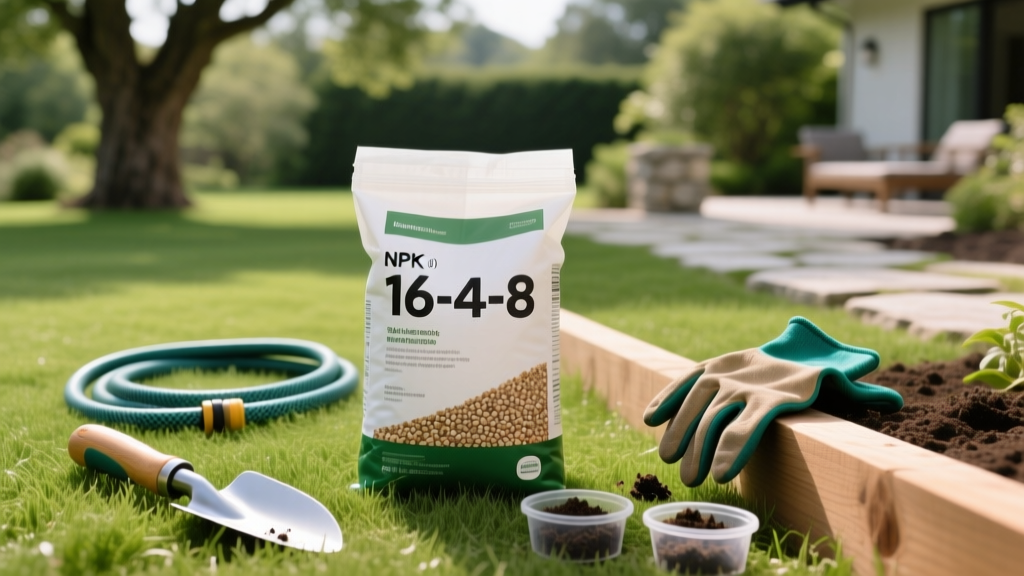
What Do the 3 Numbers on Fertilizer Mean? The NPK Ratio Explained
The Core Answer: Nitrogen, Phosphorus, and Potassium
When you pick up a bag of lawn fertilizer, the three prominent numbers on the front (such as 32-0-4 or 10-10-10) represent the percentage by weight of the three primary macronutrients required for turfgrass health. This is universally known as the NPK ratio. In a 50-pound bag of 32-0-4 fertilizer, there are 16 pounds of Nitrogen (32%), 0 pounds of Phosphorus (0%), and 2 pounds of Potassium (4%). The remaining 32 pounds consist of secondary nutrients, micronutrients, and inert filler materials that help distribute the active ingredients evenly across your lawn.
Understanding what do the 3 numbers on fertilizer mean is the difference between a thick, resilient lawn and one that suffers from chemical burn, excessive thatch, or nutrient runoff. Below is a deep dive into how each nutrient functions at the cellular level and how to leverage them for specific turfgrass outcomes.
Nitrogen (N): The Growth Engine
Nitrogen is the most critical nutrient for turfgrass. It is the central atom in the chlorophyll molecule, directly responsible for photosynthesis and the deep green color of your lawn. Nitrogen drives rapid vertical leaf growth and lateral tillering (the thickening of the turf canopy).
- Deficiency Symptoms: Pale green or yellowing grass (chlorosis), starting on older leaves; thinning canopy; increased susceptibility to dollar spot disease.
- Excess Symptoms: Excessive top growth at the expense of root development, increased thatch accumulation, and high vulnerability to environmental stress and fungal pathogens like brown patch.
Phosphorus (P): The Root Builder
Phosphorus facilitates energy transfer within the plant via ATP (adenosine triphosphate). It is essential for early root development, seedling establishment, and overall plant maturity. Note that the 'P' number on the bag actually represents phosphate (P2O5), not elemental phosphorus.
- Deficiency Symptoms: Purplish or reddish tint on grass blades; poor root mass; stunted growth in newly seeded or sodded lawns.
- Excess Symptoms: Phosphorus does not easily leach through soil; it binds to soil particles. Excess phosphorus is a primary driver of aquatic algal blooms when it runs off into waterways.
Regulatory Warning: Due to severe environmental impacts on local waterways, many states (including New York, Minnesota, and Washington) have banned the sale of phosphorus-containing fertilizers for established lawns. You will frequently see a '0' in the middle of the NPK ratio unless the product is specifically labeled for 'new seed' or 'patch repair,' or if a certified soil test proves a phosphorus deficiency.
Potassium (K): The Stress Shield
Potassium (represented as potash, or K2O, on the label) regulates the opening and closing of stomata on grass blades, controlling water loss and CO2 uptake. It acts as the plant's immune and stress-management system, thickening cell walls to improve tolerance against drought, freezing temperatures, heavy foot traffic, and disease.
- Deficiency Symptoms: Wilting despite adequate soil moisture; leaf tip dieback (firing); poor winter survivability in cool-season grasses.
- Application Timing: Potassium is most critical in late fall 'winterizer' applications for cool-season grasses, and early summer applications for warm-season grasses preparing for heat stress.
Decoding the Hidden Label Details
The 3 numbers on the front of the bag only tell half the story. To truly master lawn nutrition, you must flip the bag over and read the 'Guaranteed Analysis' panel. This section reveals the source of the nitrogen, which dictates how the grass will absorb it over time.
According to turfgrass management guidelines from University of Minnesota Extension, at least 50% of the nitrogen in a premium fertilizer should be in a slow-release or controlled-release form. Look for these specific terms on the label:
- Quick-Release (Water Soluble): Urea, ammonium sulfate. Provides immediate greening within 48-72 hours but carries a high risk of foliar burn and leaching. Lasts 2-4 weeks.
- Slow-Release (Water Insoluble): Sulfur-coated urea (SCU), polymer-coated urea (PCU), methylene urea (MU), or organic sources like feather meal. Feeds the lawn steadily over 8-12 weeks, mimicking natural nutrient cycling and preventing growth spikes.
The NPK Decision Matrix: Which Ratio Do You Actually Need?
Applying a balanced 10-10-10 fertilizer to an established lawn is a common amateur mistake that leads to phosphorus toxicity and weak root systems. Use this decision framework to select the correct NPK ratio based on your lawn's current lifecycle stage.
| Lawn Scenario | Ideal NPK Ratio | Why This Works |
|---|---|---|
| New Seed or Sod | 1-2-1 (e.g., 10-20-10) | High phosphorus drives rapid root establishment before the first mow. |
| Spring Push (Cool-Season) | 3-0-1 or 4-0-1 (e.g., 32-0-8) | High nitrogen for canopy recovery; zero phosphorus to protect waterways; moderate potassium for spring disease resistance. |
| Late Fall Winterizer | 2-0-3 (e.g., 24-0-14) | Elevated potassium thickens cell walls, storing carbohydrates in the crown for winter survival and early spring green-up. |
| Stressed / Drought Recovery | 1-0-2 (e.g., 12-0-24) | Low nitrogen prevents forcing tender new growth during stress; high potassium regulates stomatal water retention. |
The Math: Calculating Exact Application Rates
The most critical skill in lawn care is translating the NPK numbers into actual product weight per square footage. Applying 'one bag per lawn' is how homeowners accidentally chemically burn their turf. The agronomic standard for a single application is generally 0.5 to 1.0 pounds of actual Nitrogen per 1,000 square feet.
Here is the exact formula to calculate your spreader load, using a standard Scotts Turf Builder (32-0-4) as an example:
- Identify your target Nitrogen rate: Let's use 1.0 lb of N per 1,000 sq ft.
- Convert the NPK percentage to a decimal: 32% becomes 0.32.
- Divide the target rate by the decimal: 1.0 / 0.32 = 3.125 lbs of product per 1,000 sq ft.
- Scale to your lawn size: If your lawn is 6,000 sq ft, multiply 3.125 by 6. You need exactly 18.75 lbs of product to cover the entire area at the correct rate.
Pro Tip for Spreader Calibration: Weigh out your calculated product amount (e.g., 18.75 lbs) and set your rotary spreader to a low setting. Walk your entire lawn. If you have product left over, your setting was too low. If you run out before finishing, your setting was too high. Adjust accordingly and record the exact dial setting on the bag for next season.
Organic vs. Synthetic NPK Profiles
The 3 numbers on organic fertilizers look drastically different from synthetic options, which confuses many buyers. A synthetic product like Lesco 32-0-10 delivers a massive, immediate nutrient payload. An organic product like Milorganite (6-4-0) has much lower numbers because the nutrients are bound in complex carbon chains that must be broken down by soil microbes before the grass roots can absorb them.
According to research published by the Environmental Protection Agency (EPA), organic and slow-release nutrient sources significantly reduce the risk of nitrogen leaching into groundwater compared to highly soluble synthetic salts. When using low-number organics like 6-4-0, you must apply a larger physical volume of product to achieve the same 1.0 lb of Nitrogen per 1,000 sq ft target (in Milorganite's case, 16.6 lbs per 1,000 sq ft), but the added benefit is a massive inoculation of soil-building organic matter and micronutrients like iron.
Frequently Asked Questions
Can I use a 10-10-10 garden fertilizer on my lawn?
While technically possible, it is highly discouraged for established lawns. A 10-10-10 ratio delivers far more phosphorus than mature turfgrass requires. Over time, this excess phosphorus binds to the soil, locking out vital micronutrients like iron and zinc, leading to iron chlorosis (yellowing grass with green veins) despite adequate nitrogen levels.
Do the 3 numbers change if I buy liquid vs. granular fertilizer?
No. The NPK ratio always represents the percentage by weight (for granular) or by volume/weight depending on the specific liquid formulation, but the ratio logic remains identical. However, liquid fertilizers are often applied at much lower total volumes and higher frequencies (spoon-feeding) compared to granular applications.
Why does my soil test recommend a specific NPK ratio?
Soil tests, like those processed by Penn State Extension, measure the existing baseline of Phosphorus and Potassium in your specific dirt. Because Nitrogen is highly mobile and leaches out of the soil profile rapidly, soil tests rarely measure Nitrogen accurately. The test results will prescribe an exact NPK ratio to correct only the specific deficiencies present in your yard, saving you money and protecting the local ecosystem.

