
Lawn Care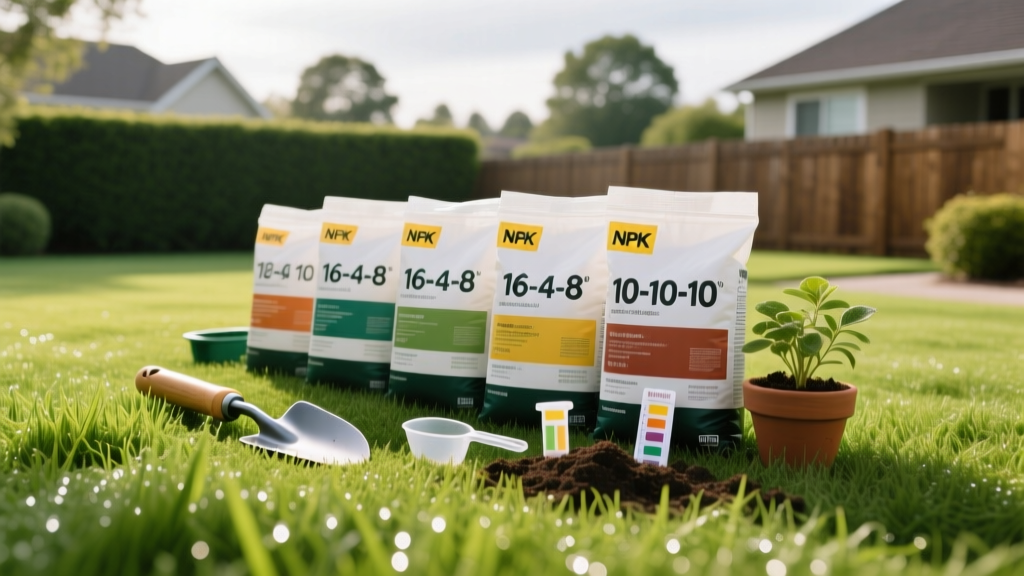
Fertilizer NPK Meaning: How to Read Lawn Food Labels
The Anatomy of a Fertilizer Bag
Walk into any garden center, and you will be confronted by a wall of plastic bags stamped with cryptic sequences of numbers: 32-0-10, 16-4-8, or 6-4-0. Understanding the fertilizer NPK meaning is the single most critical step in turf management. These numbers are not arbitrary product codes; they represent the exact percentage by weight of the three primary macronutrients required for grass survival: Nitrogen (N), Phosphorus (P), and Potassium (K).
Applying the wrong NPK ratio can lead to severe consequences. Excess nitrogen causes rapid, weak blade growth that attracts fungal diseases like brown patch, while insufficient potassium leaves turf vulnerable to drought stress and winter kill. This guide decodes the chemistry of lawn food, translating label jargon into actionable turf management strategies.
The Core Fertilizer NPK Meaning: Nitrogen, Phosphorus, Potassium
The NPK sequence always follows the same strict order. Here is the functional breakdown of each macronutrient and how it impacts your lawn at a cellular level.
Quick Reference: The N-P-K Roles
- Nitrogen (N) - The Engine: Drives chlorophyll production and vegetative blade growth. It is responsible for the deep green color and dense canopy of the turf.
- Phosphorus (P) - The Foundation: Stimulates root system development, seed germination, and energy transfer (ATP) within the plant cells.
- Potassium (K) - The Shield: Regulates stomatal opening (water retention), thickens cell walls, and builds resistance against drought, freezing temperatures, and disease.
The Phosphorus Ban Reality
You will notice many modern lawn fertilizers display a zero in the middle position (e.g., 32-0-10). This is not a manufacturing defect. Due to severe environmental concerns regarding phosphorus runoff causing eutrophication (toxic algae blooms) in local waterways, many states—including Minnesota, New York, and Michigan—have legally restricted the sale of phosphorus-containing lawn fertilizers. According to the University of Minnesota Extension, phosphorus should only be applied if a soil test explicitly indicates a deficiency or if you are establishing a new lawn from seed or sod.
Reading the Bag: Ratios vs. Actual Weight
The most common mistake homeowners make is confusing the NPK ratio with the total volume of nutrients. The numbers on the bag represent percentages by weight, not the ratio of ingredients to filler.
The 50-Pound Bag Calculation
Consider a standard 50-pound bag of fertilizer labeled 16-4-8. Here is the exact mathematical breakdown of what you are actually spreading on your lawn:
- Nitrogen (16%): 50 lbs × 0.16 = 8.0 lbs of actual Nitrogen.
- Phosphorus (4%): 50 lbs × 0.04 = 2.0 lbs of P2O5 (Phosphate).
- Potassium (8%): 50 lbs × 0.08 = 4.0 lbs of K2O (Potash).
- Filler/Carrier: The remaining 36 pounds consist of inert carriers like limestone, sand, or organic matter that ensure even distribution through a broadcast spreader.
Note: Phosphorus and Potassium are reported on labels as their oxide forms (P2O5 and K2O), not their elemental forms, a historical standard maintained by the Association of American Plant Food Control Officials (AAPFCO).
Nitrogen Release Technologies: Speed Matters
When evaluating the "N" in your fertilizer NPK meaning, the source of the nitrogen dictates how your grass will react. Nitrogen sources are divided into two primary categories:
1. Quick-Release Nitrogen (Water-Soluble)
Sources like urea and ammonium sulfate dissolve immediately upon contact with moisture. They trigger a rapid green-up within 3 to 5 days but require frequent reapplication (every 2-4 weeks). The major risk is "fertilizer burn" if applied too heavily or without immediate watering, as the sudden spike in soil salinity draws moisture out of the grass roots.
2. Slow-Release Nitrogen (WIN - Water Insoluble Nitrogen)
Premium lawn foods utilize coated or synthetic organic molecules that release nitrogen gradually based on soil temperature and microbial activity. Look for these specific acronyms on the ingredient label:
- PCU (Polymer-Coated Urea): Urea prills encased in a resin shell. Releases steadily over 8 to 12 weeks. Highly resistant to leaching.
- SCU (Sulfur-Coated Urea): Coated with sulfur and a microbicide. Release rate depends on microbial degradation of the coating (6-10 weeks).
- IBDU (Isobutylidene Diurea): Releases via hydrolysis (water contact) rather than temperature, making it excellent for early spring or late fall when soil microbes are dormant.
- Methylene Urea (MU): A chain of urea molecules of varying lengths. Shorter chains break down quickly, while longer chains provide multi-month feeding.
Pro Tip: For the healthiest turf, select a fertilizer where at least 50% to 75% of the total nitrogen is derived from slow-release sources. This prevents the "flush and starve" growth cycle associated with cheap, quick-release synthetic blends.
Matching NPK to Grass Type and Season
The ideal NPK ratio shifts dramatically depending on whether you are growing cool-season or warm-season grass, and what time of year it is. The Clemson University Home & Garden Information Center emphasizes that timing is just as critical as the nutrient ratio itself.
| Grass Type | Primary Growth Season | Ideal Spring/Summer NPK | Ideal Fall/Winterizer NPK |
|---|---|---|---|
| Cool-Season (Kentucky Bluegrass, Fescue, Ryegrass) | Spring & Fall | High N, Low K (e.g., 24-0-6) | High N, High K (e.g., 32-0-10) |
| Warm-Season (Bermuda, Zoysia, St. Augustine) | Summer | High N, Moderate K (e.g., 15-5-10) | Zero N, High K (e.g., 0-0-20) |
Why Winterizer Formulas Differ by Region
In northern climates, a "winterizer" applied to cool-season grass in late October should be high in Nitrogen (e.g., 32-0-10) to fuel root carbohydrate storage before the ground freezes. Conversely, applying high nitrogen to warm-season Bermuda grass in the fall will force new, tender blade growth that will be instantly destroyed by the first frost. Southern winterizers should be strictly Potassium-heavy (e.g., 0-0-20) to harden the plant's cell walls against freeze damage without stimulating top growth.
Secondary and Micronutrients: The Hidden Ingredients
While NPK dominates the front of the bag, the guaranteed analysis on the back often lists secondary nutrients and micronutrients. These are vital for correcting specific soil deficiencies:
- Iron (Fe): Often included at 1% to 3%. Iron promotes deep, dark blue-green coloration without triggering the rapid, mowing-intensive blade growth associated with excess nitrogen. Look for chelated iron or iron sulfate, though the latter can temporarily stain concrete walkways orange.
- Sulfur (S): Essential for amino acid synthesis. Often naturally present in ammonium sulfate or elemental sulfur, which also helps lower the pH of highly alkaline soils.
- Calcium (Ca) & Magnesium (Mg): Crucial for cell wall structure and chlorophyll production, respectively. Usually addressed via separate lime or epsom salt applications rather than standard NPK blends.
Soil Testing: The Prerequisite to NPK Selection
Guessing your lawn's NPK requirements based on generic seasonal schedules is an inefficient use of resources and a potential environmental hazard. The only way to accurately determine your Phosphorus and Potassium needs is through a laboratory soil test.
Institutions like the UMass Soil and Plant Nutrient Testing Laboratory provide comprehensive analyses for under $20. A proper soil test will yield:
- Exact P and K levels: Telling you if you need a 16-4-8 or if a 24-0-6 is sufficient.
- Soil pH: If your pH is below 6.0 or above 7.5, the grass roots physically cannot absorb the NPK you apply, rendering the fertilizer useless (a phenomenon known as nutrient lockout).
- Cation Exchange Capacity (CEC): A measure of your soil's ability to hold onto nutrients. Sandy soils have low CEC and require frequent, light NPK applications, while clay soils have high CEC and can handle heavier, less frequent doses.
Real-World Application Scenarios
Scenario A: Establishing a New Lawn from Seed
The Need: Rapid root development and seedling vigor.
The NPK Choice: A starter fertilizer high in Phosphorus, such as 10-18-10.
Application: Apply immediately before or after seeding. The high phosphorus content bypasses state restrictions because it is explicitly categorized as a "starter fertilizer" for new establishment.
Scenario B: Mid-Summer Drought Stress
The Need: Cellular hydration and stress tolerance without forcing blade growth.
The NPK Choice: A low-nitrogen, high-potassium blend, or a dedicated liquid kelp/seaweed extract (which is naturally rich in K and trace hormones). Avoid high-nitrogen synthetic blends during July and August, as they will burn the turf and deplete the soil of moisture.
Scenario C: The Organic Route (Milorganite / Biosolids)
The Need: Slow, steady feeding and soil microbiome enhancement.
The NPK Choice: Organic biosolids typically feature a low NPK ratio like 6-4-0. Because the nitrogen is bound in complex organic proteins, it must be broken down by soil microbes before the grass can use it. This means you must apply 4 to 5 times the physical weight of an organic product to achieve the same nitrogen load as a synthetic 32-0-10, but the risk of burn is virtually zero.
Frequently Asked Questions
Can I use a 10-10-10 garden fertilizer on my lawn?
While a balanced 10-10-10 fertilizer contains all three macronutrients, it is generally not recommended for established lawns. Most established turf soils already have sufficient phosphorus. Applying a 10-10-10 blend results in unnecessary phosphorus buildup, which can bind with iron and zinc in the soil, causing secondary micronutrient deficiencies. Stick to lawn-specific formulas where the middle number is zero or very low.
Does the fertilizer NPK meaning change for liquid vs. granular?
No. The NPK numbers always represent the percentage of nutrient weight relative to the total volume/weight of the product, regardless of whether it is a dry granular prill or a liquid concentrate. However, liquid fertilizers are typically fast-acting and require more frequent application, while granular slow-release formulas provide long-term feeding.

