
Lawn Care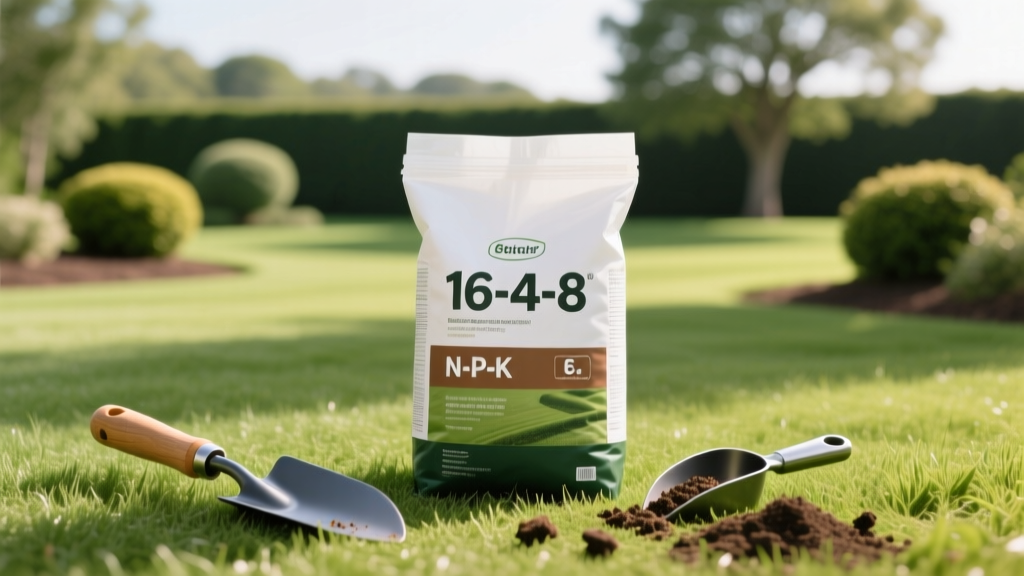
What Are the 3 Numbers on Fertilizer? The N-P-K Ratio Guide
Walk into any garden center, and you will see dozens of fertilizer bags plastered with three bold numbers, like 20-0-5 or 32-0-4. These are not random serial codes or marketing gimmicks. They represent the exact percentage by weight of the three primary macronutrients your turfgrass needs to survive: Nitrogen (N), Phosphorus (P), and Potassium (K). Understanding what the 3 numbers on fertilizer mean is the difference between a thick, drought-tolerant lawn and a burnt, weed-choked yard.
This guide breaks down the N-P-K ratio, explains how to calculate exact application rates based on your lawn's square footage, and reveals the hidden label details that dictate whether your grass gets fed over three days or three months.
Decoding the N-P-K Ratio: The Big Three Macronutrients
The three numbers always appear in the same order: Nitrogen, Phosphorus, and Potassium. If you buy a 50-pound bag of 20-5-10 fertilizer, it contains exactly 10 pounds of Nitrogen, 2.5 pounds of Phosphorus, and 5 pounds of Potassium. The remaining 32.5 pounds consist of secondary nutrients, micronutrients, and inert carrier materials like sand or limestone that help distribute the chemicals evenly.
Nitrogen (N): The Blade Builder
Nitrogen is the engine of vegetative growth. It is the core component of chlorophyll, the molecule responsible for photosynthesis and the deep green color of your grass. High-nitrogen fertilizers (where the first number is 20 or higher) drive rapid upward leaf growth and lateral spreading via stolons and rhizomes. However, applying too much nitrogen forces the grass to prioritize blade growth over root development, resulting in a shallow root system highly susceptible to summer drought stress.
Phosphorus (P): The Root Engineer
Phosphorus governs energy transfer within the plant at the cellular level (ATP synthesis) and is critical for early root establishment and seedling development. Because established lawns rarely deplete soil phosphorus levels, many states and municipalities have strictly regulated or banned the use of phosphorus in turf fertilizers to prevent toxic algae blooms in local waterways. According to the Environmental Protection Agency (EPA), nutrient runoff from excess phosphorus is a leading cause of eutrophication in freshwater ecosystems. Unless you are seeding a new lawn or a soil test explicitly indicates a deficiency, look for a zero in the middle number (e.g., 24-0-6).
Potassium (K): The Stress Shield
Potassium does not directly cause growth; instead, it regulates the plant's internal water pressure (turgor) and activates enzymes that defend against disease, extreme cold, and foot traffic. Turfgrass under heavy stress—such as high summer heat or impending winter freezes—requires higher potassium levels. The Penn State Extension recommends maintaining adequate soil potassium to improve winter hardiness and reduce the severity of fungal infections like brown patch.
Matching N-P-K Ratios to Specific Lawn Scenarios
Applying a one-size-fits-all fertilizer throughout the year is a primary cause of turf decline. The ideal N-P-K ratio shifts based on the grass type, season, and current lawn health. Use the matrix below to select the correct formulation for your specific scenario.
| Lawn Scenario | Ideal N-P-K Ratio | Primary Goal | Best Application Timing |
|---|---|---|---|
| New Seed or Sod Establishment | 10-18-10 or 16-24-12 | Aggressive root strike and seedling vigor | Day of seeding/sodding |
| Spring Green-Up (Established) | 20-0-5 or 32-0-4 | Color and blade growth without excessive surge | When soil temps hit 55°F |
| Summer Heat Stress Recovery | 12-0-12 or 8-0-20 | Cellular hydration and disease resistance | Late spring / Early summer |
| Fall Winterizer (Cool-Season) | 24-0-10 or 32-0-10 | Carbohydrate storage in roots for spring surge | 2-3 weeks before ground freezes |
Calculating Exact Application Rates (The Math Homeowners Skip)
The most common mistake homeowners make is following the generic 'covers 5,000 sq ft' claim on the bag. Professional turf managers calculate applications based on the exact pounds of actual Nitrogen applied per 1,000 square feet. The University of Minnesota Extension recommends applying 1 to 1.5 pounds of actual nitrogen per 1,000 square feet per application for most cool-season grasses.
The Golden Formula:
(Target Nitrogen Rate ÷ % of Nitrogen in Bag) × 100 = Pounds of Product per 1,000 sq ft.
Step-by-Step Calculation Example
Imagine you have a 5,000 sq ft lawn and a 50-pound bag of 20-0-5 fertilizer. You want to apply exactly 1 lb of Nitrogen per 1,000 sq ft.
- Find the product rate: Divide the target (1) by the percentage (20). 1 ÷ 20 = 0.05.
- Multiply by 100: 0.05 × 100 = 5 pounds of product per 1,000 sq ft.
- Scale to your lawn: 5 lbs × 5 (for 5,000 sq ft) = 25 pounds total.
- Set your spreader: Pour 25 lbs into your broadcast spreader, calibrate to the manufacturer's setting for 20-0-5 granule size, and cover the exact 5,000 sq ft area. If you have product left over, your spreader was calibrated too narrow; if you run out, it was too wide.
Reading Beyond the 3 Numbers: The Nitrogen Source Matrix
The N-P-K numbers tell you how much nutrient is in the bag, but they do not tell you how fast it will be released into the soil. This is dictated by the 'Derived From' section on the back label. A 30-0-4 fertilizer derived from Urea will behave vastly differently than a 30-0-4 derived from Methylene Urea.
Quick-Release vs. Slow-Release Nitrogen
- Quick-Release (Urea, Ammonium Sulfate): Water-soluble. Greens up the lawn in 48-72 hours but causes a massive growth surge requiring frequent mowing. High risk of foliar burn if not watered in immediately. Lasts 2-4 weeks.
- Slow-Release (Sulfur-Coated Urea, Methylene Urea, Poly-Coated): Requires microbial activity or moisture to break down the coating. Provides a steady, even feed for 8-12 weeks. Eliminates the 'flush and crash' growth cycle and drastically reduces nitrogen leaching into groundwater.
Expert Tip: For premium lawn care in 2026, always choose a blend where at least 50% of the nitrogen is listed as Water Insoluble Nitrogen (WIN) or slow-release on the guaranteed analysis tag.
Common N-P-K Mistakes That Burn or Starve Your Lawn
- Applying Phosphorus to Established Lawns: Not only is this ecologically damaging, but it is also illegal in states like New York, Minnesota, and Washington without a verified soil test proving deficiency. You risk heavy municipal fines for contributing to watershed pollution.
- Using Muriate of Potash (KCl) on Sensitive Grasses: While Muriate of Potash is the cheapest source of potassium (the third number), it contains high levels of chloride salts. On saline soils or sensitive warm-season grasses like St. Augustine, chloride accumulation causes leaf tip burn. Opt for Potassium Sulfate (K2SO4) instead, which provides sulfur without the salt risk.
- Ignoring Soil pH: If your soil pH is below 5.5 or above 7.5, the N-P-K nutrients become chemically locked in the soil profile. You can apply a 32-0-10 fertilizer, but the grass roots physically cannot absorb it. Always conduct a baseline soil test before purchasing high-analysis fertilizers.
Expert FAQ: N-P-K Nuances
Can I use a 10-10-10 garden fertilizer on my lawn?
Technically yes, but it is highly discouraged for established turf. A 10-10-10 ratio provides far more phosphorus than mature grass requires, leading to nutrient runoff. Furthermore, garden-grade 10-10-10 is almost entirely quick-release nitrogen, which will cause a rapid, weak flush of growth highly susceptible to turf diseases like dollar spot and pythium blight.
Do liquid fertilizers use the same N-P-K system?
Yes, liquid fertilizers use the exact same N-P-K percentage-by-weight system. However, liquid applications are typically used for foliar feeding (absorption through the leaf blade) rather than soil drenching. Because liquids are highly concentrated and fast-acting, application rates must be strictly measured in ounces per 1,000 sq ft to prevent severe chemical burns.
What do the micronutrients on the back label mean?
Beyond the big three, premium fertilizers include trace elements like Iron (Fe), Manganese (Mn), and Zinc (Zn). Iron is particularly valuable for achieving a 'dark green' color without forcing excessive upward blade growth, making it a staple in summer formulations when high nitrogen is dangerous.

