
Lawn Care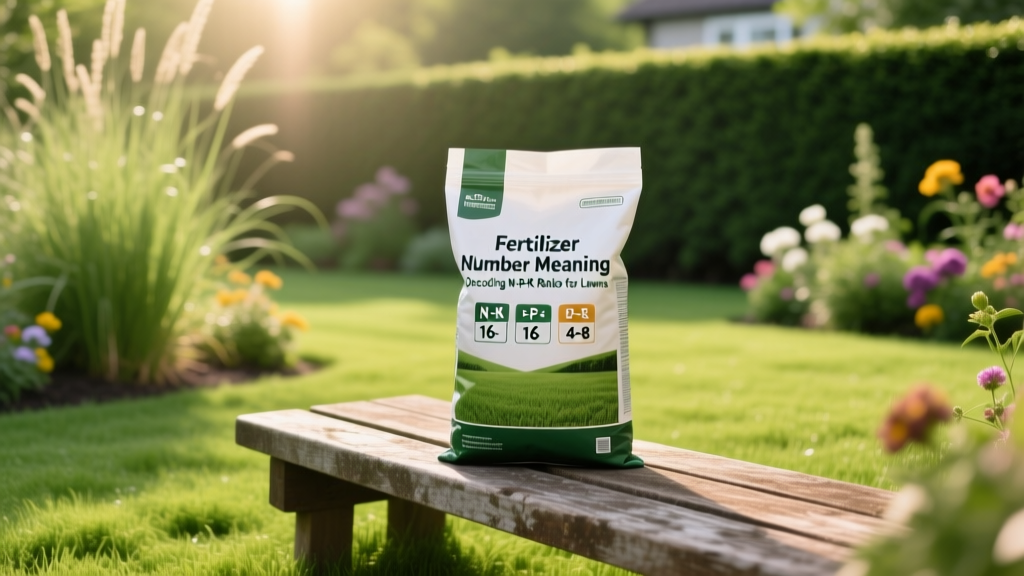
Fertilizer Number Meaning: Decoding N-P-K Ratios for Lawns
The Core Fertilizer Number Meaning: N-P-K Explained
Every commercial lawn fertilizer sold in the United States is required by law to display a three-number sequence on the front of the bag, commonly referred to as the N-P-K ratio. Understanding the fertilizer number meaning is the difference between a lush, drought-resistant turf and a burned, weed-choked yard. These numbers represent the percentage by weight of the three primary macronutrients: Nitrogen (N), Phosphorus (P), and Potassium (K).
Quick Reference: The numbers always appear in the exact same alphabetical order: N-P-K. A bag labeled 20-5-10 contains 20% Nitrogen, 5% Phosphorus, and 10% Potassium.
Nitrogen (N): The Growth Engine
Nitrogen is the most critical nutrient for turfgrass. It drives vigorous top growth, deepens the green color by fueling chlorophyll production, and increases turf density to crowd out weeds. However, excessive nitrogen causes rapid, weak growth that is highly susceptible to disease and drought stress. For cool-season grasses like Kentucky Bluegrass and Tall Fescue, aim for 2 to 4 pounds of actual nitrogen per 1,000 square feet annually. Warm-season grasses like Bermuda and Zoysia require 1 to 3 pounds.
Phosphorus (P): The Root Builder
Phosphorus is essential for early root development, seed germination, and energy transfer within the plant. Because phosphorus binds tightly to soil particles and does not leach easily, mature lawns rarely need supplemental phosphorus unless a soil test indicates a deficiency. In fact, many states and municipalities have banned phosphorus in lawn fertilizers to prevent aquatic runoff, except when establishing a new lawn from seed or sod.
Potassium (K): The Stress Defender
Potassium acts as the lawn's immune system. It regulates water uptake, improves cold and heat tolerance, and strengthens cell walls against disease and foot traffic. Turfgrass generally requires about 50% to 75% as much potassium as it does nitrogen. A fertilizer with a 4-1-2 or 3-1-2 N-P-K ratio (like 24-6-12) naturally provides this ideal balance for established lawns.
The Hidden Math: Calculating Actual Nutrient Weight
The most common mistake homeowners make is assuming a 50-pound bag of 32-0-4 fertilizer contains 50 pounds of plant food. The fertilizer number meaning dictates percentages, not total weight. The remaining weight in the bag consists of secondary nutrients (like calcium and sulfur), micronutrients (like iron), and inert carrier materials (like sand or limestone) that ensure even distribution from your spreader.
To calculate the exact pounds of nutrients in a bag, multiply the total bag weight by the decimal equivalent of each number.
Example: 50 lb bag of Scotts Turf Builder (32-0-4)
- Nitrogen: 50 lbs × 0.32 = 16.0 lbs of N
- Phosphorus: 50 lbs × 0.00 = 0.0 lbs of P
- Potassium: 50 lbs × 0.04 = 2.0 lbs of K
- Total Nutrients: 18.0 lbs (The remaining 32 lbs is inert carrier material)
Knowing this math allows you to calculate the true cost per pound of nitrogen, which is the only accurate way to compare synthetic, organic, and professional-grade fertilizers.
Matching N-P-K Ratios to Your Lawn's Specific Needs
Selecting the right fertilizer number meaning for your application depends entirely on the current state of your turf and the time of year. Applying a high-nitrogen synthetic blend to a dormant warm-season grass in late fall will only feed winter weeds and increase runoff.
| Lawn Scenario | Ideal N-P-K Ratio Profile | Example Product Numbers | Why It Works |
|---|---|---|---|
| New Seed or Sod | High Phosphorus (Starter) | 18-24-12 or 10-18-10 | Phosphorus accelerates root establishment before winter or summer stress. |
| Spring Green-Up (Established) | High Nitrogen, Low P | 32-0-4 or 29-0-3 | Provides rapid vegetative growth and color without excess phosphorus runoff. |
| Late Fall Winterizer | High Potassium | 24-0-10 or 22-0-14 | Potassium stores carbohydrates in the roots for early spring green-up and cold tolerance. |
| Summer Stress / Organic | Low N, Balanced, Slow-Release | 6-4-0 (Milorganite) | Low nitrogen prevents burning in high heat; organic base improves soil microbiology. |
Real-World Product Breakdown: Cost and Coverage Analysis
To demonstrate how the fertilizer number meaning impacts your wallet, let us compare three popular 2026 market options. Notice how the price per bag is misleading until you calculate the cost per 1,000 square feet and the actual nutrient delivery.
Scotts Turf Builder Lawn Food (32-0-4)
Type: Synthetic Fast-Release / Slow-Release Blend
Bag Size: 15 lbs (covers 5,000 sq ft)
Actual Nitrogen: 4.8 lbs per bag
Est. Price: $18.00
Cost per 1,000 sq ft: $3.60
Best Use: Quick spring green-up for cool-season grasses.
Milorganite Organic Nitrogen Fertilizer (6-4-0)
Type: 100% Organic (Heat-dried biosolids)
Bag Size: 32 lbs (covers 2,500 sq ft)
Actual Nitrogen: 1.92 lbs per bag
Est. Price: $22.00
Cost per 1,000 sq ft: $8.80
Best Use: Safe summer application; will not burn turf in 95°F+ heat; adds iron for deep greening.
Lesco Professional Starter Fertilizer (18-24-12)
Type: Synthetic Professional Grade
Bag Size: 50 lbs (covers 15,000 sq ft)
Actual Nitrogen: 9.0 lbs per bag
Est. Price: $35.00
Cost per 1,000 sq ft: $2.33
Best Use: Seeding or sodding new lawns; high phosphorus content is critical for germination.
The Critical First Step: Why Soil Tests Dictate the Numbers
Guessing your lawn's N-P-K requirements based on generic seasonal guides is a flawed strategy that leads to nutrient lockout and environmental pollution. The only way to definitively interpret the fertilizer number meaning for your specific yard is through a laboratory soil test.
According to Penn State Extension, applying phosphorus to a lawn that already has 'Optimum' or 'Above Optimum' soil test levels provides zero agronomic benefit and significantly increases the risk of nutrient runoff into local waterways. A standard soil test from a university extension office (such as the University of Massachusetts Soil Testing Lab or Texas A&M Agrilife) costs between $15 and $25 and provides exact, customized N-P-K recommendations based on your specific grass species and soil cation exchange capacity (CEC).
Warning on Phosphorus Runoff: Excess phosphorus binds to soil sediments and washes into storm drains during heavy rains, causing toxic algae blooms in local lakes and reservoirs. Never apply a high-P starter fertilizer to an established lawn without a soil test confirming a deficiency.
Troubleshooting Common N-P-K Mistakes
- The 'More is Better' Fallacy: Doubling the spreader rate on a 32-0-4 synthetic fertilizer will not make the grass twice as green. It will cause severe fertilizer burn, turning the turf yellow and killing the root system due to salt toxicity.
- Ignoring the Nitrogen Source: The N-P-K numbers do not tell you if the nitrogen is fast-release (urea, ammonium sulfate) or slow-release (methylene urea, polymer-coated). Fast-release provides a 2-week flush of growth followed by a crash. Slow-release feeds the lawn evenly for 8 to 12 weeks. Always look for products where at least 50% of the nitrogen is listed as 'Water Insoluble Nitrogen' (WIN) or slow-release on the guaranteed analysis tag.
- Applying Winterizer Too Late: A high-potassium winterizer (like 24-0-10) must be applied while the grass is still actively photosynthesizing but not growing top-growth (typically late October to mid-November in the transition zone). Applying it after the ground freezes renders the potassium useless, as the roots cannot absorb it.
Mastering the fertilizer number meaning transforms lawn care from a guessing game into a precise science. By calculating actual nutrient weights, matching ratios to your turf's current life stage, and validating your choices with a professional soil test, you can achieve professional-grade results while minimizing waste and environmental impact.

