
Lawn Care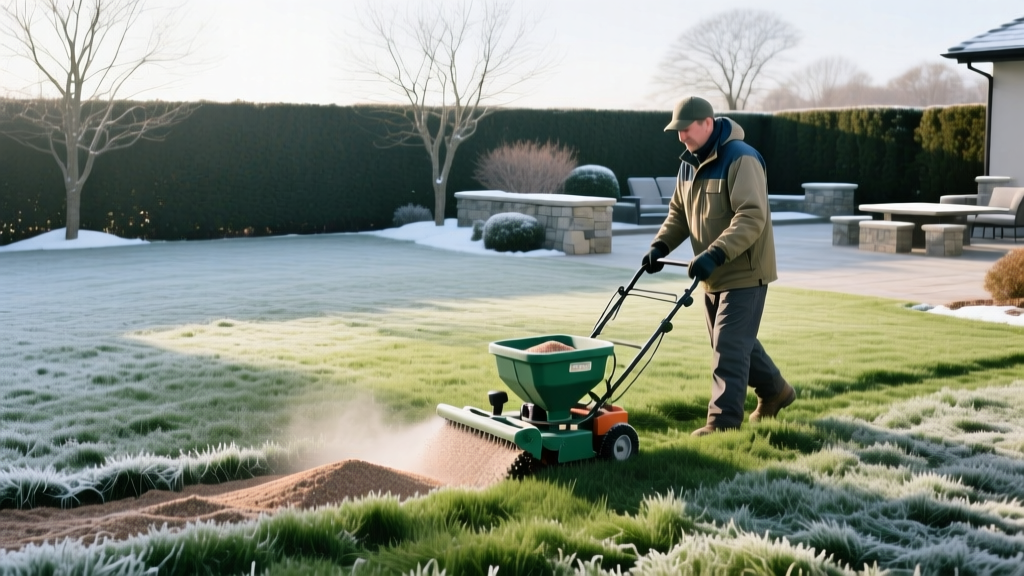
Fertilizing Lawn in Winter: Regional Timing and Winterizer Guide
The "Winterizer" Misconception: Late Fall vs. Mid-Winter
When homeowners research fertilizing lawn in winter, they are almost always looking for the "winterizer" application. However, true mid-winter fertilization (January or February) is highly detrimental to turfgrass health. The critical window for winter nutrient loading actually occurs in late fall to early winter (November through early December), when soil temperatures drop but the ground has not yet frozen solid. During this window, cool-season grasses continue to build root mass and store carbohydrates even after top growth has ceased. According to Penn State Extension, applying the correct nutrients during this narrow thermal window is the single most important factor for early spring green-up and drought tolerance the following year.
NPK Profiles: Selecting the Right Winter Formula
Not all winter fertilizers are created equal. The market is flooded with products labeled "WinterGuard" or "Winterizer," but their NPK (Nitrogen-Phosphorus-Potassium) ratios serve entirely different physiological purposes depending on the exact week of application.
| Application Window | Ideal NPK Ratio | Primary Function | Product Example & Cost (5k sq ft) |
|---|---|---|---|
| Late Fall (Oct - Mid Nov) | 32-0-10 or 28-0-10 | High Nitrogen for carbohydrate storage and root expansion before deep freeze. | Scotts Turf Builder WinterGuard (~$35-$40) |
| Early Winter (Late Nov - Dec) | 15-0-15 or 10-0-20 | High Potassium for cellular osmotic adjustment, improving cold hardiness and disease resistance. | Lesco Professional Winterizer (~$42-$48) |
| Mid-Winter (Jan - Feb) | 0-0-0 (DO NOT APPLY) | N/A. Applying N or K on frozen ground causes runoff and spring dead spot. | N/A |
Expert Insight: Avoid high-phosphorus (the middle number) winterizers unless a recent soil test confirms a deficiency. Phosphorus is highly immobile in cold soils and will simply bind to soil particles, creating runoff risks without benefiting the turf.
Regional Timing Calendars by Grass Type
The phrase "fertilizing lawn in winter" means entirely different things depending on your USDA Hardiness Zone and turfgrass species. The transition zone (Zones 6-7) presents the most complex challenges, where both cool- and warm-season grasses struggle with thermal fluctuations.
Cool-Season Grass Protocol (Zones 3-7)
Target Species: Kentucky Bluegrass, Tall Fescue, Perennial Ryegrass, Fine Fescues.
The Trigger: Do not rely on the calendar; rely on soil temperature. Purchase a basic digital soil probe thermometer. The optimal time to apply your final winterizer is when the soil temperature at a 2-inch depth consistently reads between 50°F and 55°F. In Zone 5, this typically aligns with late November (around Thanksgiving). In Zone 7, this may push into mid-December.
At these temperatures, the grass blades have stopped growing, but the root system remains highly active. The nitrogen applied now will not produce lush top growth; instead, it is converted into amino acids and stored in the crown and roots. This stored energy is what fuels the explosive spring green-up without requiring heavy spring fertilization, which can lead to excessive thatch and disease.
Warm-Season Grass Protocol (Zones 7-10)
Target Species: Bermudagrass, Zoysia, St. Augustine, Centipedegrass.
The Rule: Stop all nitrogen applications by September 15th. According to NC State Extension, applying nitrogen to warm-season grasses as they enter dormancy delays the hardening-off process. This leaves the plant highly vulnerable to sudden freeze damage and significantly increases the severity of Spring Dead Spot (Ophiosphaerella korrae) and Large Patch (Rhizoctonia solani) in the following spring.
The Exception: If a soil test reveals low potassium levels, you may apply a nitrogen-free potassium sulfate (0-0-50) or a specialized 0-0-25 winter stress formula in late October. Potassium acts as an antifreeze agent within the plant cells, lowering the freezing point of the cellular fluid and improving winter survivability.
Step-by-Step Application & Spreader Settings
Proper calibration is critical. Over-applying winterizer can lead to fertilizer burn, even in cool weather, and salt buildup in the soil profile.
- Mow Low: Drop your mower deck by one notch for the final cut of the season (e.g., from 3.5 inches down to 2.5 inches for Tall Fescue). This prevents snow mold (Typhula blight) from matting down long grass blades under winter snowpack.
- Clear Debris: Rake or blow all fallen leaves off the lawn. Fertilizer trapped under wet leaves will burn the turf and fail to reach the soil.
- Calibrate Spreader: For a standard rotary spreader like the Scotts EdgeGuard Mini, set the dial to 5.5 when applying a prill-sized product like Lesco 15-0-15. Always check the back of the specific product bag, as prill density varies by manufacturer.
- Perimeter First: Walk the perimeter of your lawn with the spreader deflector engaged to create a clean boundary and prevent fertilizer from landing on hardscapes or garden beds.
- Overlap Passes: Walk in straight lines, overlapping each pass by roughly 2 feet to ensure even distribution and avoid striping.
- Watering: If rain is not in the 48-hour forecast, apply 0.25 inches of irrigation to wash the granules off the grass blades and into the soil surface. Do not overwater; the goal is to activate the prills, not saturate the ground before a freeze.
Troubleshooting: Winter Fertilization Failure Modes
Even experienced homeowners make critical errors when fertilizing lawn in winter. Avoid these common failure modes:
- Applying on Frozen Ground: If the ground is frozen, the fertilizer cannot penetrate the soil. It will sit on the surface and wash away during the first winter thaw, polluting local waterways and wasting your money.
- Using Weed & Feed in Late Fall: Most broadleaf weed herbicides (like 2,4-D and Dicamba) require active weed growth and ambient air temperatures above 55°F to be effective. Applying a "Winterizer Weed & Feed" in November when weeds are dormant is entirely ineffective and unnecessarily introduces herbicides into the soil.
- Ignoring Soil pH: If your soil pH is below 6.0, the grass roots cannot efficiently absorb the applied nutrients, regardless of the NPK ratio. Test your soil in October. If pH is low, apply pelletized lime concurrently with your early winter potassium application.
- Fertilizing Dormant Warm-Season Turf: As noted by Texas A&M AgriLife Extension, forcing Bermudagrass to stay green into December via nitrogen applications severely weakens the rhizome network, resulting in a thin, patchy lawn that will not fully recover until late June.
Final Takeaway: Success in fertilizing lawn in winter is entirely dependent on timing and grass type. Cool-season lawns thrive on a late-fall nitrogen boost followed by an early-winter potassium application, while warm-season lawns require strict nitrogen fasting and targeted potassium only. Buy a soil thermometer, read the NPK label, and let soil temperatures dictate your schedule.

