
Lawn Care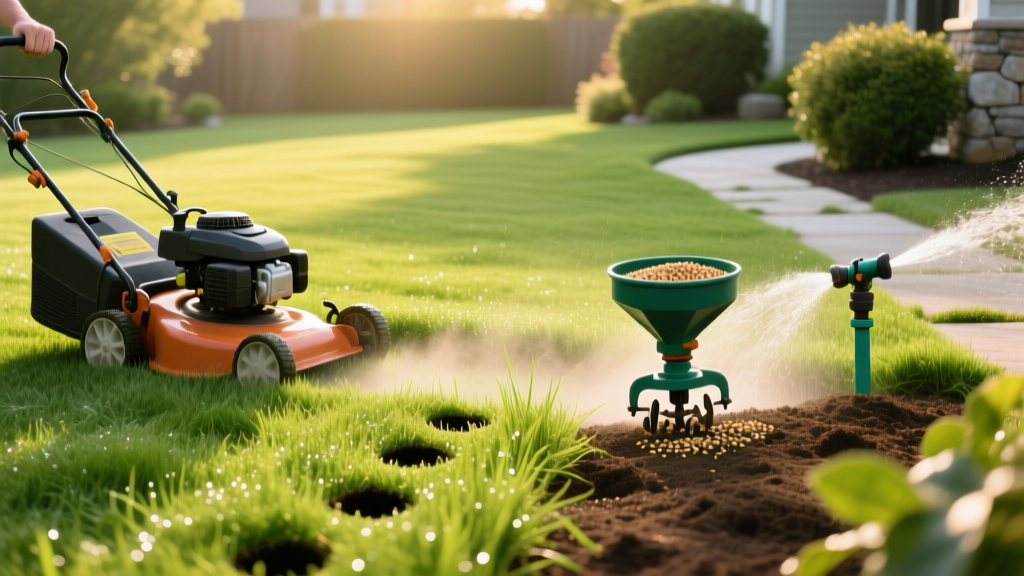
Complete Step-by-Step Fescue Grass Maintenance Guide
The Fescue Foundation: Clarifying the Search
Many homeowners initiate their lawn care research searching for 'fiscus grass,' a widespread phonetic misspelling of Fescue grass (Festuca arundinacea for Tall Fescue, and various Festuca rubra species for Fine Fescue). Fescue is the premier cool-season turfgrass for the transition zone and northern climates, prized for its deep root system, drought tolerance, and year-round green potential. However, maintaining a dense, disease-free fescue lawn requires strict adherence to seasonal triggers rather than calendar dates. This guide provides the exact agronomic protocols, chemical application rates, and mechanical procedures required to maintain Turf-Type Tall Fescue (TTTF) in 2026 and beyond.
Phase 1: Spring Pre-Emergent and Early Growth
Spring maintenance for fescue focuses on weed prevention and moderate root feeding. Fescue experiences its second major root growth flush in early spring, but excessive nitrogen will push top growth at the expense of root depth, leaving the lawn vulnerable to summer heat.
Soil Temperature Triggers for Pre-Emergent
Do not apply pre-emergent herbicides based on the calendar. Apply when soil temperatures at a 2-inch depth consistently reach 50°F to 55°F for three consecutive mornings. This correlates with the germination window for crabgrass and goosegrass.
- Active Ingredient: Prodiamine 65 WDG or Dithiopyr (Dimension).
- Application Rate: 0.15 oz of Prodiamine 65 WDG per 1,000 square feet provides a 3-month barrier.
- Watering Requirement: 0.5 inches of irrigation immediately after application to activate the chemical barrier in the top 1 inch of soil.
Agronomic Tip: If you plan to overseed bare patches in the spring, avoid Prodiamine. It inhibits grass seed germination for up to 4 months. Use Mesotrione (Tenacity) instead, which selectively targets weeds while allowing fescue seed to germinate safely.
Phase 2: Summer Stress Management & Mowing Matrix
As summer heatwaves intensify, fescue enters a state of environmental stress. Cool-season grasses naturally thin out when soil temperatures exceed 75°F. The goal in summer is survival, not aggressive growth.
| Maintenance Task | Early Summer (June) | Peak Summer (July/Aug) |
|---|---|---|
| Mowing Height | 3.0 - 3.5 inches | 3.5 - 4.0 inches |
| Watering Volume | 1.0 inch / week | 1.5 inches / week |
| Watering Frequency | 2x per week (0.5" each) | 2x per week (0.75" each) |
| Fertilization | None | None |
Disease Alert: Brown Patch (Rhizoctonia solani)
Brown patch is the primary killer of fescue lawns in humid summers. It activates when night temperatures remain above 68°F coupled with high humidity and prolonged leaf wetness. If conditions align, apply a preventative systemic fungicide containing Azoxystrobin (e.g., Heritage G) at a rate of 2.5 lbs per 1,000 sq ft. Rotate with Propiconazole every 21 days to prevent chemical resistance.
Brown patch is the primary killer of fescue lawns in humid summers. It activates when night temperatures remain above 68°F coupled with high humidity and prolonged leaf wetness. If conditions align, apply a preventative systemic fungicide containing Azoxystrobin (e.g., Heritage G) at a rate of 2.5 lbs per 1,000 sq ft. Rotate with Propiconazole every 21 days to prevent chemical resistance.
Phase 3: Fall Renovation Protocol
Fall is the undisputed most critical season for fescue. Cool nights and warm soils create the perfect environment for seed germination and deep root establishment. According to NC State University's TurfFiles, 80% of a fescue lawn's annual root mass is generated during the autumn months.
Step-by-Step Core Aeration and Overseeding
- Timing: Execute when daytime highs drop below 80°F and nighttime lows reach the 50s (typically late August to mid-September in the transition zone).
- Preparation: Mow the existing lawn down to 2.0 inches to expose the soil surface and reduce competition for new seedlings.
- Core Aeration: Use a heavy-duty mechanical core aerator. Make two passes in perpendicular directions (a grid pattern) to pull 3-inch deep plugs, leaving them on the lawn to break down and return microbes to the thatch layer.
- Seed Selection & Rate: Apply a certified Turf-Type Tall Fescue (TTTF) blend containing three or more cultivars (e.g., Titan Ultra, Houndog, or Falcon IV) to ensure genetic diversity against disease. Apply at a heavy rate of 8 to 10 lbs per 1,000 square feet.
- Starter Fertilizer: Apply a high-phosphorus starter fertilizer (such as 18-24-12) at 4 lbs per 1,000 sq ft to accelerate root development.
- Germination Watering: Water lightly 2 to 3 times daily for the first 14 days to keep the top 1 inch of soil consistently moist. Once seedlings reach 1 inch, transition to deep, infrequent watering.
Phase 4: Winter Dormancy and Soil Amendment
As soil temperatures drop below 45°F, fescue enters dormancy. This is the optimal time to address soil pH and structural deficiencies based on a professional soil test. If your soil test indicates a pH below 6.0, apply pelletized calcitic lime at a rate of 50 lbs per 1,000 square feet. The winter freeze-thaw cycles will naturally work the calcium carbonate into the soil profile, neutralizing acidity and unlocking bound nutrients for the spring flush. For a comprehensive breakdown of soil sampling, refer to the Penn State Extension Tall Fescue guidelines.
Troubleshooting Common Fescue Failures
| Symptom | Probable Cause | Corrective Action |
|---|---|---|
| Circular, tan lesions with dark borders (Summer) | Brown Patch Fungus | Apply Azoxystrobin; switch to AM-only watering. |
| Grass pulls up easily, roots chewed off | White Grubs | Apply Trichlorfon (Dylox) for immediate curative kill. |
| Purplish-red hue during winter months | Phosphorus Deficiency / Cold Stress | Conduct soil test; apply 0.5 lbs P/1000 sq ft if deficient. |
| Spongy feel, water pooling on surface | Severe Soil Compaction | Double-pass core aeration in early fall. |
Successful fescue maintenance relies on precise timing and understanding the biological limits of cool-season turf. By aligning your mowing, chemical applications, and renovation efforts with soil temperatures rather than arbitrary calendar dates, you will cultivate a resilient, deep-rooted lawn capable of withstanding modern climate extremes.

